Thermotraffic has expanded its Wrexham distribution centre with a new automated warehouse that adds about 19,300 pallet positions and 48,000 tonnes of storage capacity, taking the site to roughly 33,150 pallet positions and 77,000 tonnes in total.
The extension became operational on 28 September and is the company’s first automated warehouse. Thermotraffic provides temperature controlled warehousing, transport and freight forwarding services in the UK, while the Wrexham site also handles services for meat products including thawing and freezing.
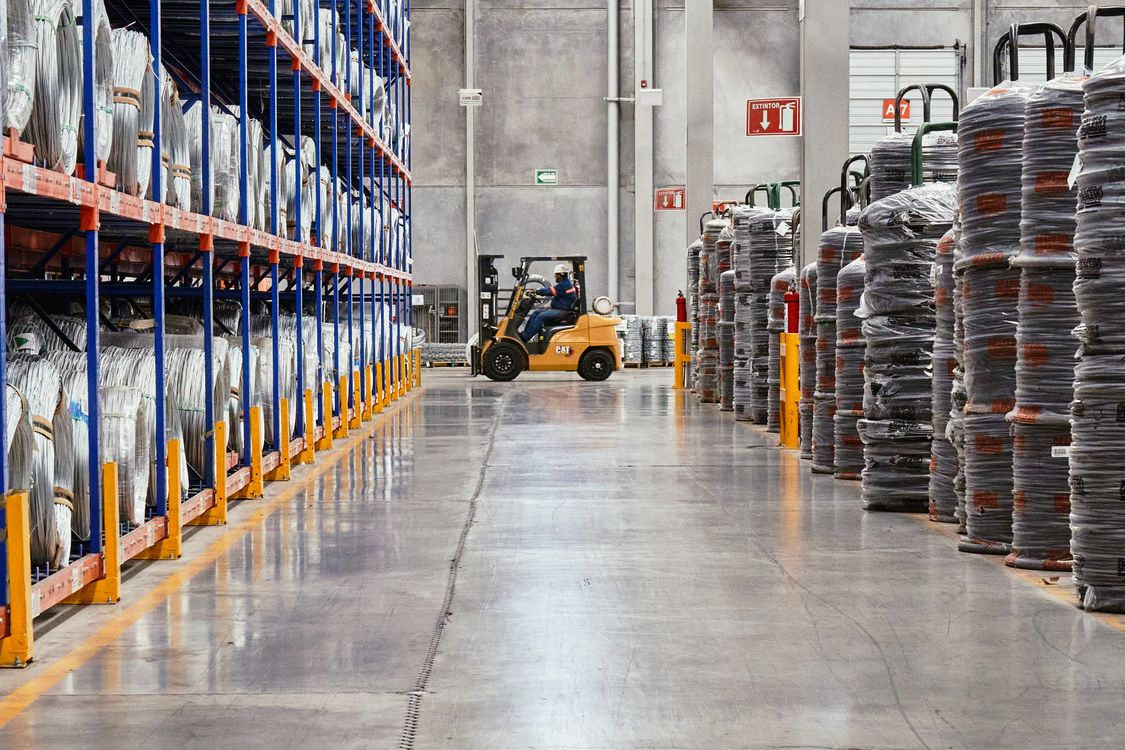
Inside a conventional cold store, drivers move pallets between receiving areas, storage positions and dispatch locations using manual or partly automated handling equipment. An automated warehouse transfers more of those movements to controlled machinery and warehouse software, reducing routine vehicle journeys inside chilled or frozen storage areas.
Nichirei, Thermotraffic’s parent group, has not disclosed the supplier or detailed architecture of the Wrexham system, so the exact storage and retrieval mechanism cannot yet be assessed. Cold storage economics nevertheless make pallet density, travel distance and handling time significant because refrigerated space is expensive to build and consumes energy continuously while in operation.
The new building adds more than half as many pallet positions again as the enlarged site’s final total, substantially increasing its physical storage potential. Actual throughput will also depend on inbound vehicle scheduling, pallet identification, order preparation, freezing and thawing services, loading bays and outbound transport keeping pace with the automated storage system.
Software controlled storage can assign locations and retrieve pallets according to inventory rules rather than relying on drivers to find and select positions manually. That supports stock rotation, traceability and inventory accuracy where products have defined shelf lives, batch requirements or temperature limits, while reducing the number of vehicles circulating inside the storage zone.
Removing some manual pallet movement can also reduce the amount of time employees spend in low temperature working environments, although automation shifts more operational dependence onto machinery, sensors and controls. A manual warehouse can often continue at reduced efficiency when one vehicle or aisle is unavailable, whereas a fault in automated handling equipment can disrupt a larger part of the material flow if the system has limited redundancy.
Preventive maintenance, spare parts, controls support and recovery procedures therefore become part of warehouse operations rather than occasional engineering considerations. Equipment availability has to remain high enough for pallets to move at the rate required by receiving, processing and dispatch, particularly during seasonal peaks.
Refrigeration adds another interdependent system. Every door opening, vehicle movement and product transfer introduces some combination of heat and moisture into a cold store, while incoming goods can add a substantial thermal load if they require freezing or further cooling after arrival.
More predictable internal pallet movement can help operators manage those loads, but the refrigeration plant still has to remove heat from products, lighting, equipment, employees and the building envelope while maintaining the specified storage temperature. If material begins moving through the warehouse faster, refrigeration and processing capacity have to support the additional throughput rather than becoming the next constraint.
Wrexham’s location also places the site close to a significant meat processing region, giving the operation a role beyond static frozen storage. Thermotraffic already provides thawing and freezing services, so pallet handling has to connect with processing schedules as well as transport plans.
A product may arrive frozen, remain in storage, move into controlled thawing and then leave against a customer production or distribution schedule. Each transfer creates another requirement for accurate stock data, temperature control and physical coordination, particularly where the same warehouse is serving several customers with different handling specifications.
The expanded facility is intended to operate alongside Thermotraffic’s wider road, import, export and ocean freight activities. Combining those services can reduce handovers between providers, although the operational advantage depends on information moving reliably between international transport, storage, processing and domestic distribution.
Greater storage density also concentrates more customer inventory at one location. Higher utilisation can improve the economics of refrigeration and automation assets, but it increases the potential consequence of power, refrigeration or controls failures because a larger volume of temperature sensitive product depends on the same infrastructure.
Electrical supply, emergency procedures, refrigeration monitoring and equipment resilience therefore become more significant as capacity grows. Automated storage can improve routine efficiency, but it does not remove the need to protect product when one of the systems supporting the warehouse becomes unavailable.
Nichirei expects the expansion to improve operational efficiency, safety and service quality. Those gains will ultimately be visible in throughput, handling accuracy, equipment availability and the time pallets spend between receipt and dispatch rather than in storage capacity alone.
With about 33,150 pallet positions now available, Wrexham gives Thermotraffic a materially larger UK operating base. The first full operating cycles will show whether automation allows the additional capacity to be used without moving the principal bottleneck into refrigeration, processing, order preparation or vehicle movements around the site.