Stegra has agreed to sell Google environmental attribute certificates linked to as much as 91,000 tonnes of near-zero-emission steel during the first year of a new agreement, creating another revenue stream around the ramp-up of its hydrogen-based steel plant in Boden, northern Sweden.
The certificates separate the environmental characteristics of the steelmaking process from the physical steel itself. Google can purchase those attributes without necessarily receiving the corresponding tonnes of metal, using them to address steel-related emissions associated with its operations, including data-centre construction.
Stegra says additional volumes are intended over the life of the agreement, although the companies have not disclosed its total duration or financial value. The arrangement uses a book-and-claim model in which the environmental attribute and the physical material can be sold to different customers.
The certificates are linked to non-prime steel produced during the mill’s operation. The physical buyer receives the material without the lower-emission claim, while the certificate buyer receives the environmental attribute associated with the production route. Stegra says the structure is intended to prevent the same emissions benefit being claimed twice.
Non-prime material is a normal feature of steel production, particularly during the ramp-up of a new mill when process settings and product quality are still being stabilised. It can remain suitable for industrial applications even where it falls outside the specification required for a particular prime-grade order.
Separating the environmental attribute creates a way to retain additional commercial value from that output. A buyer interested in lower-emission steel production may not always be able to take physical material from the new plant because its fabrication, contracting or logistics arrangements are already fixed around other suppliers.
Data-centre construction provides a good example. A technology company may want to reduce the embodied emissions associated with steel but still rely on established structural-steel contractors and local supply chains. Environmental certificates allow support for the lower-emission production route without forcing the corresponding physical tonnes through the same procurement channel.
The flexibility also increases the importance of accounting. If the physical steel buyer and the certificate buyer both claimed the same lower-emission attribute, the market would overstate how much near-zero material had actually been produced. Stegra therefore requires buyers of the underlying non-prime steel not to make the environmental claim attached to certificates sold separately.
The commercial mechanism has already attracted other customers. Microsoft previously entered agreements covering physical near-zero-emission steel and environmental attribute certificates, while thyssenkrupp Materials Services agreed to buy non-prime material whose environmental attributes could be separated and sold elsewhere.
The Google agreement broadens the model into another major industrial demand pool and links it directly with the rapidly expanding physical infrastructure behind cloud computing and AI. Data centres require substantial quantities of steel in structural frames, equipment supports and associated buildings, making embodied emissions increasingly relevant to companies attempting to reduce the wider footprint of new capacity.
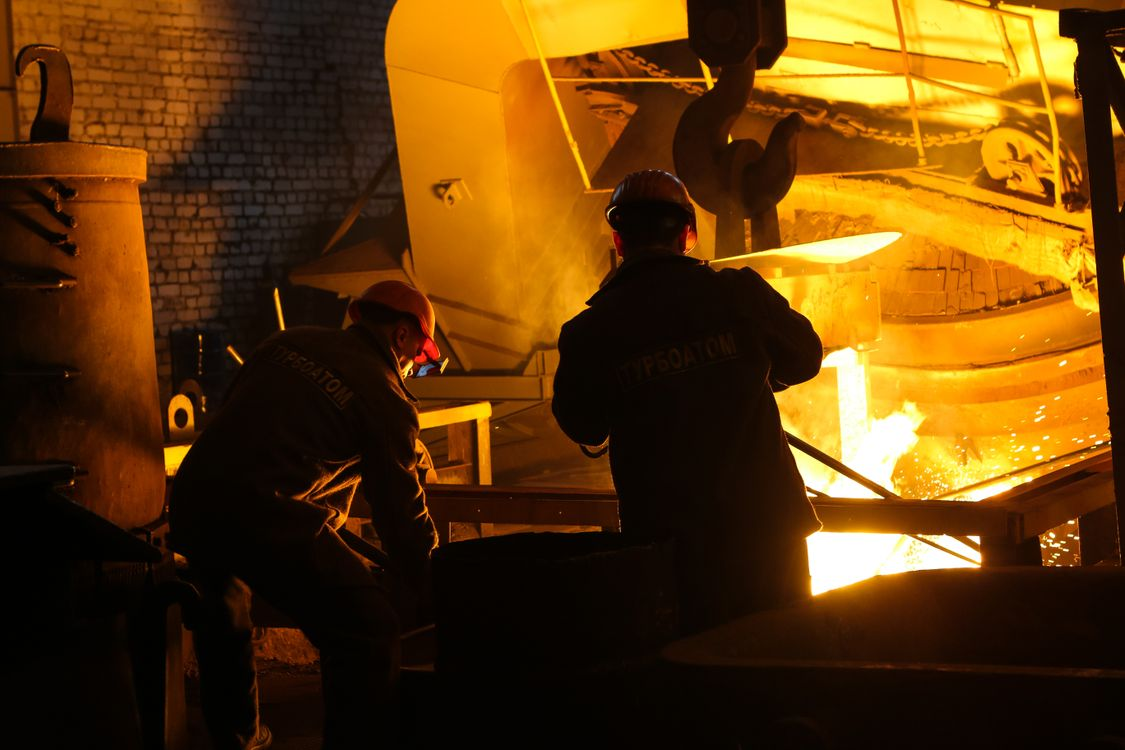
The certificates ultimately depend on Stegra’s production process at Boden. The company is building an integrated operation combining renewable electricity, electrolysis, direct reduction of iron ore and steelmaking. Hydrogen produced at the site is intended to replace coal or natural gas as the reducing agent used to remove oxygen from iron ore.
Stegra says the route can reduce carbon dioxide emissions by as much as 95% compared with conventional ore-based steelmaking. Its hydrogen plant is designed to produce more than 100,000 tonnes of green hydrogen annually, with the wider industrial programme targeting five million tonnes of steel production a year by 2030.
Those targets make plant ramp-up a central commercial issue. A new steelworks has to move from commissioning into stable output while proving product quality, maintaining yield and meeting customer delivery requirements. Non-prime material is likely to be particularly visible during those early stages, giving the certificate structure a role while operations are still stabilising.
Financing is another part of that transition. Stegra completed a €1.4 billion financing round in June 2026 to support completion and commissioning of the Boden plant. Certificate sales do not replace physical steel contracts or project finance, but they provide an additional way to monetise the emissions advantage associated with the process.
The agreement therefore sits between materials procurement and industrial finance. It does not mean that 91,000 tonnes of Stegra steel will be physically delivered into Google projects, nor does it create additional production capacity on its own. It creates a buyer for the environmental value attached to that volume.
For the model to move beyond early bilateral agreements, buyers will need confidence that certificate volumes correspond to real production, that claims are not duplicated and that accounting remains consistent between suppliers. Those controls will determine whether book-and-claim becomes a repeatable route for financing near-zero materials or remains a relatively specialised mechanism used during the first years of new industrial capacity.
Google gives the model another large customer, but Boden’s production performance remains the underlying measure. Certificates can transfer the environmental attribute; they cannot substitute for a plant capable of producing steel at the required quality, cost and volume.