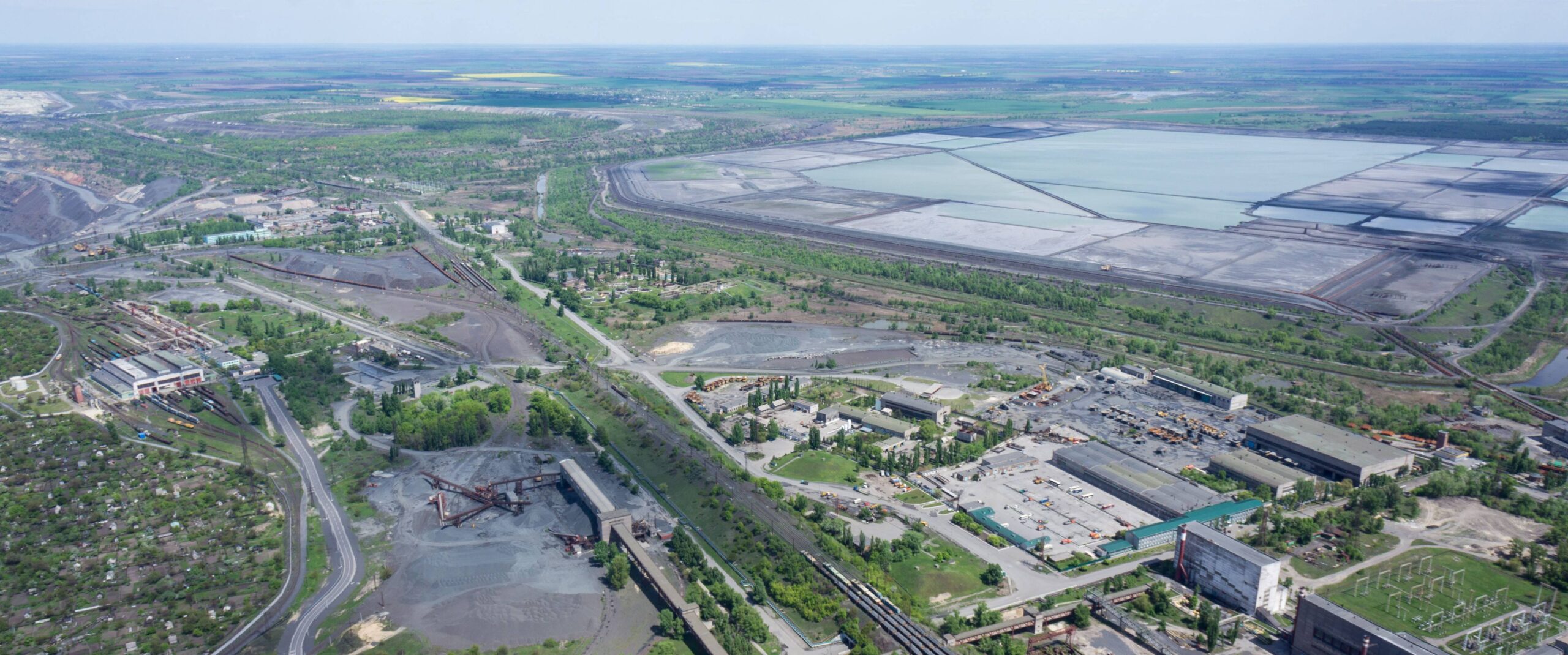
Ferrexpo has restarted production at its Ukrainian mining and pelletising operations using one pellet line after completing a $100 million equity fundraising. The company mobilised its operations over the weekend and intends to concentrate exports on European customers while attacks continue to restrict its principal Black Sea logistics route.
The restart reverses the temporary suspension introduced on 5 August, when Ferrexpo stopped mining and pellet production to protect working capital after threats to ports and shipping materially reduced Black Sea export capacity. The company was still able to supply European customers from existing inventory, but continuing to manufacture material without a dependable route to market would have tied up additional cash.
The logistics disruption followed an incident involving a third-party vessel carrying Ferrexpo direct-reduction-grade pellets. The vessel was subsequently removed from the immediate war-risk area, but the wider threat around Ukrainian ports remained sufficiently serious for the company to suspend production rather than assume normal shipping would resume.
That sequence demonstrates how quickly bulk-material logistics can become a factory constraint. Pellet production consumes electricity, mining inputs, maintenance resources, labour, binders, and working capital before the finished product generates cash. If export capacity falls sharply, stockpiles can become a financial limit even when the processing plant itself remains technically capable of running.
Ferrexpo’s fundraising was designed partly to relieve that pressure. The company said the proceeds were required to strengthen liquidity and provide working capital for the resumption and continuation of operations at a reduced level, with management expecting the funding to cover immediate and short-term requirements while the wider operating environment remains constrained.
One pellet line has now returned to operation. Ferrexpo has previously operated with the same reduced configuration during 2026 as electricity availability and logistics prevented a broader return towards normal capacity. The current restart should therefore be read as restoration of a constrained production model rather than a recovery to pre-war volumes.
Europe remains the most practical destination while Black Sea shipping is restricted. Ferrexpo has used its own rail wagons to serve customers in Eastern and Central Europe and has retained alternative logistics through inland and Danube routes. Those options provide resilience, but rail and river capacity carry different cost, volume, and transit characteristics from high-volume seaborne exports.
The company supplies premium iron ore products to steel mills, including pellets and concentrates used where operators are seeking higher furnace productivity or lower emissions intensity. Direct-reduction-grade material is also relevant to emerging lower-carbon ironmaking routes because higher-grade ore reduces the amount of unwanted material entering downstream processes.
That gives European steelmakers a commercial interest in continued Ukrainian supply even when Ferrexpo’s volumes are below historic levels. The physical product can still move west while maritime routes are constrained, but transport costs and available rail capacity influence which customers can be served economically and how quickly finished inventory leaves the production site.
Energy supply remains another exposure. Earlier this year Ferrexpo suspended and restarted production as attacks on Ukrainian electricity infrastructure affected the availability and cost of domestic and imported power. Mining, crushing, concentration, and pelletising are electricity-intensive processes, so a functioning export route does not guarantee output if power becomes the next constraint.
The company consequently depends on several external systems operating at the same time. Mines and processing plants need secure electricity, production requires sufficient working capital, railways and inland routes must remain available, and ports must be usable if larger seaborne volumes are to resume. Disruption to any one of those systems can reduce the value of capacity elsewhere.
The $100 million fundraising gives Ferrexpo more room to operate through that uncertainty, but it does not remove it. The company’s own financing documents describe an environment of severe operational and financial risk, including attacks on energy infrastructure, restrictions on export routes, legal proceedings, and the continuing war.
Restarting one pellet line nevertheless restores revenue-generating production and keeps part of the industrial chain operating. The next useful measure will be whether the line can run consistently and whether European logistics can move sufficient finished product to prevent inventory and working capital from becoming limiting factors again.