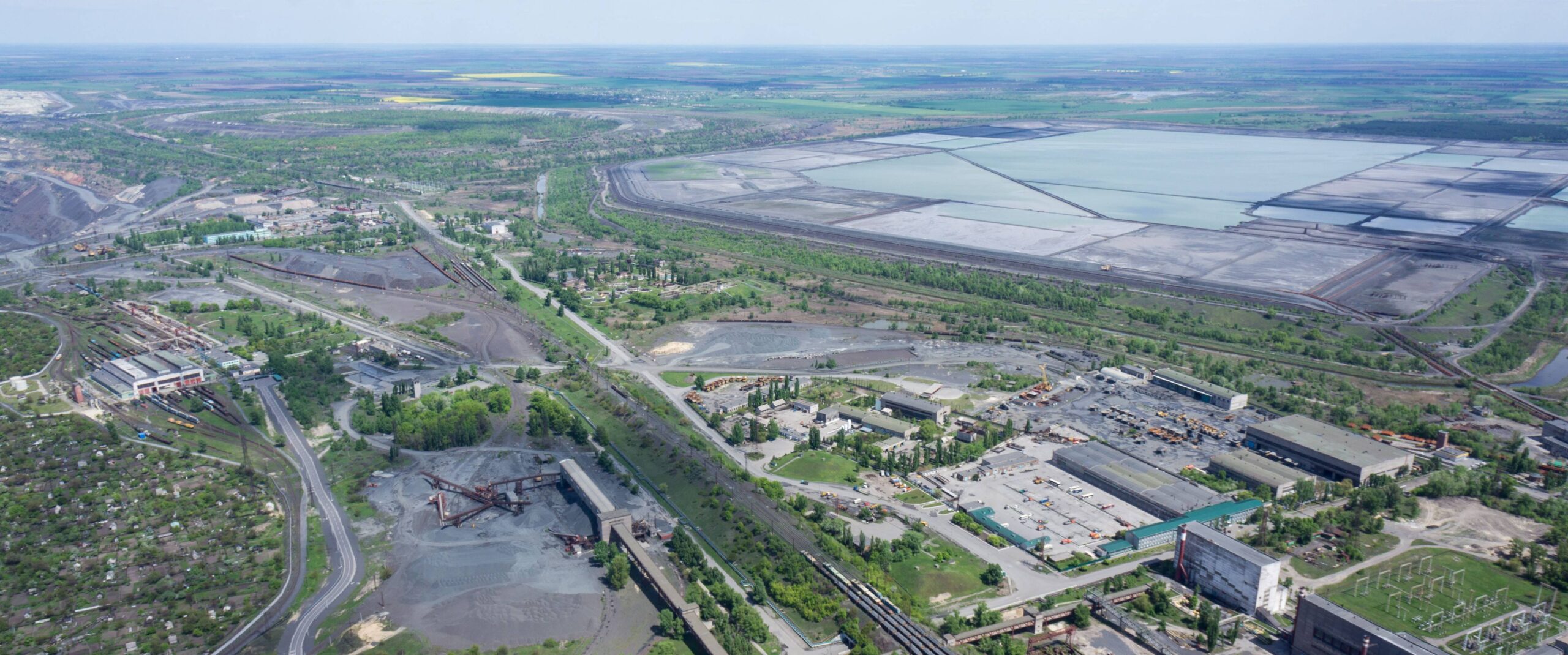
Yara has started operations at its carbon-capture facility in Sluiskil in the Netherlands, completing a commercial chain that captures carbon dioxide from ammonia production, liquefies it on site, moves it by ship to Norway, and sends it into permanent geological storage beneath the North Sea. Yara and the European Commission describe the plant as Europe’s largest industrial carbon-capture operation.
The installation can capture and liquefy up to 800,000 tonnes of carbon dioxide each year from ammonia production. The liquefied gas is held temporarily at Sluiskil before Northern Lights vessels transport it to Øygarden on Norway’s west coast, where it enters the transport and storage system serving the offshore reservoir.
Northern Lights will inject the carbon dioxide into a saline formation approximately 2,600 metres below the seabed. Yara expects about 12 million tonnes to be captured and stored over 15 years if the system operates at the planned commercial scale, giving the agreement a defined throughput rather than the open-ended capacity often attached to proposed carbon-management projects.
The Sluiskil project also creates a different industrial structure from a plant that owns its entire disposal chain. Yara operates the capture, liquefaction, temporary storage, and ship-loading equipment in the Netherlands, while Northern Lights provides marine transport, receiving infrastructure, pipeline transport, and geological storage in Norway.
Seven storage tanks at Sluiskil provide around 15,000 tonnes of temporary capacity. Yara’s project material says two vessels, each capable of transporting about 7,200 tonnes, are intended to load twice a week. The arrangement makes shipping frequency and buffer storage part of the carbon-capture operating plan rather than an activity separated from production.
Ammonia manufacturing is comparatively well suited to this type of project because conventional steam-methane reforming produces a relatively concentrated carbon-dioxide stream. Fertiliser producers have long captured some of that gas for uses including urea, greenhouses, carbonated drinks, and AdBlue, so liquefaction and handling are not entirely new activities at sites such as Sluiskil.
Permanent geological storage changes the destination and scale of the operation. Markets for carbon dioxide as a product depend on continuing commercial demand, whereas the Northern Lights agreement provides a disposal route intended specifically to prevent captured gas returning to the atmosphere. Yara committed approximately €200 million to the project when the transport-and-storage contract was announced in 2023.
The project does not make the Sluiskil complex carbon-free. It captures defined process streams rather than every source of greenhouse-gas emissions at the plant, while energy use, upstream natural gas, shipping, and other site activities remain part of the wider emissions balance. The operating claim is narrower: up to 800,000 tonnes of carbon dioxide from ammonia production now have a commercial route to permanent geological storage.
That route also has to run as an industrial supply chain. Carbon dioxide must meet the required specification, be liquefied, transferred into storage, loaded safely, shipped to Norway, unloaded, sent through the transport network, and injected at a rate compatible with the reservoir and offshore infrastructure. A constraint at any one of those stages can eventually restrict capture upstream unless buffer capacity is sufficient.
The commercial model is being watched beyond fertiliser production because Northern Lights was designed to serve multiple industrial emitters rather than one dedicated capture plant. Shared transport and storage can remove the need for each factory to develop its own offshore reservoir and export pipeline, but it also makes emitters dependent on infrastructure whose capacity is shared with other customers.
That dependency will become more important if European carbon capture expands from a handful of large projects into a wider market. Capture plants, ships, terminals, pipelines, and injection wells have long development schedules of their own, and additional capture capacity is of limited use if transport and storage cannot be expanded at the same rate.
Sluiskil is one of the first projects large enough to test those interfaces under normal commercial operation. The engineering technologies used in separation, liquefaction, shipping, and geological injection are established individually; integrating them across two countries and several operators is the part now being tested continuously.
Yara’s performance can therefore be measured in physical tonnes rather than announced capacity. Sustained capture rates, ship availability, terminal operation, and injection performance over the coming months will show whether the cross-border chain can operate with the reliability expected from the ammonia plant feeding it.