Volkswagen has agreed key terms with Lower Saxony and Aurelius Capital for a possible sale of Volkswagen Osnabrück GmbH, opening a route to convert the site from specialist vehicle production into a centre for security and defence manufacturing after car production ends in summer 2027. Rafael Advanced Defense Systems is planned as the first anchor industrial partner.
Under the proposed structure, Aurelius would become majority owner alongside the State of Lower Saxony. The site would then be developed progressively around security and defence projects rather than closed and reopened as an entirely new factory. Volkswagen intends to contribute existing infrastructure and experience in development, production, quality, and industrialisation during the transition.
The first anchor project under discussion with Rafael concerns possible manufacture of systems and components for air-defence equipment for Germany and other European customers. Volkswagen has not disclosed production volumes, investment value, or a firm start date, and the transaction remains subject to final agreements, corporate approvals, and regulatory review.
Its industrial significance lies in the manufacturing capability that could be retained. Volkswagen decided in 2024 that vehicle production at Osnabrück would end in summer 2027, leaving a site with established engineering and production skills but no long-term automotive allocation. The current plan is intended to preserve a large part of that capability by applying it to a different market.
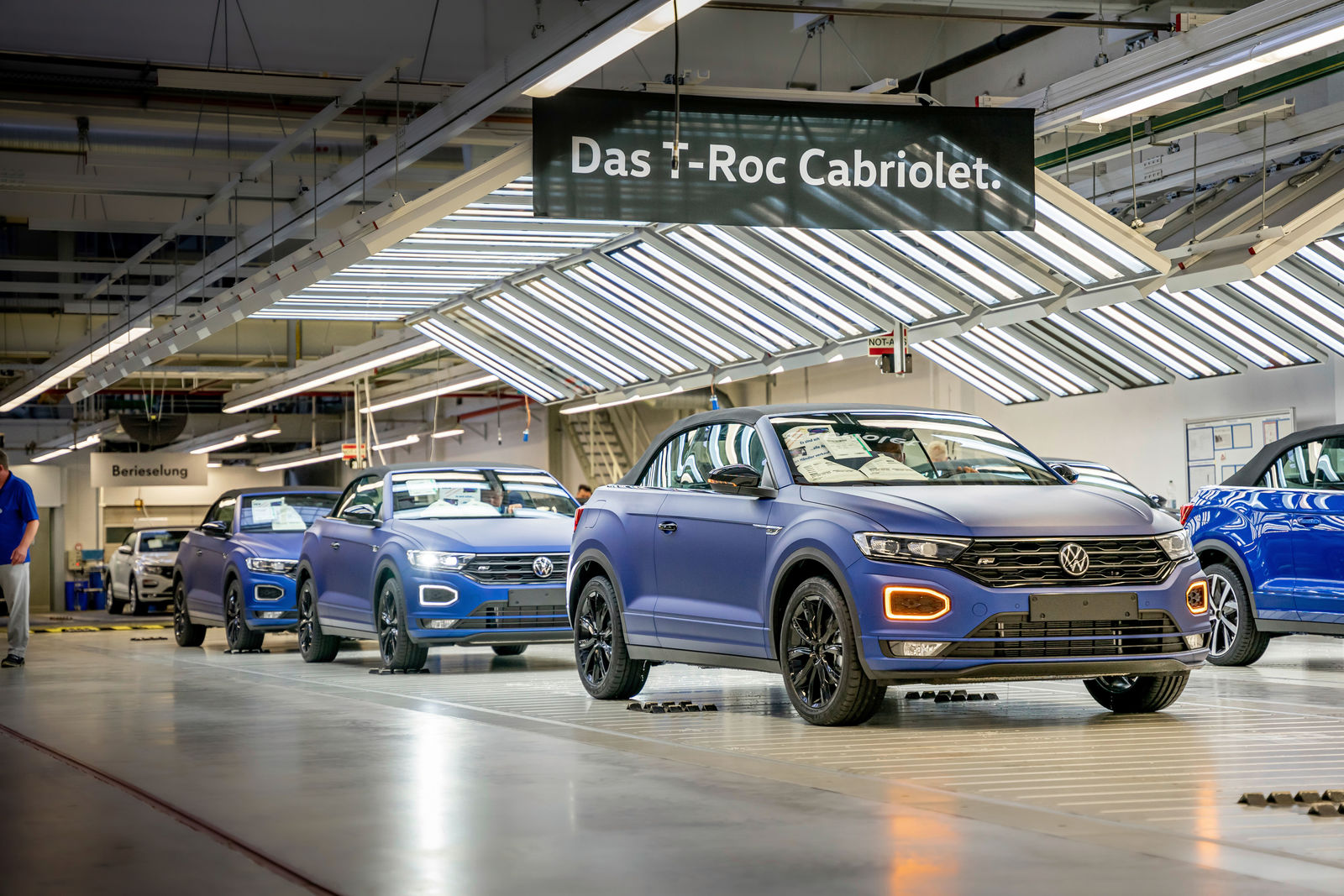
Osnabrück is better suited to that type of transition than a highly specialised mass-production plant. Volkswagen describes the site as a centre for small-series production and special projects, covering technical development, tool and plant construction, painting, assembly, quality, and industrialisation. It has produced vehicles including the Golf Cabriolet, Porsche Boxster and Cayman, XL1, Moia, and the current T-Roc Cabriolet.
Those capabilities are useful in defence production, where volumes can be lower and configurations more specialised, but they do not make the conversion automatic. Air-defence equipment brings different security requirements, traceability, component controls, testing regimes, military qualification, customer acceptance, and information-management obligations. Existing machinery and buildings will have to be assessed against the requirements of each incoming programme.
The workforce is central to the proposal for the same reason. Volkswagen says Osnabrück employees would play a leading role in setting up manufacturing and industrialising new products. The company’s works council says more than 1,200 employees now have a perspective at the site, while negotiations continue over the eventual structure and the position of the wider workforce.
The agreement also provides one possible answer to Volkswagen’s broader European capacity problem. The group has approved a restructuring under Future Plan 2030 after identifying more than 500,000 vehicles of excess annual capacity across its European manufacturing network. Several German plants face future allocation reviews as Volkswagen reduces model complexity and attempts to bring production closer to expected demand.
Osnabrück is unusual because a growing defence market offers an alternative industrial use rather than another automotive model allocation. European defence spending is creating demand for machining, assembly, electronics integration, testing, skilled labour, and secure production space, while existing industrial sites can provide infrastructure that would take years to reproduce on a greenfield development.
The economics will depend on which parts of the automotive asset base remain useful. Assembly halls, logistics systems, quality processes, metrology, engineering offices, and some tooling capability can retain value, while vehicle-specific equipment may be difficult to reuse if incoming products have entirely different structures and tolerances. Converting a factory is therefore an engineering programme in its own right rather than a simple change of badge over the entrance.
Rafael’s involvement gives the proposed transition an initial product family around which those decisions can be made. Aurelius and Lower Saxony say development will proceed step by step around concrete projects, with further industrial partnerships intended to follow. That approach reduces the risk of spending heavily on a speculative conversion before manufacturing requirements are defined.
Volkswagen also avoids becoming a defence manufacturer in its own right under the proposed structure. The company is contributing the site, infrastructure, and industrial experience to the transition, while the new owners and specialist partners would determine the future programme mix. Lower Saxony’s involvement adds a public interest in retaining skilled employment and regional industrial capacity.
The agreed terms are therefore a starting point rather than a completed factory conversion. Ownership, responsibilities, financing, programme scope, employment arrangements, and regulatory approvals still have to be settled. Osnabrück remains an automotive plant approaching the end of vehicle production, but it now has a credible route towards another industrial use instead of an empty production allocation.