Krones has opened a new manufacturing plant at Vemagal in Karnataka, expanding local production of bottling and packaging machinery for beverage and liquid-food manufacturers in the Indian market.
The facility represents an investment of ₹3.15 billion and comprises around 16,000m² of manufacturing space on a 30-acre industrial site in Kolar district, near Bengaluru. The plant was completed around 18 months after its February 2025 groundbreaking and is expected to support approximately 400 jobs.
Krones says the Vemagal operation will manufacture its ErgoBloc systems and other machinery used in bottle production. Producing those systems locally moves a larger part of fabrication, assembly, testing, and supply-chain coordination into India rather than serving the market entirely through equipment built elsewhere in the company’s international network.
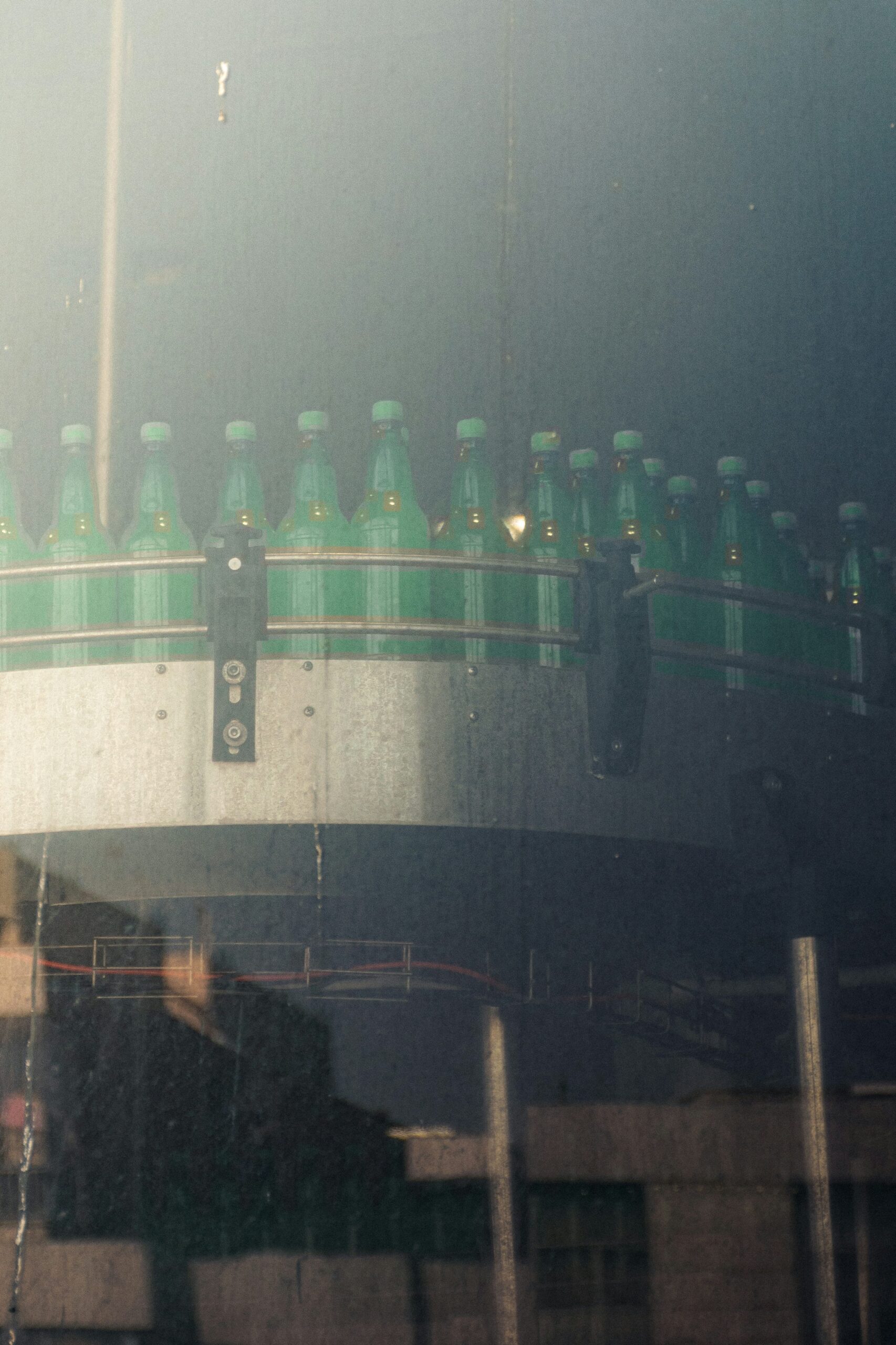
The ErgoBloc concept combines several functions that would traditionally be installed as separate machines. Depending on configuration, stretch blow moulding, labelling, filling, and capping can be integrated into a wet-section block, reducing the number of transfer points and the line footprint while concentrating more process functions inside a common production architecture.
Krones’ high-output ErgoBloc L configurations can reach up to 100,000 containers per hour. At that rate, small interruptions become substantial production losses, placing demanding requirements on container handling, filling accuracy, controls, hygiene, compressed air, drives, inspection, changeovers, and downstream packaging.
Local manufacturing does not remove those requirements; it moves responsibility for delivering them closer to the customer. A machinery plant assembling high-speed packaging systems needs stable fabrication, machining, electrical-panel production, software configuration, mechanical assembly, test routines, quality control, documentation, and commissioning support.
The Vemagal location also places Krones close to Bengaluru’s large engineering and supplier base. Bottling and packaging machinery depends on fabricated stainless steel, machined components, motors, drives, pneumatics, valves, sensors, conveyors, control cabinets, safety systems, software, and specialist services, creating scope for a wider regional supply chain if local suppliers can meet the required specifications.
That supplier effect can be more significant than the direct employment figure inside the plant. Machinery manufacturers purchase a substantial proportion of the value in a finished line from specialist suppliers, meaning a stable local factory can create repeat work in machining, fabrication, electronics, automation, logistics, maintenance, and industrial services.
Krones has operated in India for years across machinery, processing technology, service, training, and digital activities. Vemagal is different because it adds a substantial manufacturing asset and brings production of one of the company’s integrated bottling platforms into the market it is intended to serve.
Regional production can also make product adaptation easier. Indian beverage producers range from multinational bottlers running high-speed lines to regional companies with different pack formats, utilities, automation levels, building constraints, and investment cycles. Local engineering and manufacturing should shorten the path between specification changes and the equipment that eventually reaches the factory floor.
The plant’s development began with Karnataka approving the investment proposal in 2024 and allocating the 30-acre site. The foundation stone was laid in February 2025, followed by a relatively fast construction and industrialisation programme. Completing the building is only part of that work: utilities, lifting systems, stores, assembly areas, test equipment, quality processes, digital infrastructure, and production teams all have to be established before output stabilises.
Packaging machinery is also becoming more software-dependent. High-speed filling lines exchange recipes, machine states, inspection results, alarms, maintenance data, and performance information across multiple pieces of equipment. A regional manufacturing site therefore needs access not only to mechanical drawings but also to the controls and digital engineering behind the installed system.
The Indian beverage market adds another layer of operating requirements. Manufacturers are increasing throughput while handling a wider mix of package formats, lightweight containers, recycled materials, shorter changeovers, water-efficiency targets, energy reduction, and higher levels of automation. Machine suppliers have to reconcile those requirements with food-safety, maintainability, and the economics of local production.
For Krones, bringing ErgoBloc production into Karnataka is a stronger commitment than adding another sales or service office because it requires manufacturing standards, test procedures, supplier qualification, and production know-how to be reproduced locally. The company can then use the same site to deepen localisation if order volume and supplier capability justify it.
The plant now moves from construction into utilisation. The ₹3.15 billion investment, 16,000m² factory, and 30-acre site provide the physical base, but the useful measures will be the volume and complexity of equipment assembled there, the proportion of the supply chain sourced regionally, and whether Vemagal begins supporting export programmes as well as Indian customers.
Opening ceremonies are easy to photograph; industrialising a machinery plant is slower. Krones has completed the visible part of the investment in 18 months. The next phase is qualifying suppliers, stabilising assembly, training production teams, and delivering high-speed equipment consistently enough that Vemagal becomes an ordinary part of the company’s global manufacturing network rather than a new factory still proving itself.