NCMT has secured £13.5 million of facilities from NatWest as the Coventry precision-engineering business moves into management ownership and prepares to expand its advanced manufacturing activities. The package combines an £8.3 million revolving credit facility with a £4 million bond facility, alongside foreign-exchange and operational support.
Part of the financing has already been used to complete a management buyout from the company’s previous shareholders, transferring control to the existing leadership team. The remaining facilities are intended to provide working capital and contract support for investment in technology, modernisation, and larger UK and overseas projects rather than serving only as acquisition finance.
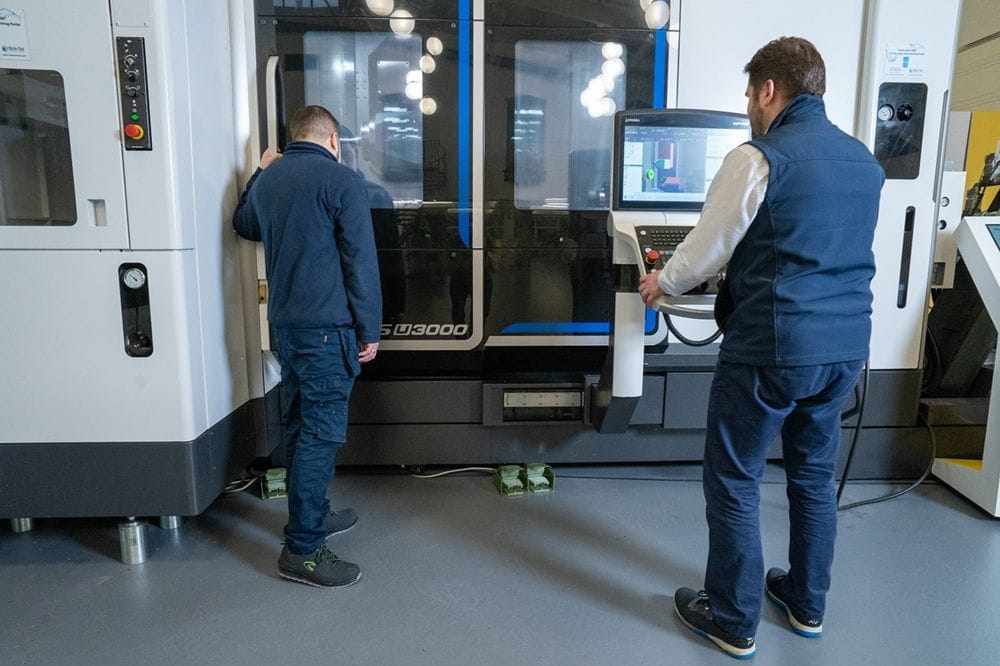
NCMT has traded for more than 60 years and specialises in high-technology CNC machine tools, precision machining systems, grinding equipment, automation, and workholding. It supplies and integrates equipment for industrial users across the UK and Ireland and represents machinery brands including Okuma and Makino, placing the business between global machine-tool builders and industrial users investing in new production capability.
High-value machine tools create demanding cash-flow cycles. Equipment may be ordered internationally months before final delivery, while applications engineering, process development, installation, training, and customer acceptance can extend the period before a project is fully paid. Larger contracts can also require performance bonds or other guarantees, and imported machinery introduces foreign-exchange exposure before the finished installation produces revenue.
The £8.3 million revolving facility gives NCMT more capacity to fund those cycles, while the £4 million bond element supports guarantees associated with larger projects. Additional financial headroom can therefore affect which contracts the company is able to pursue, particularly where engineering work and supplier commitments have to be made well ahead of final customer payment.
The facilities are intended to support investment in new technology and more efficient machining processes. NCMT’s activities extend beyond equipment sales into applications engineering, installation, training, service, automation, and process improvement, all of which influence whether the stated performance of a machine tool turns into lower cycle times, higher utilisation, reduced scrap, or more complex component production on the shop floor.
Machine tools sit near the base of productivity improvements in aerospace, automotive, energy, medical, defence, and general engineering production. Manufacturers can invest in automation, software, and inspection, but many gains still depend on the ability to cut, grind, fixture, and handle components more accurately with less intervention. Advanced equipment also raises the requirement for programmers, applications engineers, service technicians, and operators capable of exploiting it.
Capital equipment suppliers are exposed to the same investment cycle from the opposite direction. When customers postpone machinery purchases, distributors and integrators can see project pipelines lengthen even while technical demand remains. Stronger working-capital facilities provide more room to absorb those timing differences and to commit engineering resource to projects whose revenue is recognised only after equipment has been delivered and accepted.
NCMT expects its expansion to support workforce growth and has an established apprenticeship programme. Skills development is closely tied to the business model because imported equipment can arrive much faster than the engineering knowledge needed to configure, optimise, and maintain it. A supplier unable to support a sophisticated machine after installation risks turning an expensive capital asset into an underused piece of factory equipment.
The management buyout gives the existing leadership team direct ownership of that next phase while placing greater responsibility on the business to convert financial capacity into sustainable order growth. Revolving credit can smooth project timing, but it does not remove exposure to imported equipment costs, contract margins, customer investment cycles, or the need to provide long-term technical support after commissioning.
Coventry and the surrounding Midlands retain significant automotive, aerospace, precision-engineering, and advanced-manufacturing activity, providing a concentrated customer base for machining and production technology. Improvements in this part of the supply chain are rarely as visible as a new assembly plant, yet they accumulate through shorter cycle times, higher equipment availability, reduced scrap, and the ability to manufacture more demanding parts competitively.
The financing package gives NCMT more room to carry the machinery, engineering effort, and guarantees associated with larger projects while its management team takes ownership of the company. Its effect will become measurable through orders, equipment deployments, recruitment, and customer investment rather than through the balance-sheet figure alone. The company now has additional financial capacity; the next requirement is turning it into installed manufacturing capability.