DPM Metals has declared commercial production at its Vareš operation in Bosnia and Herzegovina after the mine and processing plant exceeded the company’s throughput and recovery threshold over 30 consecutive days. The milestone was achieved on 10 August, ahead of the timetable previously indicated by the company, while the operation continues to target its full annual processing rate by the end of 2026.
DPM’s commercial-production test required Vareš to exceed an average of 60% of design throughput capacity and recoveries across the qualifying period. Daily throughput averaged 72% of plant design capacity during those 30 days, giving the company sufficient evidence of operating stability to move the asset beyond its pre-commercial ramp-up phase.
The next threshold is higher. DPM is targeting a full processing run-rate of 850,000 tonnes of ore per year by the end of December, so the plant still has to increase utilisation while maintaining recovery, availability, concentrate quality, and the mine-development rate required to feed it. Commercial production is an accounting and operating milestone, not the end of the ramp-up.
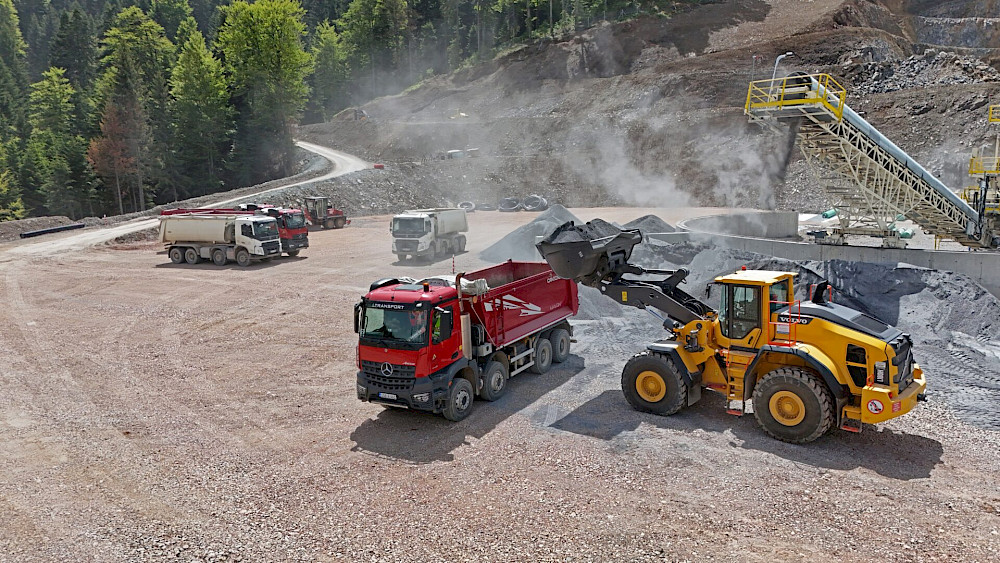
Vareš is around 50km north of Sarajevo and combines the Rupice underground mine with the Veovaca processing plant. The wider operation covers approximately 4,400 hectares and produces saleable silver-lead-gold and silver-zinc concentrates. DPM describes Rupice as a fully mechanised underground operation, while the brownfield processing site uses established regional infrastructure including power, roads, water, and rail connections.
The concentrator was developed with grinding, flotation, and dewatering systems on a site with a much longer mining history. Much of the older surface infrastructure was demolished during redevelopment, although selected assets were retained or repurposed. Vareš therefore combines modern processing equipment with access to infrastructure created around an established mining district.
Production began before DPM owned the asset. First concentrate was produced under Adriatic Metals, and DPM acquired Vareš through its takeover of Adriatic in September 2025. The Canadian group then concentrated on raising underground development rates, stabilising processing performance, completing supporting infrastructure, and moving the operation towards its designed annual throughput.
Progress accelerated during the second quarter of 2026. DPM processed 117,250 tonnes of ore during the period, 48% more than in the preceding quarter, while underground development averaged more than 400 metres a month. The company also completed a planned processing-plant shutdown in seven days, ahead of schedule, reducing the downtime expected during the higher-production second half.
Several supporting systems are being developed alongside the concentrator ramp-up. Construction of a paste-backfill plant and second tailings filter continued during the second quarter, while commissioning of a water-treatment plant began. Both the backfill plant and additional tailings filter are expected to become operational before the end of the year.
Those systems determine how much of the nominal plant capacity can actually be sustained. Underground mines need enough developed headings to provide a stable ore blend, while backfill, tailings handling, water management, maintenance, and concentrate logistics have to operate at compatible rates. A concentrator capable of processing ore faster than the mine can supply it simply moves the bottleneck upstream.
DPM’s commercial-production declaration suggests that the separate parts of Vareš are beginning to operate together with greater consistency. Based on first-half performance, the company now expects 2026 production to finish towards the higher end of its guidance range of 105,000 to 130,000 gold-equivalent ounces, although that forecast still depends on the remaining ramp-up progressing broadly as planned.
The operation is strategically important to DPM because it adds a polymetallic underground mine to a portfolio that also includes operations and development projects elsewhere in south-eastern Europe and Ecuador. Vareš produces several payable metals rather than relying on one commodity stream, with silver, lead, gold, and zinc contributing to the concentrates and overall economics.
The asset also carries exploration potential beyond the immediate production programme, with DPM identifying opportunities across the wider mineralised corridor around the operation. That work is secondary to the current engineering objective: keeping underground development, ore delivery, processing, backfill, water treatment, and tailings handling in balance while the plant climbs towards 850,000 tonnes a year.
Commercial-production declarations can make mine developments sound finished when the difficult work often continues afterwards. Vareš has passed DPM’s 30-day test at an average 72% of design throughput, but the company remains in a ramp-up year. The more revealing result will come at year-end, when the operation either reaches the promised annualised rate or identifies the next constraint in the production system.