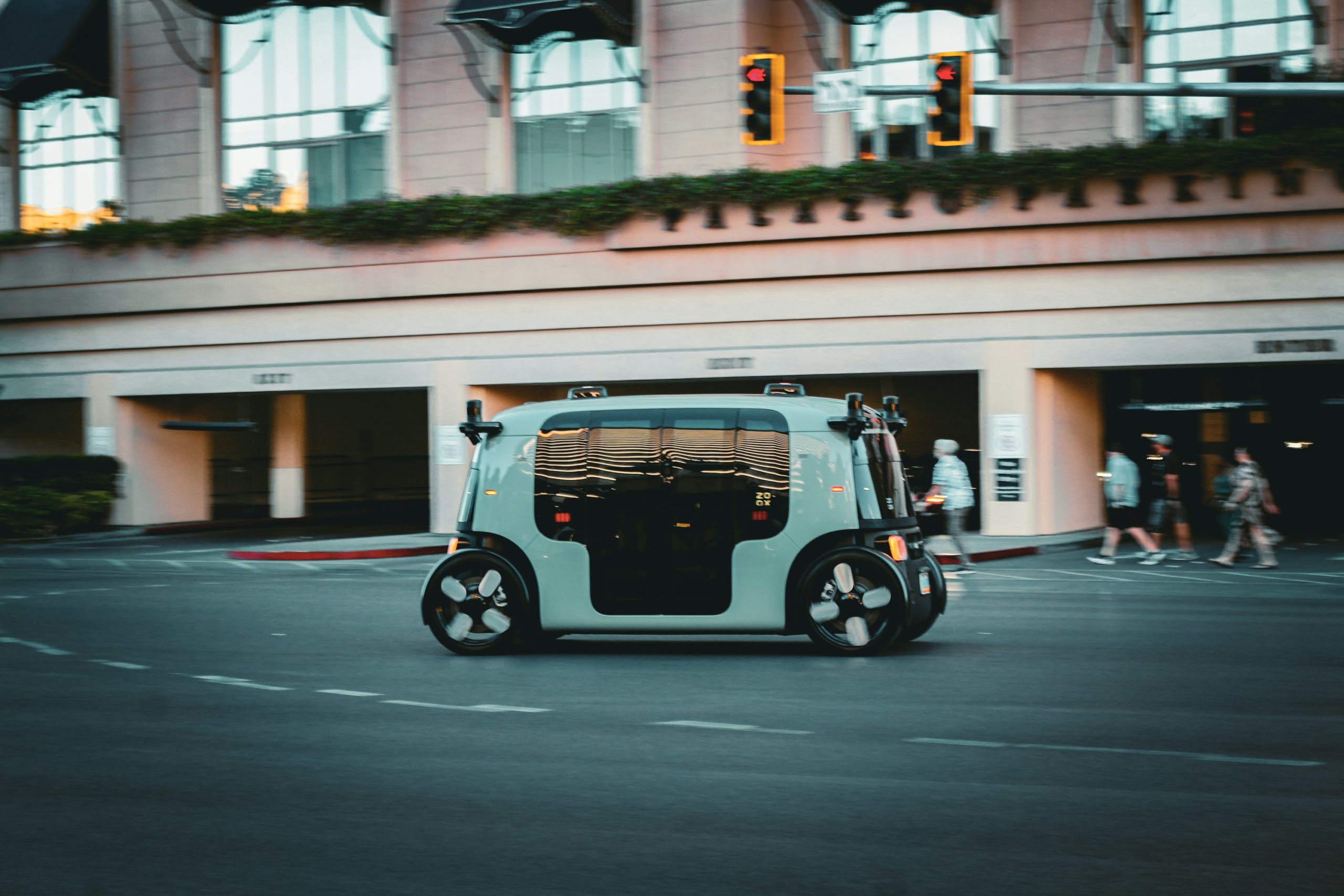
Pony.ai and Uber plan to deploy more than 2,000 robotaxis across five European cities, expanding a partnership that is beginning in Zagreb into a regional autonomous-mobility operation.
The agreement adds four European cities to the Croatian programme, although the companies have not yet named them or published a detailed rollout timetable. The partnership also includes plans for later robotaxi deployment in the Middle East.
The proposed European fleet is built around three functions: Pony.ai supplies Level 4 autonomous-driving technology and operational expertise, Uber provides passenger access through its booking, payment, and customer-service platform, and local fleet partners can handle day-to-day vehicle operations.
Vehicle ownership and financing can vary by market. That gives the companies a structure capable of accommodating local fleet operators rather than requiring Pony.ai or Uber to own every vehicle, an important distinction when the target fleet is measured in thousands rather than dozens.
The arrangement extends a partnership first announced in May 2025. During 2026, Pony.ai and Uber worked with Croatian mobility company Verne on the Zagreb service, giving the model a European starting point before the companies committed to a broader five-city plan.
For Pony.ai, European expansion provides another route to commercialise technology already operating at larger scale in China. The company has developed paid driverless services in several Chinese cities and is increasing the number of vehicles operating with its autonomous-driving system.
European deployment nevertheless requires a separate set of approvals and operating arrangements. Road rules, autonomous-driving regulation, insurance, mapping, licensing, and fleet responsibilities vary by jurisdiction, meaning a system already operating commercially in one country cannot simply be copied into another without local validation.
Road environments vary as well. Lane markings, signs, junction layouts, cyclist behaviour, pedestrian density, weather, and local driving conventions all influence an autonomous system’s operating domain. Scaling across five cities therefore tests whether the underlying technology and fleet processes can be adapted without recreating the entire programme for every location.
The manufacturing requirement grows with fleet size. More than 2,000 robotaxis need repeatable installation and calibration of cameras, LiDAR, radar, computing hardware, wiring, redundant control systems, and communications equipment. Integration that can be handled manually on a handful of prototypes becomes a production-engineering problem at regional scale.
Configuration control becomes equally important. Vehicles operating in different markets may receive different software versions, maps, regulatory settings, or hardware updates, yet the fleet operator has to know precisely which configuration is installed on each vehicle when a fault occurs or a safety update is released.
Maintenance also changes. Autonomous cars still require tyres, brakes, suspension work, cleaning, charging or fuelling, accident repair, and routine inspection, while their sensor suites add calibration and diagnostic tasks absent from conventional fleets.
A driverless vehicle that is technically capable of completing a journey can still be commercially poor if it spends too much time waiting for specialist maintenance. Fleet utilisation, component reliability, cleaning, charging, and repair turnaround consequently become part of autonomous-driving economics.
Uber’s platform addresses another constraint: passenger demand. A robotaxi operator building a service independently has to acquire customers as well as vehicles, whereas integration with an established mobility platform puts autonomous cars inside an existing booking environment containing conventional drivers and passengers.
That hybrid model allows deployment to grow without requiring an entire city to switch operating model at once. Robotaxis can serve areas and periods where they are permitted and available, while human-driven vehicles continue carrying trips outside the autonomous operating domain.
Local fleet partners provide a similar bridge on the physical side. Businesses already accustomed to operating vehicles can provide depots, servicing, cleaning, and local management rather than forcing a technology developer to build those capabilities from scratch in every market.
None of that makes the announced 2,000-vehicle deployment a completed fleet. Pony.ai and Uber have described a plan, and the four European cities beyond Zagreb remain unnamed. Vehicle orders, local partners, approvals, and launch schedules still have to be confirmed market by market.
The scale nevertheless sets a different benchmark from a small autonomous trial. A ten-car pilot can survive with engineers monitoring individual vehicles closely and specialists intervening whenever unusual problems occur. A fleet measured in thousands needs standard operating procedures, spare parts, remote support, diagnostics, and predictable maintenance costs.
Pony.ai has already stated that its wider robotaxi fleet is on a rapid growth trajectory, giving the company a production base from which to support overseas expansion. Europe will provide a tougher test of whether that operating model travels across regulatory boundaries as readily as the software itself.
The next evidence will be the names of the additional cities, confirmed fleet orders, operating permissions, and passenger launches. More than 2,000 vehicles is a meaningful industrial target; it becomes a European robotaxi network only when those vehicles start completing paid journeys.