Germany’s Federal Statistical Office, Destatis has reported a modest increase in industrial production for June, with price-adjusted output rising by 0.2% from May after seasonal and calendar adjustment. The headline figure extends a tentative improvement in German industry, although the sectors beneath it continue to move in markedly different directions.
The less volatile three-month comparison was stronger. Production between April and June was 0.7% higher than in the preceding three months, while May’s month-on-month increase was revised to 0.7% from the previously reported 0.9%. Compared with June 2025, overall production was 0.1% lower after calendar adjustment, leaving the industrial sector broadly flat on an annual basis despite the recent monthly gains.
Automotive manufacturing provided the largest positive contribution in June, with output rising by 3.6% from May. Production of other transport equipment, covering sectors including aircraft, ships, trains, and military vehicles, increased by 8.4%. Machinery and equipment moved in the opposite direction, falling by 3.9% during the month.
That split makes the 0.2% aggregate rise less convincing as evidence of a broad industrial recovery. Transport-equipment production can move sharply around large programmes, model schedules, plant shutdowns, and individual orders, while machinery is more closely exposed to investment cycles across manufacturing. June was therefore a month in which stronger transport output outweighed weakness in an important supplier industry rather than one in which most factories produced more.
Production excluding energy and construction was unchanged from May. Within that measure, consumer-goods output increased by 1.0% and capital-goods production rose by 0.2%, while intermediate-goods output declined. The detail reinforces the uneven picture because intermediate products sit deep within manufacturing supply chains, feeding subsequent production rather than final consumption.
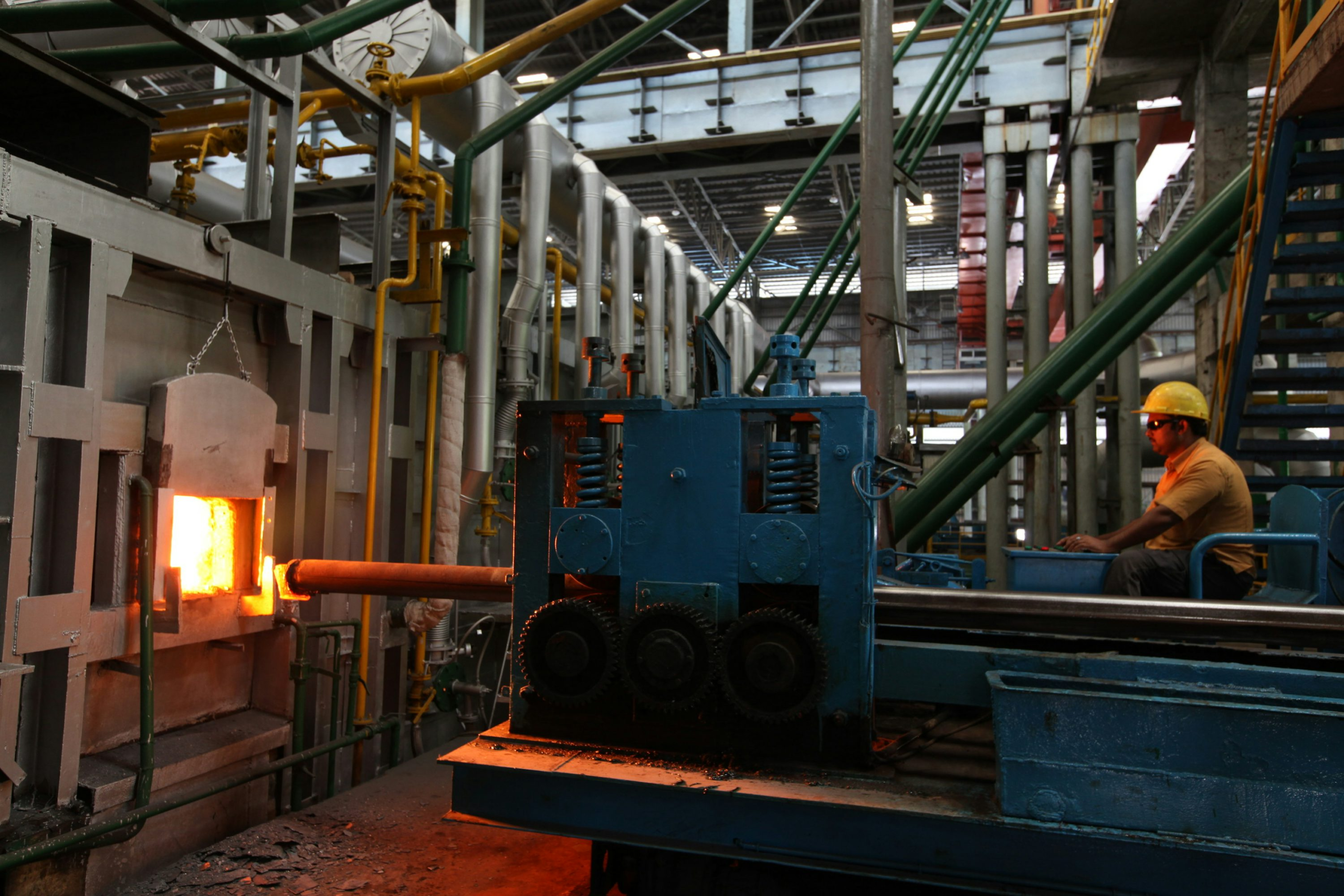
Germany’s energy-intensive industries also weakened during June, with output down on the previous month. These branches include chemicals, basic metals, non-metallic mineral products, paper, and glass, all of which carry a relatively high exposure to electricity, gas, and other energy inputs. Their performance remains an important indicator of whether improvements elsewhere in German industry are reaching businesses with some of the heaviest operating-cost burdens.
The contrast between automotive and machinery is particularly relevant to Germany’s industrial structure. Machinery manufacturers supply capital equipment to factories at home and abroad, so weaker output can reflect caution in investment even when large final-assembly sectors are operating more strongly. Automotive production, meanwhile, can lift the overall index substantially without producing an equivalent improvement across every supplier tier.
Large transport programmes add another source of volatility. Aircraft, rail vehicles, ships, and defence equipment are frequently produced against long contracts in which the timing of individual manufacturing milestones can move monthly statistics sharply. An 8.4% rise in other transport equipment is economically meaningful, but it should not be confused with an equivalent increase across the broader German manufacturing base.
The three-month trend is consequently more useful than any individual monthly figure. A 0.7% increase between April and June suggests that production has recovered some ground, but the year-on-year comparison shows how limited that improvement remains. German industry is producing at roughly the level recorded a year earlier rather than breaking decisively into a new growth phase.
Manufacturers also continue to operate against an awkward cost backdrop. Energy-intensive industries remain sensitive to power and raw-material prices, while capital-equipment producers depend heavily on customers being sufficiently confident to approve new machinery orders. Transport manufacturers can provide useful support, but their project cycles are too concentrated to carry the wider industrial economy indefinitely.
For suppliers, the composition of the index matters as much as its direction. Businesses serving automotive and transport programmes may see improving schedules while machinery and intermediate-material producers face a softer environment. That divergence can also complicate employment, inventory, and investment decisions because a positive national production figure does not necessarily translate into stronger order books at individual plants.
June therefore offers evidence of stabilisation rather than an uncomplicated recovery. German factories produced slightly more overall, and the three-month measure moved higher, but much of the improvement was concentrated in automotive and other transport equipment. Machinery moved backwards, intermediate production remained weak, and total industrial output was still fractionally below its level a year earlier.
The next set of production figures will show whether strength spreads beyond transport manufacturing or remains dependent on a handful of volatile sectors. For now, Germany’s industrial numbers are moving in the right direction at headline level, but the machinery underneath them is still running at noticeably different speeds.