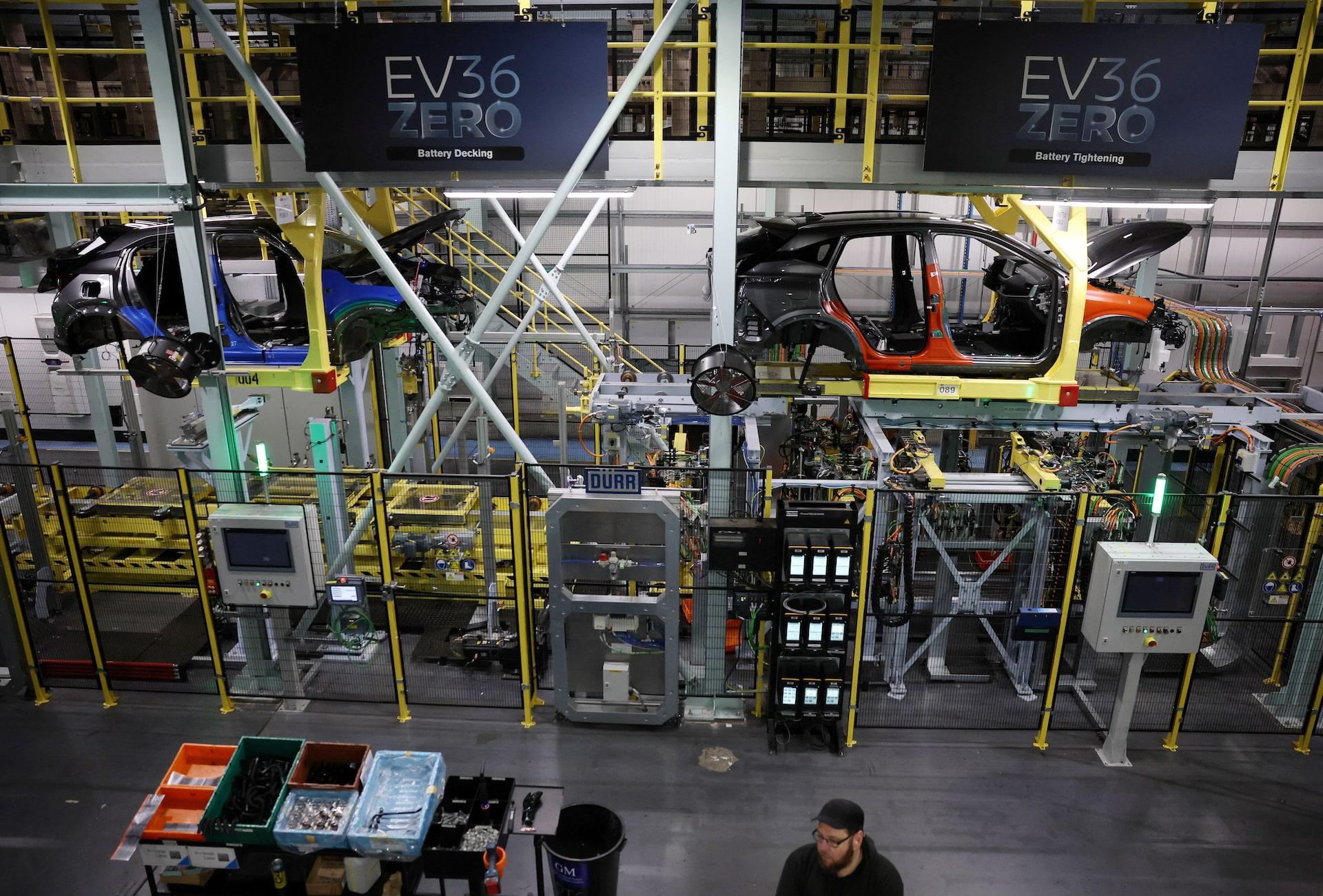
The Society of Motor Manufacturers and Traders has reported a steadier second quarter for UK vehicle production, although total factory output remained 7.5% lower during the first half of 2026.
British plants produced 385,979 cars and commercial vehicles between January and June, compared with 417,218 during the corresponding period of 2025. Most of the decline came from commercial vehicle manufacturing, while car production proved more resilient and second quarter volumes almost matched the previous year.
Combined output during the second quarter was only 128 units below the equivalent three month period in 2025, representing a decline of 0.1%. June production reached 68,200 vehicles, down 1.2% year on year, after a much weaker opening quarter.
Car plants manufactured 371,756 vehicles during the first half, a decline of 3.6%. Commercial vehicle production fell by 54.7% to 14,223 units as model changes, factory restructuring, and weaker demand continued to affect the segment.
Exports accounted for 76.2% of all vehicles produced, with manufacturers shipping 294,222 units overseas during the six month period. Export volume fell by 5.6%, while production for the domestic market declined by 13.2% to 91,757 vehicles.
The European Union strengthened its position as the largest destination for British built cars. Shipments to EU markets increased by 3.4% to 166,801 units and represented 58.3% of all car exports, while deliveries to the United States fell by 4.6% to 45,162 units and exports to China dropped by 44.7% to 12,323 vehicles.
Manufacturing programmes remain closely tied to stable access to European customers, because vehicle specifications, customs procedures, battery sourcing, and logistics networks have been structured around the requirements of the region. Further divergence in technical rules or origin requirements would add cost to programmes already carrying heavy investment commitments.
Electrified vehicles accounted for around four in every ten cars manufactured, although their output fell by 8.6%. Manufacturers are investing in battery electric and hybrid capacity while demand, charging infrastructure, fleet purchasing, and consumer incentives continue to develop at different rates.
Recent investment across vehicle and component plants includes new inverter production, automated paint operations, battery assembly, and production engineering programmes. Those assets require sufficient volume to absorb their fixed costs, and a prolonged gap between regulatory targets and market demand would place pressure on utilisation throughout the supply chain.
Reduced vehicle movements have already affected the specialist logistics businesses serving factories, ports, storage compounds, and dealerships, as examined in the downturn facing UK automotive logistics. Production volatility travels quickly through those networks because sequencing, storage, transport, and export operations are closely linked to plant schedules.
Commercial vehicle manufacturing remains the weakest area. Although smaller than passenger car production, the segment supports specialist bodybuilders, powertrain suppliers, metal fabricators, trailer manufacturers, and engineering companies. Model transitions can create abrupt gaps in output where a limited number of plants and products account for a large share of national volume.
Energy prices continue to shape investment decisions across vehicle production. Paint shops, heat treatment, machining, compressed air, ventilation, robotics, testing, and extensive building services leave factories exposed to industrial electricity and gas costs. Efficiency programmes can reduce consumption, but they cannot fully offset a persistent structural disadvantage against competing production locations.
Labour availability adds another constraint as plants recruit electrical engineers, controls specialists, maintenance technicians, software engineers, and production staff for increasingly automated facilities. New equipment can raise productivity, yet it also increases dependence on people able to diagnose faults, maintain networks, and support complex production systems.
Vehicle manufacturers must also manage product launches with little tolerance for disruption. New models bring revised tooling, supplier parts, software, quality processes, and operator training, while existing vehicles may remain in production during the changeover. Delays at a single component supplier can interrupt an entire assembly sequence.
The current outlook points to approximately 740,000 cars and light commercial vehicles being manufactured during 2026, with growth expected in 2027 as new models enter production. Achieving that recovery will depend on orderly launches, stronger demand, reliable component supply, and policies that support investment over complete vehicle programme cycles.
UK automotive manufacturing generates around £85 billion in annual turnover, contributes approximately £18 billion in gross value added, and supports 188,000 manufacturing jobs. A steadier quarter offers some relief, but output must recover far enough to sustain the factories, suppliers, and technical skills on which future vehicle programmes depend.