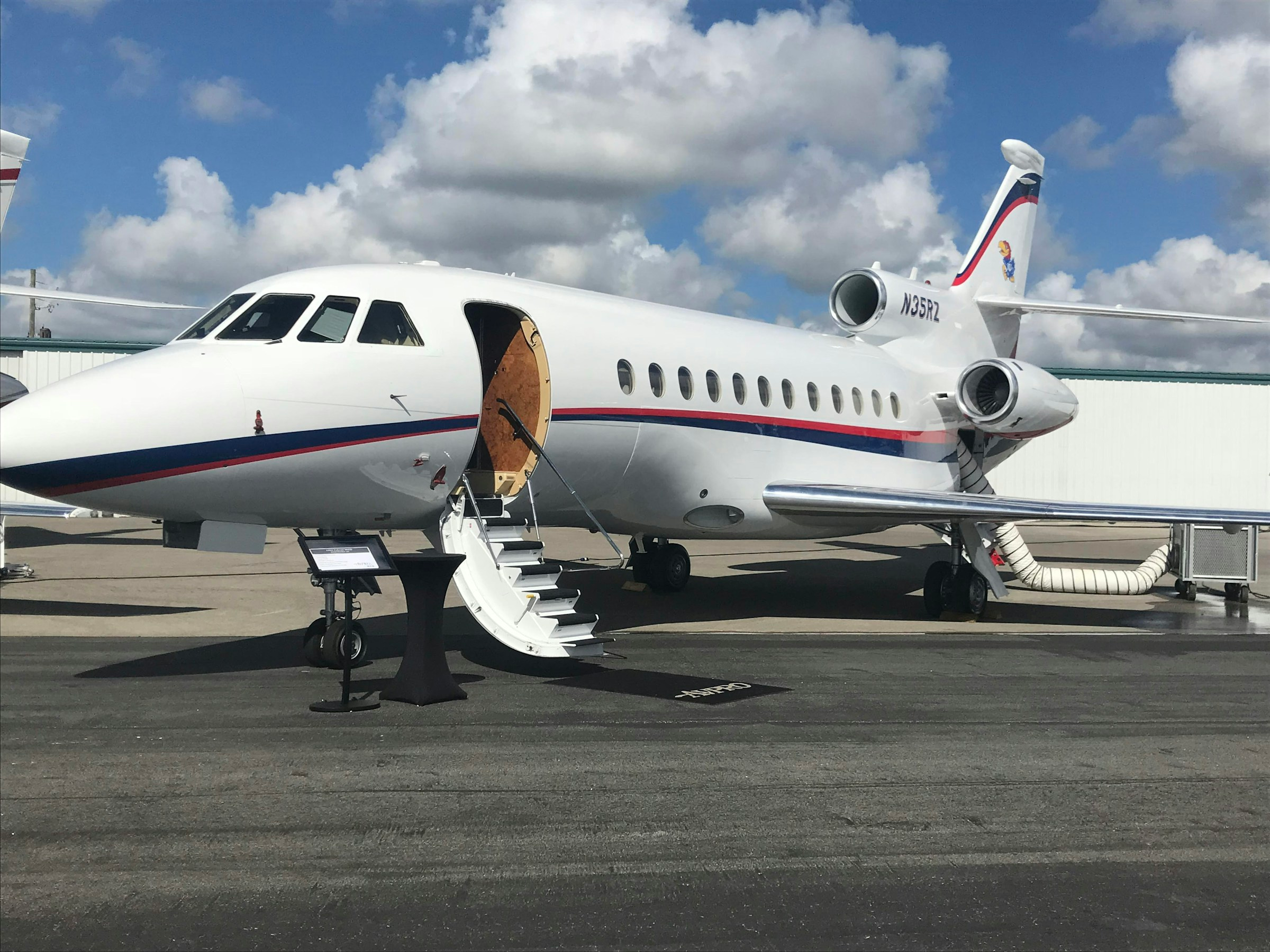
Dassault Aviation has extended the certification timetable for its Falcon 10X business jet as regulators apply more demanding approval requirements to clean-sheet commercial aircraft programmes.
The first Falcon 10X completed its maiden flight on 19 June 2026, beginning a test campaign covering aerodynamic performance, propulsion, handling, avionics, systems integration, and operation across the aircraft’s intended flight envelope.
Dassault had previously worked towards an earlier entry into service, but the programme has moved beyond those expectations. The manufacturer has linked the change to the greater depth of certification evidence required following the Boeing 737 Max accidents and subsequent reform of regulatory oversight.
As an entirely new aircraft rather than a derivative of an existing business jet, the Falcon 10X introduces a composite wing, Rolls-Royce Pearl 10X engines, updated flight controls, a wide cabin, and a planned range of approximately 7,500 nautical miles.
Clean-sheet development gives engineers greater freedom to improve aerodynamic efficiency, systems architecture, structural design, and passenger accommodation. It also restricts the certification credit available from an earlier model, leaving more equipment and operating conditions to be assessed as new or substantially changed.
Additional test aircraft are expected to join the programme as work expands. Separate airframes can be assigned to aerodynamic development, systems testing, cabin validation, reliability, route proving, and certification activity, allowing several workstreams to proceed in parallel.
Flight testing forms only one part of the approval process. Structural test articles, laboratories, simulators, software verification, component rigs, manufacturing records, supplier documentation, and safety assessments contribute to the evidence submitted to regulators.
Those requirements extend throughout the supply chain. Equipment manufacturers must show that components meet specified performance standards, that electronics and software were developed through controlled processes, and that manufacturing variation remains within approved limits.
Certification scrutiny reshapes programme risk
Aircraft approval has always required extensive evidence, although the relationship between manufacturers and regulators has changed markedly. Authorities now place greater emphasis on independent review, assumptions behind system safety assessments, software behaviour, pilot interaction, and the cumulative effect of multiple failures.
Greater scrutiny can expose weaknesses before an aircraft enters service, but it also increases the quantity of engineering and documentation required before approval. Novel systems and tightly integrated digital architectures attract particular attention because changes can affect several functions simultaneously.
Business jets are manufactured in smaller volumes than commercial airliners, yet they use many of the same advanced technologies and must meet comparable safety expectations. Development costs are therefore recovered across a smaller fleet, magnifying the financial effect of schedule changes.
Suppliers may already have purchased tooling, reserved labour, or added capacity against the previous production timetable. When entry into service moves, those companies carry the cost for longer before reaching the expected rate of component deliveries.
Dassault delivered 13 Falcon aircraft and recorded 23 new orders during the first half of 2026, with 83 aircraft remaining in backlog. Existing models provide an active production base while the 10X completes development, although customers at the top of the long-range market are waiting for the new platform.
The aircraft will compete with established ultra-long-range products from Gulfstream and Bombardier. Range, cabin volume, airport performance, reliability, operating cost, and delivery availability will influence the commercial position once the 10X enters service.
A longer test programme gives engineers more opportunity to mature the design and resolve problems before customer operation. The accompanying costs include deferred revenue, later deliveries, and the possibility that buyers unwilling to wait place orders with competitors.
The composite wing represents one of the central manufacturing workstreams. Large composite structures require controlled material storage, lay-up, curing, machining, inspection, drilling, assembly, and repair processes, with production consistency demonstrated alongside structural performance.
Rolls-Royce’s Pearl 10X engine is closely connected to the aircraft schedule. Propulsion testing can proceed independently across many areas, but installation, nacelle behaviour, aircraft systems, performance, and operating limits must be validated on the complete platform.
Software also contributes substantially to the approval burden. Digital flight controls, avionics, health monitoring, communications, cabin systems, and maintenance data are interconnected, meaning that a change within one function may require regression testing elsewhere.
Dassault has extensive experience integrating complex civil and military aircraft, but the 10X is progressing while certification authorities themselves face pressure to recruit and retain specialists in software, propulsion, structures, and human factors.
The first flight moved the programme from design predictions into measured aircraft behaviour, although it did not remove the uncertainty surrounding a new platform with novel structures, engines, systems, and approval requirements.
Development will now be governed by the pace at which flight evidence, ground testing, supplier records, and regulatory review converge. Dassault must preserve the aircraft’s technical ambition while demonstrating that its systems and production methods meet the standard required for commercial service.