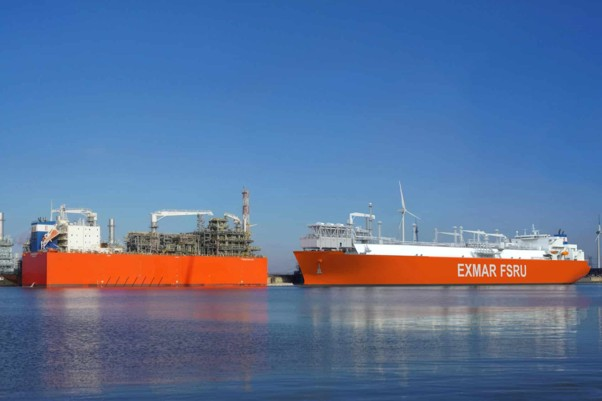
Nord Gas Solutions has secured an order to supply an LNG regasification system module for Exmar as part of the conversion of a floating storage and regasification unit for the EemsEnergyTerminal expansion in Eemshaven, the Netherlands.
The order was booked in the second quarter of 2026 and covers a regasification module that will be installed on the converted FSRU. The unit will support expanded LNG import capacity at the Dutch terminal, which has become part of Europe’s wider energy security infrastructure since the disruption of Russian pipeline gas supplies.
Exmar is a Belgium-based specialist in liquid gas transportation and floating LNG infrastructure. The company has worked with Nord Gas Solutions on earlier projects, mostly involving systems for newbuild vessels. The latest order extends that relationship into another FSRU conversion programme.
Carl-Antoine Saverys, Chief Executive Officer of Exmar, said: “EXMAR and EemsEnergyTerminal continue to work towards an improved LNG import solution for Europe’s energy security, and the Nord Gas Solutions regasification technology will play an important role in this.”
The EemsEnergyTerminal was developed rapidly in 2022 to increase LNG import capability and reduce dependency on Russian natural gas. Its expansion involves the conversion of an LNG carrier into a modern FSRU, which will then support the long-term development of the Eemshaven site. EemsEnergyTerminal is backed by Gasunie and Vopak, two major infrastructure players in European gas storage and terminal operations.
FSRUs can add import capacity faster than many land-based LNG terminals. A converted or purpose-built vessel can receive LNG, store it, regasify it, and send it into the grid through marine and onshore infrastructure. The route can shorten the path to additional capacity, although it still requires complex integration across vessel systems, terminal equipment, process plant, and network connection.
The regasification module is a core part of that system. LNG is stored at cryogenic temperature and has to be converted back into gas under controlled conditions before delivery into the network. The process requires heat exchange, pressure control, safety systems, instrumentation, control logic, and integration with vessel and terminal operations. Reliability is essential because the asset forms part of national and regional gas supply infrastructure.
Pål Steinnes, Head of Sales Midstream at Nord Gas Solutions, said: “Regasification systems represent a core segment for us in which we are market leaders.”
Marine engineering and process engineering increasingly overlap in LNG infrastructure. An FSRU is both a vessel and a process plant, with maritime requirements, class rules, gas handling standards, terminal interfaces, safety zones, environmental constraints, and grid delivery expectations all affecting the design. Suppliers delivering modules onto converted vessels have to work within that combined engineering environment.
European energy infrastructure continues to span older and newer systems. Offshore permits, interconnectors, LNG terminals, hydrogen projects, and refinery upgrades are all part of a larger energy security picture. Equinor’s North Sea drilling permit sits in a different segment, but it reflects the same reality: Europe is balancing security of supply, existing hydrocarbons, new infrastructure, and lower-carbon transition pathways.
LNG’s long-term role remains contested as policy pushes toward electrification, renewables, hydrogen, and lower fossil fuel use. Yet the short and medium-term engineering requirement remains clear. Gas infrastructure has to stay reliable while power systems absorb variable generation, industrial users maintain supply, and countries manage geopolitical risk.
FSRU conversions also create demanding supply chain requirements. Shipyards, gas system suppliers, automation vendors, cryogenic equipment manufacturers, safety specialists, marine engineers, and terminal operators all have to align around tight project schedules. Exmar’s selection of Nord Gas Solutions again suggests conversion experience was a decisive factor.
The Eemshaven project will now move through the practical stages that decide whether additional LNG capacity becomes available as planned: module delivery, installation, integration, commissioning, regulatory approval, and terminal readiness. The award marks a significant equipment step, but LNG infrastructure only earns its value when the full system is safely operating at the required availability.