PP Control & Automation has called for manufacturers to apply artificial intelligence to specific operational constraints rather than treating adoption as a technology race.
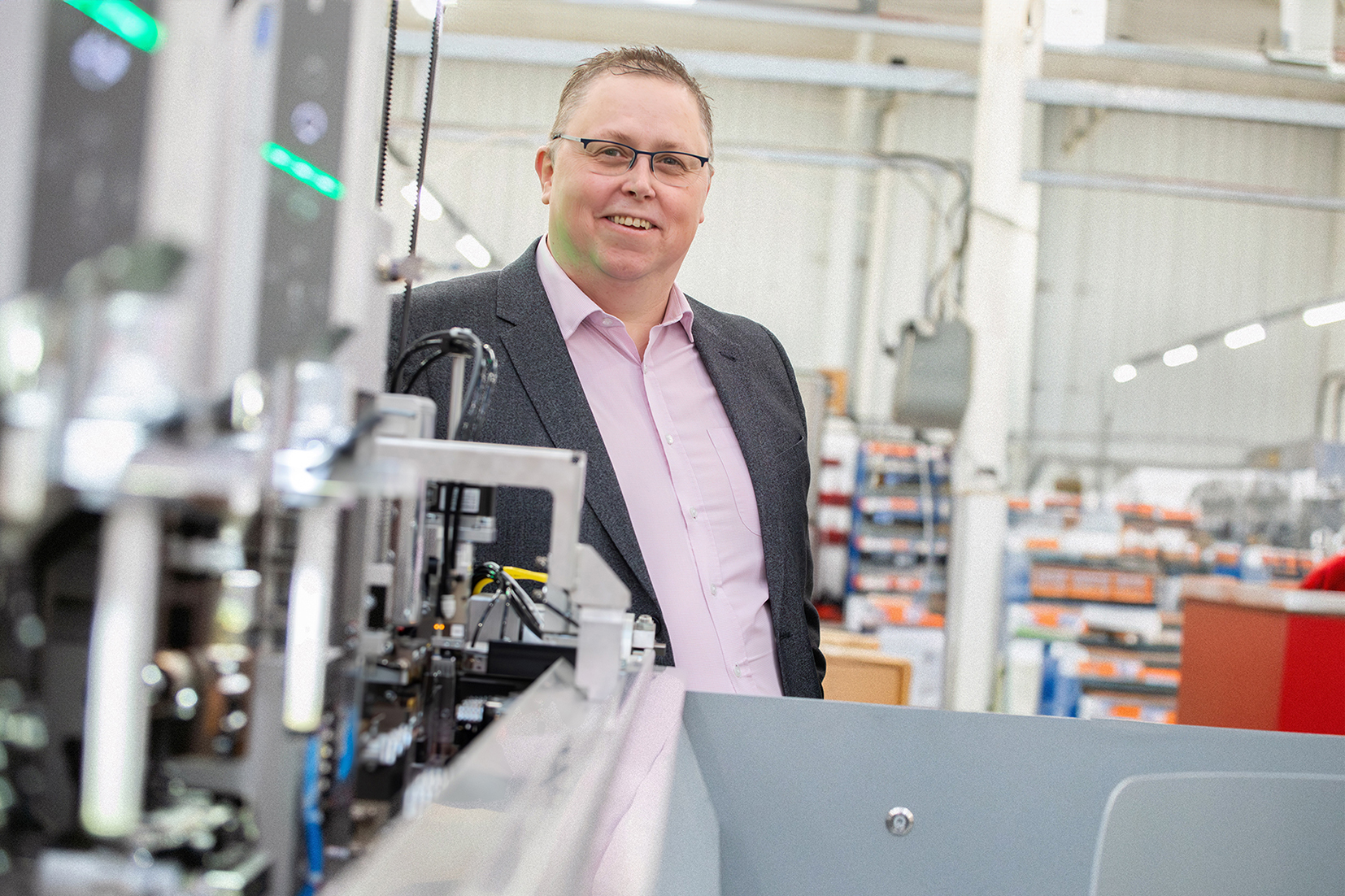
The West Midlands manufacturing outsourcing specialist said companies should begin by identifying where their operations are most constrained, then assess whether AI can remove or reduce that friction. Ian Knight, chief information officer at PP Control & Automation, said the company avoided platform noise and focused first on a time-intensive electrical engineering task: converting unstructured technical documentation into structured, repeatable outputs.
The company’s engineering team targeted technical PDFs, which can often exceed 1,600 pages. These documents can now be processed into structured outputs containing embedded rules, traceability, missing component identification, and mismatch detection. Work that previously required significant manual engineering time can now be processed in hours rather than days.
PP Control & Automation said the approach has produced a 36% recovery in headcount capacity, targeting the 60% of time previously lost to manual parsing and interpretation. The benefit reaches beyond internal efficiency by reducing friction at the early stages of customer engagement and accelerating the movement from enquiry to executable work.
The company employs more than 200 people at its West Midlands facility and works as a strategic outsourcing partner for machine builders and OEMs. Its manufacturing activity includes module and assembly-based production, part and full machine build, electrical control and automation, electronics assembly, mechanical assembly, cable harnesses, and associated systems.
The AI work is being developed in phases. The first stage focused on data extraction, while later stages are intended to enhance structured data, validate outputs, and integrate the results into business systems. Each phase builds the foundation for the next, moving from extraction to decision support and eventually execution.
That direction aligns with a wider shift in industrial AI. AI-supported automation engineering workflows are extending into defined engineering tasks where data, rules, validation, and system integration can be controlled. The useful applications are often narrower, more technical, and more measurable than broad claims about AI transformation suggest.
Manufacturing AI often struggles when it is detached from daily operational constraints. A production company may demonstrate a model, chatbot, or analytics dashboard, but that does not automatically improve throughput, reduce engineering time, cut scrap, or shorten quotation cycles. The strongest use cases begin with delays, rework, interpretation burdens, or decision overload that already carry a measurable cost.
Technical documentation is a strong example because it contains information engineers need, often in forms that are difficult to reuse. Drawings, specifications, bills of materials, wiring information, component references, supplier documents, manuals, and customer data can arrive in inconsistent formats. Extracting structure from that material can consume skilled time before production work has even begun.
Machine builders and outsourcing partners are particularly exposed to that early-stage friction. A slow transition from enquiry to executable work delays costing, design review, procurement, production planning, and customer response. If AI can shorten that stage while preserving traceability and identifying mismatches, it improves both capacity and responsiveness.
Traceability remains critical. Manufacturers cannot rely on AI outputs that are difficult to verify, particularly where customer requirements, safety, electrical design, and component selection are involved. A useful system has to show where information came from, how it was interpreted, and where human review is required. Automated speed without engineering assurance would simply move risk downstream.
Many manufacturers recognise the potential of AI, robotics, digital twins, and data integration, but still struggle to move from experimentation into measurable operational gain. PP Control & Automation’s approach suggests a more disciplined route: define the bottleneck, establish a baseline, automate the repeatable burden, validate the output, and then connect the system into business processes.
AI adoption does not need to begin with an enterprise-wide transformation programme. In manufacturing, it can begin with a well-defined constraint, a repeatable process, and a clear measure of recovered capacity. That may prove more valuable than adopting the newest platform before the production problem has been properly understood.