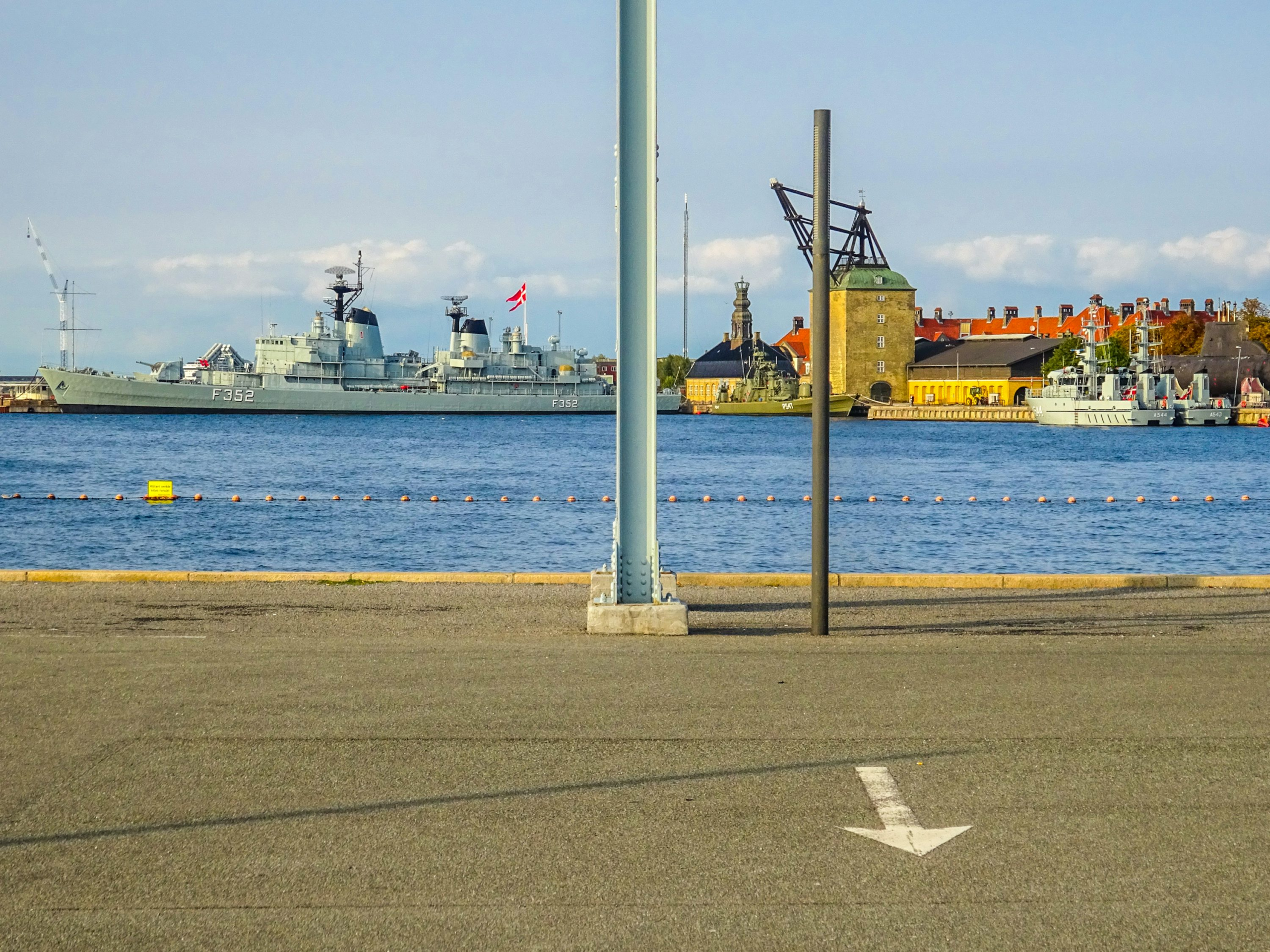
QinetiQ is bringing additive manufacturing capability to HM Naval Base Clyde, giving Royal Navy submarine maintenance teams a new dockside route for producing and reverse engineering selected parts on demand.
The facility is being delivered through two contracts with the Submarine Delivery Group’s Additive Manufacturing team. The Additive Manufacturing All In One system and its Market Access Cell will support production of selected submarine components at the point of need, with QinetiQ and Royal Navy submariners working from deployable workshops at Faslane.
The arrangement is designed to reduce the time submarines spend alongside during maintenance and repair periods. Simpler components may be manufactured onsite, while more complex parts can be reverse engineered by QinetiQ and produced through an accredited network of UK additive and advanced manufacturing SMEs. That network is expected to draw on suppliers from high-performance sectors including Formula 1, where short lead times, complex geometries, and tight material control are routine demands.
The Clyde deployment follows recent work during HMS Anson’s maintenance period in Australia, where QinetiQ used additive manufacturing to deliver replacement parts in four weeks. The same approach has already been applied to distributed submarine support under AUKUS, where secure transfer of technical data, local production, inspection, and approval all have to work together under naval constraints.
Submarine maintenance is a demanding application for additive manufacturing because availability cannot come at the expense of assurance. Parts must meet strict requirements for material performance, dimensional accuracy, configuration control, safety, and traceability. A component produced quickly is only useful if it can be approved confidently and installed within the platform’s technical authority framework.
The Clyde facility therefore combines manufacturing technology with maintenance governance. Additive manufacturing can shorten the route between engineering need and physical part, but the surrounding system carries equal weight. Scanning, reverse engineering, design validation, material selection, process qualification, inspection, documentation, and approval determine whether the technology becomes a repeatable support capability rather than an emergency workaround.
The Royal Navy’s submarine availability depends on specialist dockyard capacity, trained personnel, controlled facilities, long-lead components, and tightly managed maintenance schedules. Delays in one part of that chain can affect readiness, patrol planning, and the wider support workload across the fleet. Point-of-need manufacturing gives maintainers another route around low-volume supply constraints, particularly where conventional procurement would otherwise be slowed by transport, batch production, obsolete tooling, or supplier capacity.
Additive manufacturing is not a universal replacement for conventional supply. It is better suited to selected parts where design data, material performance, qualification rules, and production economics align. Brackets, housings, ducting elements, tooling, fixtures, and certain replacement components may be suitable, while safety-critical parts with complex loading, fatigue exposure, or severe environmental requirements will need deeper qualification before routine use.
The wider benefit is a more flexible maintenance architecture. A deployable workshop at Clyde gives submariners and engineers a local problem-solving capability, while the Market Access Cell creates a route into external manufacturing expertise. That combination avoids treating additive manufacturing as either a closed military workshop or an unmanaged open supplier model. It creates a controlled bridge between dockside need and specialist production capacity.
The approach also strengthens the UK advanced manufacturing base. SMEs that can meet defence quality, security, and traceability requirements gain a route into complex support programmes where responsiveness and technical discipline are both valued. If the system scales, it could support broader maintenance applications across maritime, land, air, and infrastructure assets where part obsolescence and long lead times remain costly.
At Clyde, additive manufacturing is being pulled into a practical defence role: reducing maintenance friction on platforms where time alongside is expensive and operational availability matters. The next test is repeatability, with standards, data controls, and supplier oversight strong enough to make rapid manufacturing dependable rather than exceptional.