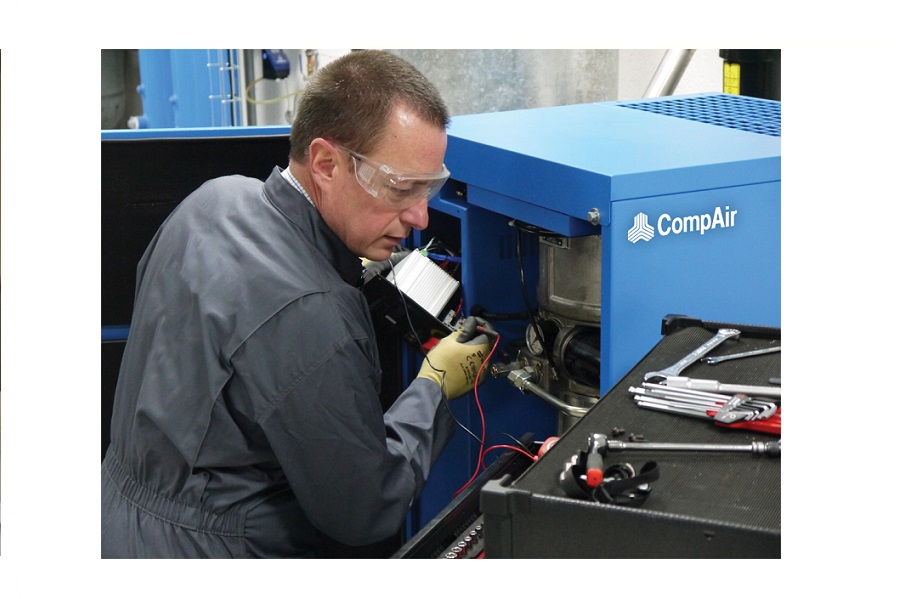
CompAir has launched Energy Check, a compressed air assessment service designed to help industrial operators identify inefficiencies, reduce energy waste, and improve system reliability.
The service assesses compressed air networks and provides recommendations to lower operating costs, improve reliability, and support sustainability targets. CompAir is treating compressed air as a managed energy system rather than a background utility that receives attention only when a compressor fails or reaches replacement age.
Compressed air is used across manufacturing, processing, packaging, automotive, food and beverage, chemicals, pharmaceutical production, and general engineering. It powers tools, valves, actuators, conveyors, packaging equipment, cleaning systems, and process equipment. Because it is so familiar, waste can remain hidden for years.
Leaks, excessive pressure, poor control strategy, inappropriate compressor sizing, and poorly maintained downstream equipment can all increase energy consumption without improving production. CompAir says manufacturers can typically identify meaningful savings by reviewing system demand, pressure settings, leakage, equipment selection, and maintenance practice.
Energy Check is intended to turn that analysis into a structured action plan. A site may not need additional compressor capacity if the real problem is wasted demand, unstable pressure, poor storage, or uncontrolled leakage. Without measurement, plants often pay for more installed power instead of correcting the conditions that drive unnecessary load.
High electricity prices are changing how factories view utility systems. Make UK and the TUC have warned that energy costs are weakening the UK manufacturing base, with some companies delaying investment or considering moving activity out of the country. Against that background, compressed air efficiency has moved from maintenance housekeeping to a direct operating cost issue.
Compressed air should also be treated as production infrastructure. If pressure is unstable, production can stop. If air quality is poor, pneumatic equipment, instrumentation, and product quality can suffer. If leakage is high, compressors run harder than necessary. A system that appears to be functioning can still be eroding margin every hour it operates.
The service fits within a wider shift towards plant level energy management. Factories are being pushed to understand where electricity is used, how demand varies by shift, which systems create fixed load, and where control improvements can reduce consumption. Pumps, fans, compressors, chillers, and blowers are increasingly being examined with the same discipline once reserved for headline production assets.
Compressed air is well suited to this approach because inefficiency is often measurable. Leakage surveys, pressure reviews, data logging, and compressor control assessments can turn hidden losses into quantified costs. That gives engineering teams a stronger case for pipework repair, storage changes, dryer upgrades, variable speed drive equipment, or changes to operating practice.
Reliability benefits can be just as valuable as energy savings. A compressed air network operating close to its limits may appear cheaper to leave untouched until a failure occurs, but unstable air supply can affect production quality and uptime. Maintenance teams then manage symptoms rather than the underlying system.
Energy Check gives industrial operators a practical starting point for reducing avoidable consumption. Efficiency gains in compressed air are rarely dramatic in appearance, but they can be accessible, measurable, and repeatable. At a time when every kilowatt-hour is being weighed against margin, competitiveness, and investment capacity, compressed air is too expensive to remain invisible.