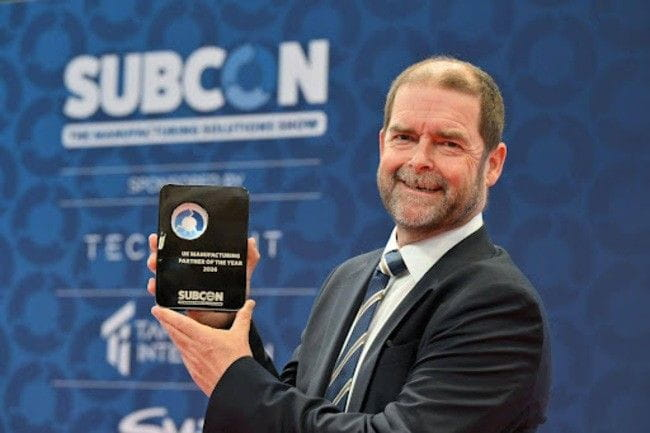
LTi Metaltech has been named UK Manufacturing Partner of the Year at the Manufacturing Solutions Show Awards, recognising a period of growth, investment, and strategic contract success for the Oxfordshire engineering specialist.
The award was presented at Subcon, the subcontract manufacturing supply chain show, and follows a significant period for the company. LTi Metaltech has recently secured a contract worth more than £45 million from Sellafield to manufacture and supply specialist products for the Product and Residue Store Retreatment Plant, a project connected to the safe storage and long-term management of nuclear material.
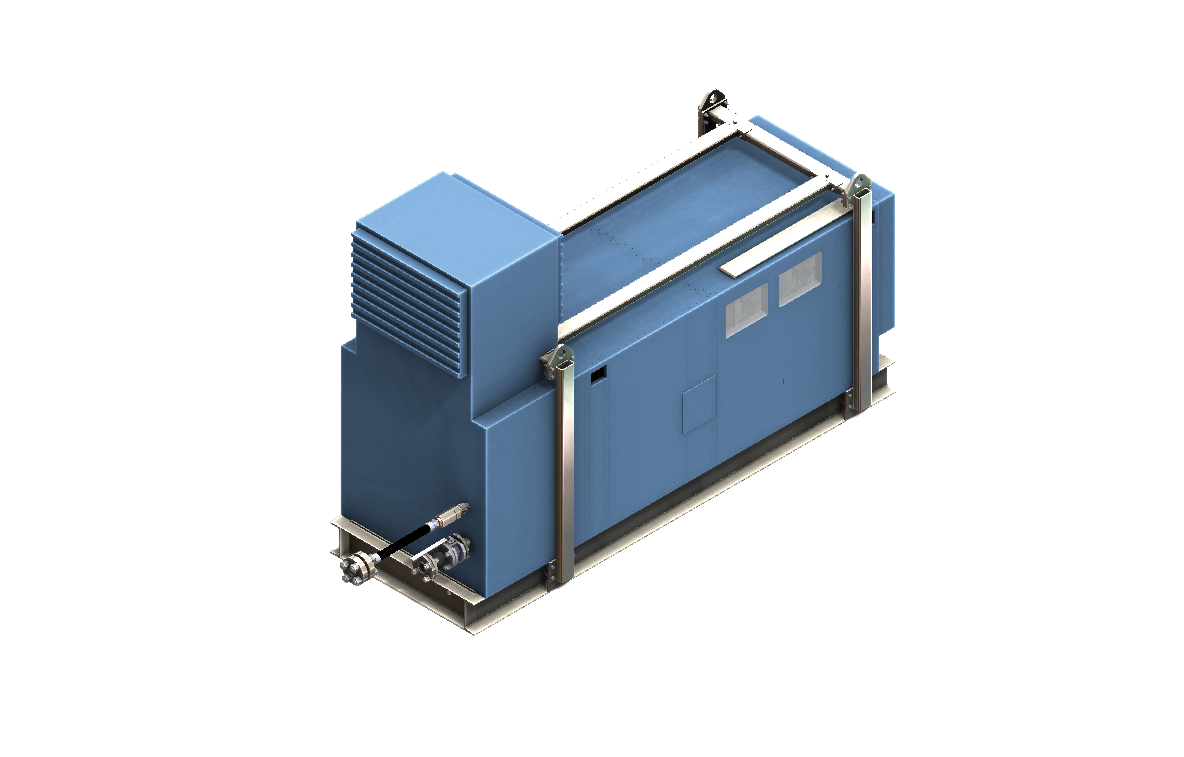
The company’s work spans high integrity fabrication and pressure vessel manufacturing, placing it in a part of the industrial base where engineering judgement, welding capability, materials knowledge, inspection discipline, and documentation quality are central to customer confidence. These are not commodity activities. Customers in nuclear, energy, and process industries depend on suppliers that can manage risk across design support, production, traceability, and delivery.
Recognition for LTi Metaltech also highlights the role of specialist manufacturers that sit below the most visible project owners. Large infrastructure, nuclear, energy, and process engineering programmes depend on networks of companies able to manufacture qualified components under demanding conditions. Without that layer of capability, strategic projects remain exposed to lead times, overseas sourcing risk, and shortages of approved suppliers.
The Sellafield contract gives the award a substantial industrial backdrop. Nuclear supply work carries strict requirements around technical assurance, material control, welding procedures, inspection records, non-destructive testing, operator qualifications, and long-term reliability. Suppliers have to manage not only the fabrication process, but the evidence trail that supports the finished product.
The wider UK metals and fabrication sector is operating under difficult conditions. Energy costs, skills shortages, trade policy, materials availability, and carbon reporting are all shaping investment decisions. The UK Metals Council’s current sector work is gathering evidence on tariffs, energy costs, CBAM, skills, apprenticeships, and trading conditions, underlining how many pressures now converge on the metalworking supply base.
Growth by a specialist manufacturer carries more weight in that environment. Companies such as LTi Metaltech help determine whether the UK can retain production capability around sensitive and technically demanding sectors. The Sellafield contract shows that domestic suppliers can still win high value packages when capability, assurance, and project fit are strong enough.
The nuclear link is also aligned with renewed interest in advanced reactor technology. Collaboration involving UKNNL, JAEA, and Rolls-Royce on high-temperature gas-cooled reactors and coated particle fuel reflects the same underlying requirement from another part of the sector: national nuclear ambitions need manufacturers with deep process discipline, not only developers with reactor concepts.
Subcontractors often struggle for visibility in industrial strategy debates, yet they are the companies that cut, form, weld, machine, inspect, certify, and deliver the hardware behind critical projects. Those businesses need stable pipelines, skilled labour, modern equipment, and customers willing to value assurance rather than only price.
LTi Metaltech’s award therefore reflects more than a commercial milestone. It points to the importance of suppliers able to deliver complex, documented, and safety critical manufacturing work in the UK. Keeping that capability in place will depend on whether companies can continue to invest, train, and scale without being squeezed by energy costs, fragmented demand, or short-term procurement behaviour.