Optimax has expanded its range of advanced non-contact metrology solutions for Geometric Dimensioning and Tolerancing inspection, targeting manufacturers working with tighter tolerances and more complex quality requirements.
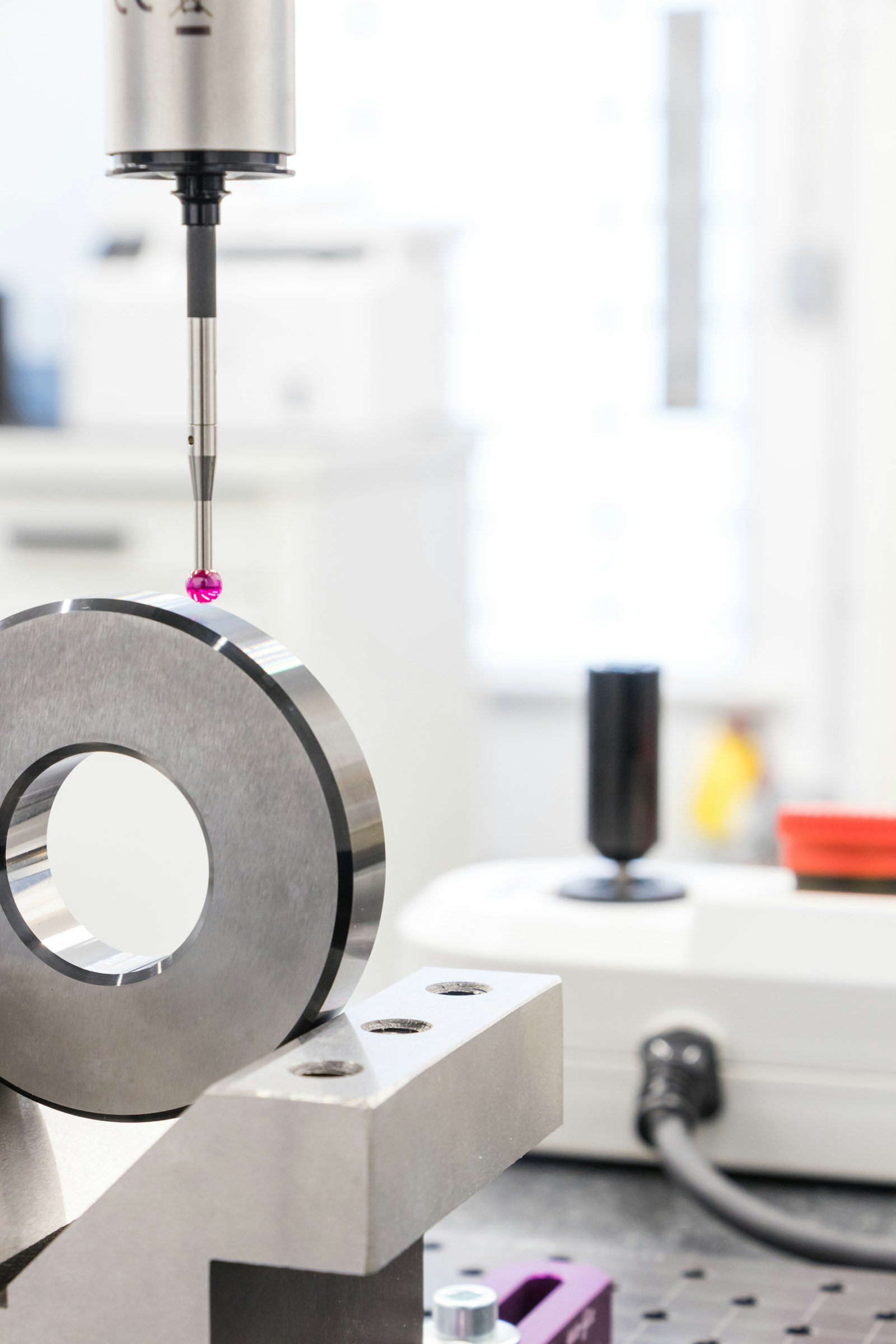
The expanded range is aimed at sectors including aerospace, automotive, medical devices, and advanced manufacturing, where dimensional accuracy, surface condition, and documentation can affect product performance, customer approval, and regulatory compliance. Non-contact metrology allows engineers to inspect parts without physically touching sensitive surfaces, deformable features, or complex geometries that are difficult to measure consistently with conventional tools.
GD&T has become more important as manufacturers control functional relationships between features rather than rely only on simple linear dimensions. Modern components may include complex curves, thin walls, precision bores, freeform surfaces, coatings, and small features that are difficult to capture reliably. Inspection systems increasingly need to support measurement accuracy and repeatable data generation.
Optimax’s expanded range belongs to a wider movement towards digital quality control. Manufacturers are under pressure to reduce inspection bottlenecks while increasing evidence. Manual inspection can be slow, operator dependent, and difficult to scale when production becomes more complex. Non-contact measurement systems can help by generating digital records, capturing richer surface information, and reducing the need to handle every feature through manual gauges.
Medical device manufacturing shows the pressure clearly. Orthopaedic implants, surgical instruments, and precision device components require reliable inspection evidence, while their surfaces and geometries can challenge traditional contact methods. Automated medical machining can raise output, but metrology has to keep pace or quality assurance becomes the limiting stage.
Aerospace production faces a similar constraint. Larger tooling packages, automated machining, composite structures, and tighter schedules can increase throughput before inspection capacity has been upgraded. Automated dimensional measurement is increasingly being used to remove quality control bottlenecks, particularly where high value parts require detailed evidence before they can move through production.
Non-contact metrology also supports earlier engineering decisions. Design and manufacturing teams need measurement data during process development, not only at final inspection. Prototype parts, first-off components, tooling trials, and process changes can all benefit from fast measurement feedback that helps identify whether variation is coming from machine setup, fixturing, material behaviour, tool wear, thermal drift, or design assumptions.
That makes metrology part of the engineering loop rather than a policing function at the end of production. Digital measurement data can feed process capability studies, customer reports, corrective action work, and design for manufacture discussions. It can also support traceability where regulated products or safety critical components require documented evidence over long lifecycles.
No single inspection technology solves every measurement problem. Contact CMMs, optical systems, digital microscopes, structured light, laser scanning, surface metrology, and specialist gauges each have strengths. Practical value comes from matching inspection method to part geometry, tolerance, material, surface finish, production volume, and data requirement.
As tolerance expectations tighten, investment in non-contact metrology becomes less about buying equipment and more about protecting production flow. The best inspection systems reduce handling risk, improve repeatability, speed up data capture, and provide records that support process improvement. Without that capability, quality control remains the slowest and least digitised part of the production system.