United Kingdom National Nuclear Laboratory has welcomed two Memorandums of Cooperation with the Japan Atomic Energy Agency and Rolls-Royce covering advanced reactor and fuel technology.
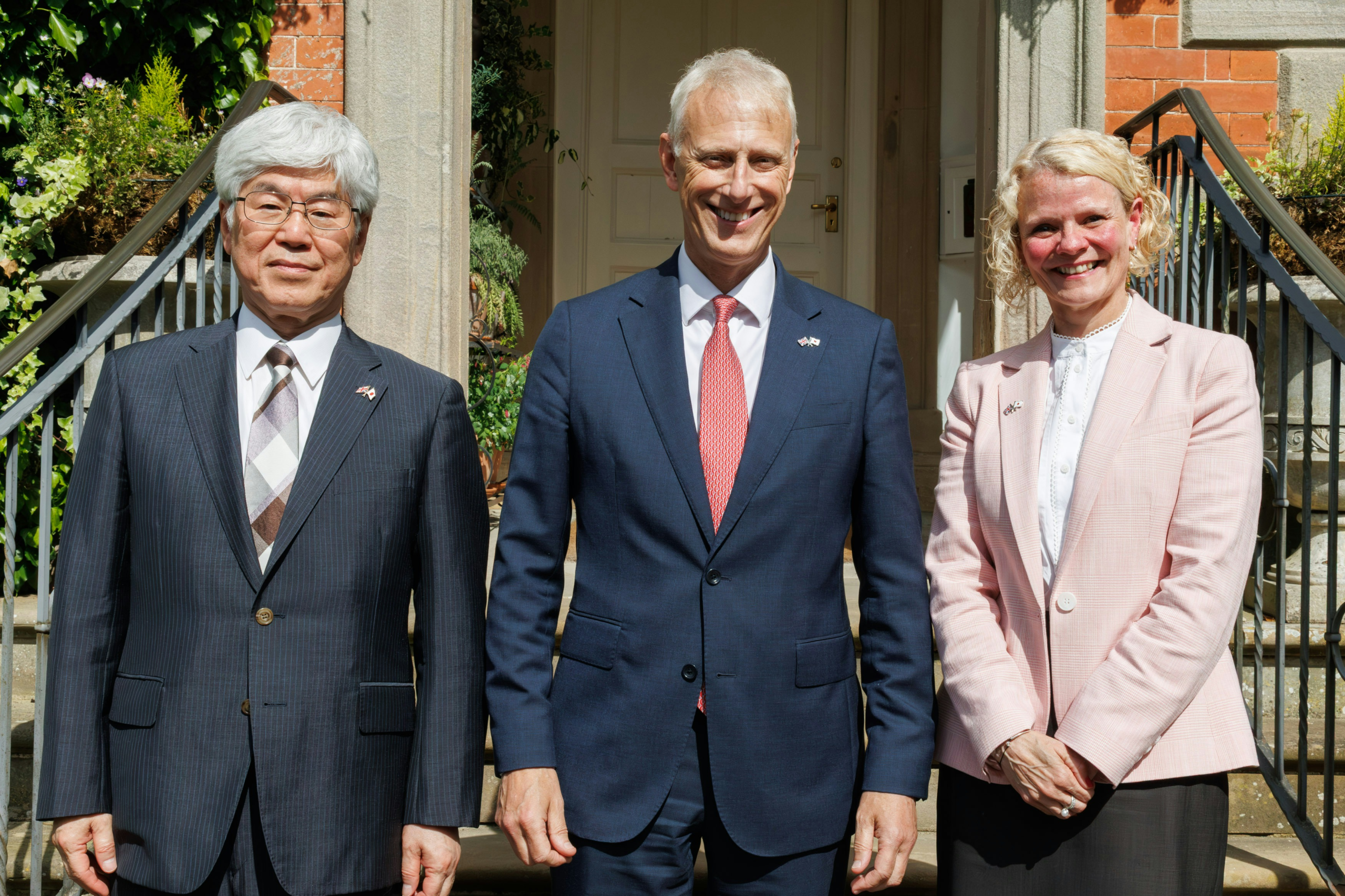
The agreements were signed at 10 Downing Street on 14 June during a visit by Japanese Prime Minister Sanae Takaichi. They mark the first example of UKNNL delivering on the role set out for the laboratory under the government’s Advanced Nuclear Framework.
The collaboration brings together UK and Japanese expertise in Advanced Modular Reactor technology, specifically High-Temperature Gas-Cooled Reactors, and the Coated Particle Fuel required for those reactors. Rolls-Royce has contracted UKNNL to support the development and demonstration of its AMR in the UK, creating the basis for the trilateral work with JAEA.
The Advanced Nuclear Framework, published by the Department for Energy Security and Net Zero in February, gives developers a route to approach UKNNL about using its capabilities to support technology development, validation, and deployment. The framework is intended to help private industry access national laboratory expertise as the UK seeks to move advanced nuclear technologies towards deployment.
Julianne Antrobus, CEO of UKNNL, said the agreements strengthen UKNNL’s partnership with Rolls-Royce and JAEA, and said advanced nuclear technologies could deliver clean, safe, and reliable energy while supporting industrial decarbonisation and economic growth.
She added: “The UK government’s Advanced Nuclear Framework exists to give industry a clear route to access the world-class expertise that UKNNL offers. Being contracted by Rolls-Royce to support this vital work is a strong signal that the framework is delivering and that UKNNL is playing its part in bringing the sector together.”
High-temperature gas-cooled reactors are being pursued partly because they can deliver high-quality heat as well as electricity. That gives them potential use beyond grid power, particularly in industrial sectors where electrification is difficult, heat demand is high, and carbon reduction options are limited.
HTGR technology also uses passive safety features and advanced fuel forms. Coated Particle Fuel consists of small fuel kernels protected by layers of ceramic and carbon coating. UKNNL said three poppy seed-sized kernels can produce the same energy as burning 1kg of coal, with the coating structure designed to provide robust containment.
UKNNL’s Preston laboratory houses the UK’s only facility for manufacturing CPF kernels and has recently received new coating equipment. The laboratory said this marks the first time in a generation that the UK will produce coated particle fuel at scale.
The collaboration builds on a long-standing UKNNL-JAEA relationship first established in 2001. Japan has maintained significant HTGR expertise through JAEA’s High Temperature Engineering Test Reactor, while the UK has its own advanced nuclear heritage through the Dragon Reactor, which operated from 1965 to 1975.
Lord Vallance, Minister for Science, Innovation, Research and Nuclear, said: “We are bringing together crucial expertise through our Advanced Nuclear Framework to deliver a golden age of nuclear and boost our energy security. These agreements build on Britain and Japan’s proud legacies of leading innovation in nuclear technologies.”
Chris Cholerton, Group President, Rolls-Royce, said: “Our two agreements with UKNNL and JAEA are a milestone moment for the UK’s nuclear sector. Strengthening existing relationships between our nations and combining our broad nuclear capability, they will enable us to jointly address technical challenges and accelerate the development of Advanced Modular Reactors and their advanced coated particle fuel, to deliver industrial growth, skilled jobs and energy security for our nations.”
Masanori Koguchi, JAEA President, said: “It is my great pleasure to strengthen our collaboration with the UK, working with our long-term partner UKNNL, and Rolls-Royce, under this Memorandum of Cooperation. I hope that through our expertise in HTGR technologies, this collaboration will lead to their early deployment, a significant step towards net zero.”
The agreements sit in the difficult space between nuclear research and deployment. Advanced reactors depend on more than reactor physics. They require fuel manufacturing, test capability, materials science, regulatory confidence, supply-chain readiness, construction planning, and customers that can use heat or power at industrial scale.
UKNNL’s role is therefore more than advisory. National laboratory capability can help developers validate technologies before they reach licensing and commercial demonstration. In nuclear, where safety case, fuel qualification, and regulatory evidence shape programme timelines, access to established expertise is a practical industrial advantage.
The collaboration also connects with wider UK-Japan industrial cooperation around technology, energy, and security. As with future combat air development, advanced nuclear work shows how bilateral partnerships are increasingly built around critical technologies rather than simple trade flows. Nuclear fuel, reactor design, materials, manufacturing, and energy security now sit inside a broader strategic industrial agenda.
Progress will be measured by how quickly advanced nuclear programmes move from agreements into equipment, facilities, components, fuel production, and demonstration assets. The MoCs create a stronger collaboration framework; the next challenge is turning laboratory capability into deployable nuclear technology and a qualified domestic supply chain.