Hewland Engineering will use this year’s Farnborough International Airshow to present its aerospace transmission, drivetrain, testing, and make-to-print manufacturing capability.
The specialist transmission and gear manufacturer will exhibit on the Midlands Aerospace Alliance stand, where it will highlight work across aerospace transmission design, validation, gearbox development, and complex component production. The company is taking engineering experience built in high-performance motorsport into conventional aerospace, electric propulsion, hybrid platforms, and defence-related applications.
Recent work has included eVTOL transmission programmes and make-to-print projects for UK Tier 1 aerospace businesses. Hewland has adapted its transmission engineering background to aerospace-grade design processes, safety factors, qualification methods, and structured validation, where performance has to be matched by traceability and long-life reliability.
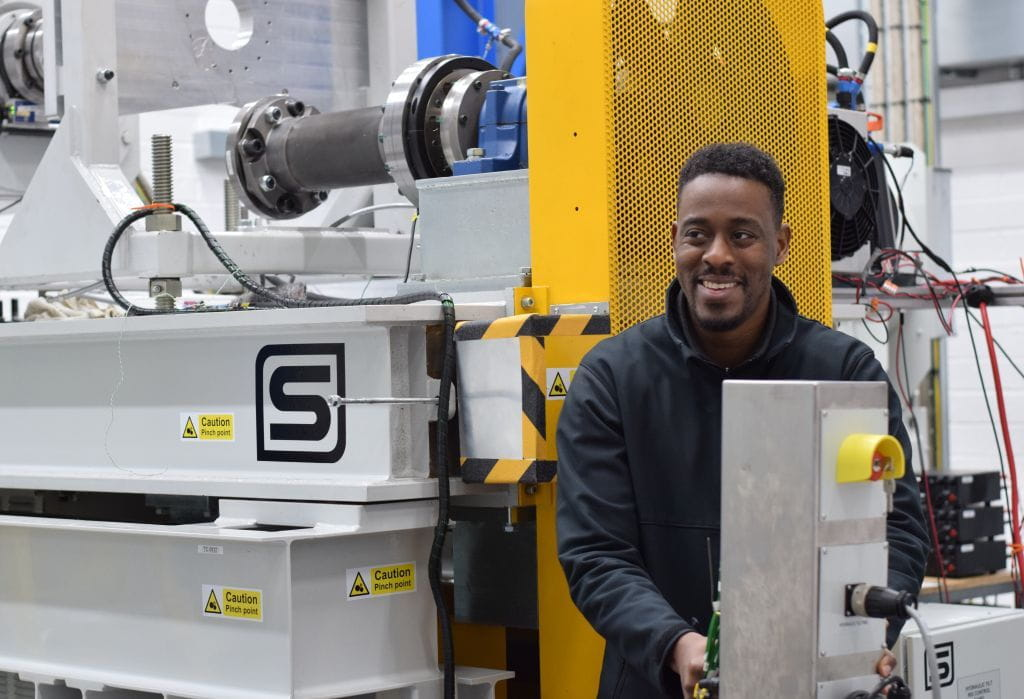
The company has also completed a £1.5 million investment in a test and validation centre at Southam, Warwickshire. The facility supports development programmes that combine design, analysis, validation, and physical testing, giving customers a route to reduce programme risk before hardware reaches production or flight-critical qualification stages.
Hewland operates under AS/EN9100 accreditation and provides gearbox and transmission design services, bevel gear manufacturing, analysis, testing, and manufacturing support. Its UK capability includes a commissioned 2E and 3E tilt-rig test facility, which expands the company’s offer for aerospace manufacturers seeking drivetrain validation capacity.
Aerospace supply chains are being asked to support established aircraft programmes while preparing for new architectures in propulsion, autonomy, and advanced air mobility. Conventional aircraft, hybrid-electric demonstrators, eVTOL platforms, uncrewed systems, and defence equipment all place different demands on drivetrain systems, but each depends on weight control, reliability, manufacturability, and evidence-led qualification.
Motorsport-derived engineering can translate well where rapid iteration, lightweighting, precision machining, and mechanical efficiency are central to the brief. Aerospace adds a harder layer of discipline. Components must satisfy fatigue life, environmental performance, materials assurance, process documentation, configuration control, and certification expectations. Hewland’s investment in test and validation capacity is therefore as important as the transmission hardware itself.
Transmission systems are becoming more visible as new propulsion architectures mature. Electric and hybrid-electric aircraft can alter speed ranges, duty cycles, thermal loads, vibration behaviour, packaging constraints, and redundancy requirements. Distributed propulsion adds further integration questions, with gearboxes and drivetrains needing to work as part of compact, efficient, and fault-tolerant systems.
The UK has been building a broader base of specialist aerospace manufacturing around reshoring, materials, testing, and platform-specific capability. Aircraft production activity at Bembridge, where Islander manufacturing has been brought back into a UK production line, and new qualified alloy powder activity for space propulsion components, both point to a supply chain seeking value in precision rather than volume alone.
Make-to-print capability remains a central part of that picture. Many aerospace manufacturers need additional capacity without relaxing quality, traceability, or delivery expectations. A supplier able to combine component manufacture with design understanding and validation support can reduce programme friction, particularly where components require tight tolerances, specialist gear knowledge, or short development loops.
Farnborough gives Hewland access to a market where supply-chain credibility matters as much as product range. Civil aircraft demand remains strong, defence programmes are expanding across Europe, and advanced air mobility companies are still trying to separate plausible engineering partners from prototype-era suppliers. A company that can demonstrate design, manufacturing, and test capability inside one UK operation is better placed to compete for production-grade work.
The next stage for Hewland will be converting aerospace interest into repeatable programme content. Transmission specialists that can meet certification, validation, and delivery expectations will become increasingly important as propulsion systems become more varied and mechanically complex. Hewland’s Farnborough appearance marks another step in that move from motorsport heritage into aerospace manufacturing capacity.