Essity has reported further growth for its Tork PaperCircle recycling service, with customer numbers increasing by 33% and the volume of used paper towels recycled rising by 67% to more than 100 million hand towels a year.
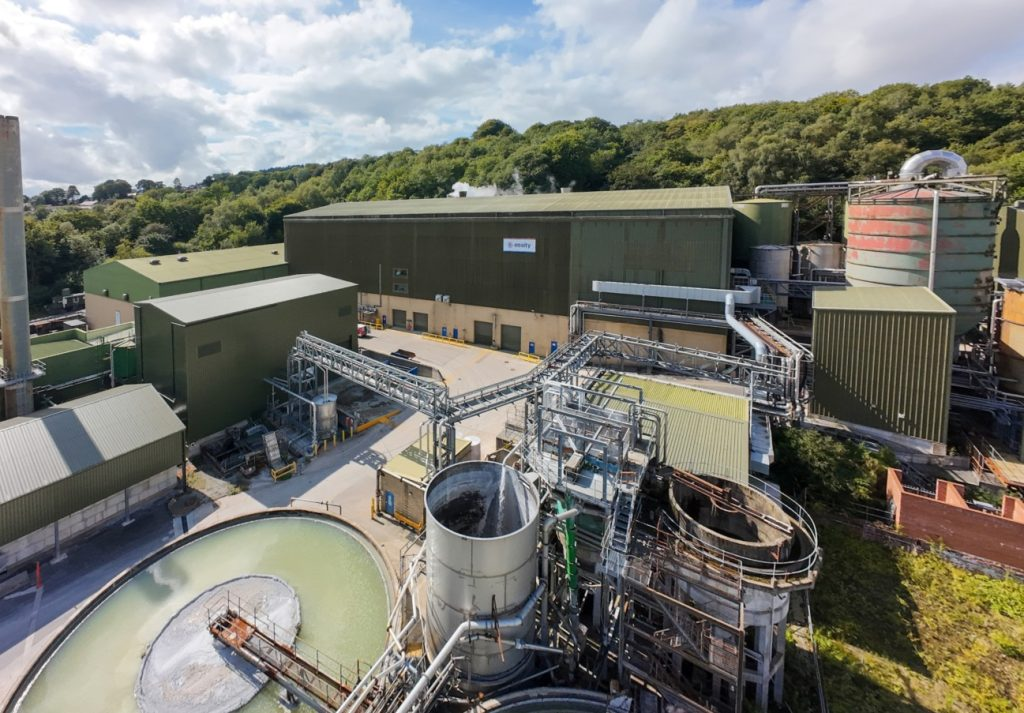
The closed-loop service collects used paper hand towels from participating workplaces and returns them to Essity’s Stubbins mill in Lancashire, where the fibre is recycled into new tissue products. The facility supplies recycled hand towels, toilet tissue, and napkins to businesses across the UK and Ireland, and all tissue products produced at the site are made from 100% recycled fibre.
Essity describes Tork PaperCircle as the world’s first closed-loop recycling system for paper hand towels. The service is designed to separate used towels from general washroom waste and maintain a dedicated recovery route for fibre that would otherwise often be sent for disposal. Washroom paper towels have historically been difficult to recycle because of contamination and collection challenges, making source separation and logistics central to the system’s performance.
One participating site, 3 Hardman Square in Manchester’s Spinningfields district, introduced Tork PaperCircle in February 2024. Since then, the building has recycled around 3,000kg of paper hand towels through the service, equivalent to saving up to 1,000kg of CO₂, according to Essity.
The growth of the service reflects a shift in how businesses handle routine waste streams inside commercial and industrial buildings. Sustainability programmes are increasingly moving from procurement pledges into operational systems that require measurable volumes, auditable routes, and reliable collection procedures. Paper towels may be a low-profile waste stream, but high-frequency use across workplaces gives them a material footprint when collection and recovery are organised at scale.
Stubbins is central to that model because it gives the collected material a defined manufacturing destination. Circular manufacturing depends on more than recovering waste at the front end; the material has to return to a process capable of converting it into a specification-compliant product while managing rejects, wastewater, and non-recyclable by-products. At Stubbins, non-recyclable by-products are repurposed for uses including animal bedding.
The facility is also notable because Essity says it is the only UK site capable of recycling both takeaway drink cups and used paper towels into new tissue products. Those waste streams sit awkwardly between consumer behaviour, facilities management, and industrial fibre recovery. Technical recyclability alone is not enough; the material has to be collected, transported, processed, and sold back into a market at sufficient scale.
Higher customer numbers suggest that more organisations are prepared to adapt internal waste-handling routines when the output is linked to a credible manufacturing loop. That still places demands on building managers, cleaning contractors, occupants, logistics providers, and mill operators. Segregated bins have to be used correctly, contamination has to be controlled, collection schedules have to fit building operations, and the recycled fibre has to meet production requirements.
The operating model is strongest where the loop is repeatable. Circular economy claims have often run ahead of industrial reality, particularly where materials are collected without a secure route back into production. Tork PaperCircle is more concrete because the process connects a defined waste source to a specific mill and a specific tissue product family.
Commercial property and industrial estates are also under pressure to reduce waste emissions and improve environmental reporting. Facilities teams are being asked to provide data that can be used in tenant reporting, corporate sustainability targets, and procurement decisions. A system that attaches weight, volume, and carbon-saving estimates to a routine washroom waste stream has a practical advantage over initiatives that are harder to measure.
The expansion does not remove the usual constraints around cost, logistics, contamination, and adoption. It does show how mature industrial assets can support circular systems when the material stream is clearly defined. For Stubbins, the growth of Tork PaperCircle strengthens the link between workplace waste management and UK recycled tissue manufacturing, turning a routine facilities issue into a repeatable process operation.