Aqua superPower has formed a strategic partnership with Tidal Transit to deliver electric crew transfer vessel projects for ports and harbours supporting offshore infrastructure.
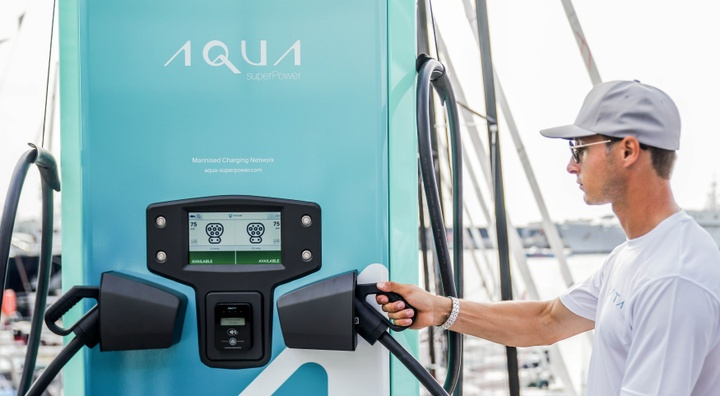
The collaboration is aimed at port operators, offshore wind developers, and harbour authorities looking to electrify crew transfer operations. Under the agreement, Tidal Transit will build and operate electric crew transfer vessels and manage offshore charging infrastructure, while Aqua superPower will design, build, operate, and maintain shore-side charging infrastructure at the vessel’s origin port.
Crew transfer vessels are central to offshore wind operations, moving technicians and equipment between shore bases and offshore assets. Electrifying that segment requires more than vessel procurement, because ports need dependable high-power charging, offshore projects need charging options close to the asset, and operators need a delivery model that reduces the number of separate interfaces between vessel, infrastructure, and service providers.
By combining shore-side infrastructure with electric vessel operation and offshore charging capability, the partnership is intended to create a co-ordinated deployment model. Aqua superPower brings experience in marine fast-charging infrastructure, including harbour charging projects and vessel-to-grid demonstration work, while Tidal Transit brings operating experience in offshore wind crew transfer and electric vessel development.
“Ports and harbours are looking for practical, scalable ways to decarbonise marine operations,” said Matt Holland, Chief Project Engineer at Aqua superPower. “By partnering with Tidal Transit, we can offer a complete charging ecosystem for electric crew transfer vessels that reduces project complexity and gives operators confidence to transition faster.”
Tidal Transit has already developed electric crew transfer capability through its e-Ginny programme, which converted a diesel crew transfer vessel to electric propulsion and supported work on offshore charging infrastructure. The company has also secured backing for six new-build electric CTVs due for delivery from 2026, reinforcing the move from demonstration activity into fleet expansion.
Electric CTVs can reduce local emissions and noise, while lowering maintenance demands associated with conventional propulsion. Deployment remains tied to charging availability, duty cycles, grid connection capacity, and the ability to maintain vessel availability in demanding marine environments.
“Electric crew transfer vessels are a major opportunity for the offshore wind sector to cut emissions and lower operating costs,” said Leo Hambro, CEO and Co-Founder at Tidal Transit. “Working with Aqua superPower allows us to combine our vessel expertise with proven charging infrastructure to create a compelling end-to-end electrification solution for ports and offshore operators.”
The partnership comes as offshore wind capacity continues to expand and port infrastructure faces increasing pressure to support low-emission marine operations. By linking shore-side and offshore charging with vessel delivery, Aqua superPower and Tidal Transit are addressing one of the practical bottlenecks in maritime electrification: turning clean vessel projects into repeatable port-based operating systems.