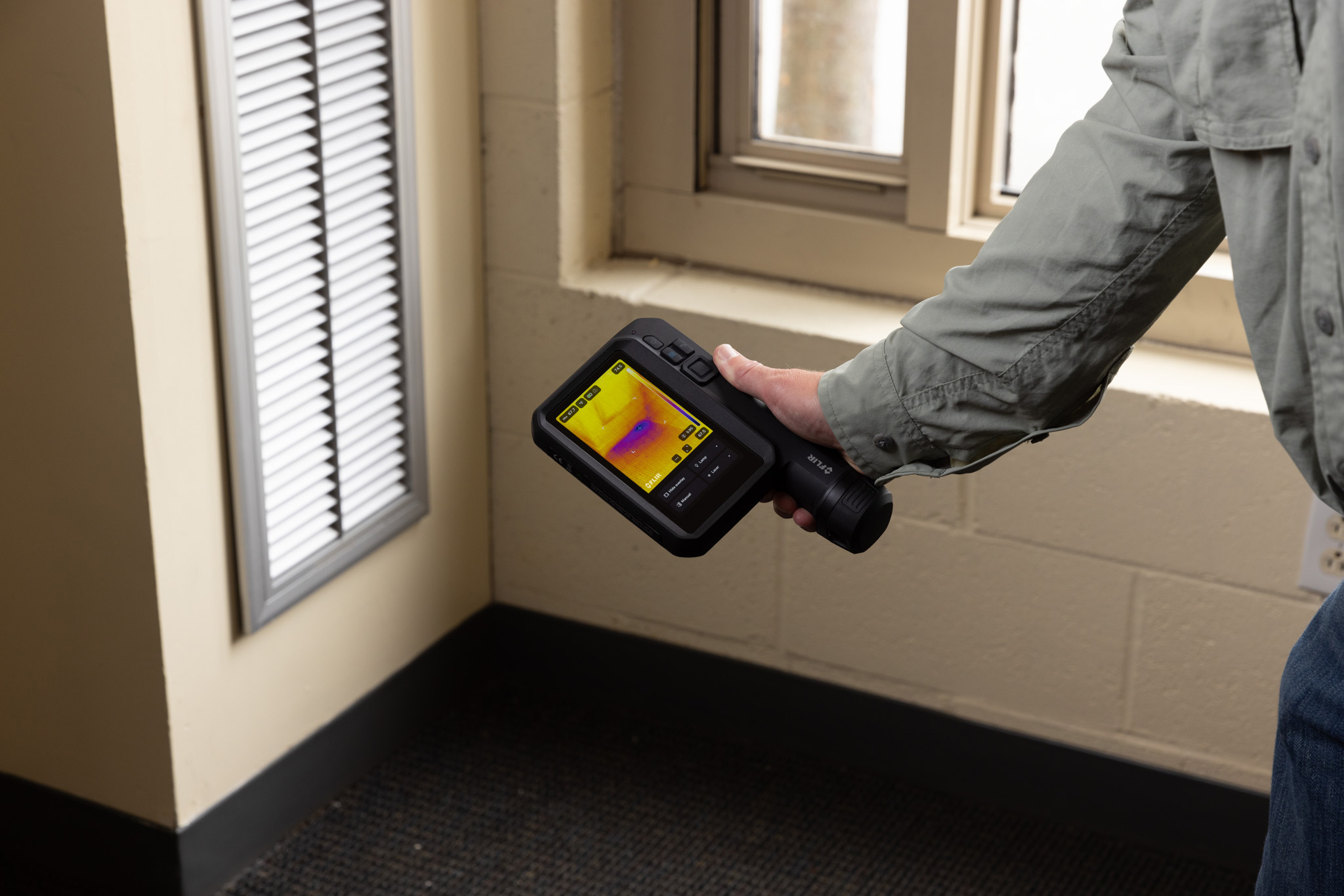
Flir has expanded its integration with RocketPlan, connecting professional thermal imaging cameras directly into digital restoration workflows used in water damage, structural assessment, and insurance documentation.
The integration moves thermal images from standalone camera files into the job record. Images captured in the field can be associated with the relevant project, room, and timestamp, placing thermal evidence alongside photos, notes, moisture readings, and reporting data in RocketPlan’s mobile-first platform.
Restoration work often generates large volumes of visual and thermal evidence across multiple rooms, visits, and contractors. Manual transfer from a camera or memory card can slow reporting, create duplicate administration, and increase the risk of mislabelled files. Connecting image capture directly to the project record reduces that handling step and gives office teams faster access to inspection data.
Thermal imaging is widely used to identify temperature anomalies that may indicate hidden moisture, insulation failure, HVAC issues, or structural defects. Its value depends on context: an image must be linked to the correct room, surface, inspection stage, and job file if it is to support field decisions or insurance documentation.
The Flir iXX-Series has been developed around app-enabled inspection workflows, with cloud connectivity and guided capture intended to make thermal inspection more consistent across mixed-skill teams. RocketPlan provides the job-management layer, allowing field teams and office staff to work from the same evidence base while a claim or restoration project is still active.
The integration also supports Flir ONE, Flir Edge, and the Flir MR277 moisture meter with IGM. That wider compatibility allows different members of a restoration crew to capture relevant data using devices suited to their role, while keeping the evidence in a single job file.
By shortening the route from inspection to documentation, the system gives restoration businesses a cleaner workflow between assessment, reporting, and mitigation planning. It also reflects a wider shift in field service work, where connected instruments are expected to feed directly into project records rather than operate as isolated data-capture tools.
More information is available from RocketPlan.