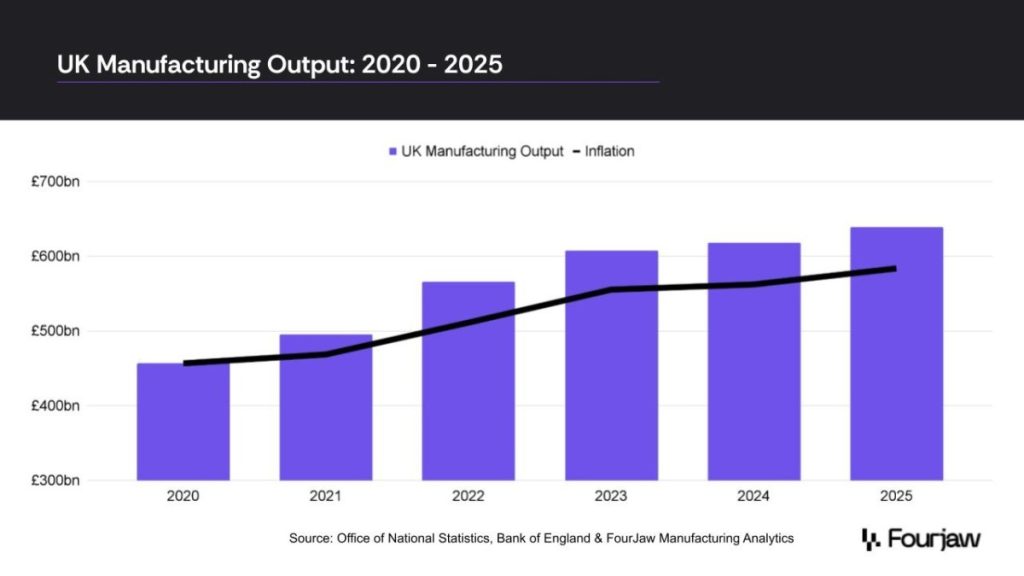
UK manufacturing output increased by £21 billion in 2025, despite a significant reduction in the workforce and a decrease in the number of manufacturers. According to an analysis by FourJaw Manufacturing Analytics, the sector has shown remarkable resilience, marking the fifth consecutive year of output and productivity growth.
The total value of factory production in 2025 was 27.8% higher in real terms compared to 2020. Factory output rose by 3.4% to nearly £639 billion, driven by substantial gains in key sectors. Aerospace contributed £6.7 billion, chemicals and pharmaceuticals added £4.2 billion, metals and machinery provided £2.6 billion, and computers and electrical products accounted for £1.9 billion.
FourJaw’s analysis indicates that, after adjusting for inflation, UK manufacturing productivity increased by 1.4% (£8.9 billion) in 2025 compared to 2024. The average output per manufacturing employee rose by 2.9% (£7,000) in real terms year-on-year, highlighting improvements in efficiency despite workforce challenges.
However, food production saw a real-terms decline of 1% (£1.1 billion) from the previous year, even as food price inflation reached 4.7% in August, raising the value of food production to £109 billion in 2025. On the other hand, automotive manufacturing faced a downturn, with a decline of nearly £5.4 billion (7%) due to reduced domestic demand, export tariffs, trade uncertainty, and disruption from a major cyberattack.
Chris Iveson, CEO at FourJaw Manufacturing Analytics, stated, “UK manufacturing is proving that resilience and innovation are winning the day. To deliver £21 billion more in output is a phenomenal achievement given current workforce challenges and points to a sector successfully embracing continuous improvement and productivity-enhancing technology.”
Looking forward, the UK manufacturing sector’s embrace of technology and innovation positions it well to navigate future challenges, with a focus on maximising the output of every machine and employee.