— By Al Kingsley MBE, Group CEO of NetSupport
Digital technology is now embedded across manufacturing operations. From connected production lines and industrial control systems to cloud-based planning tools and remote access platforms, manufacturers are increasingly reliant on digital infrastructure to maintain output, quality and competitiveness.
While this connectivity brings clear efficiency gains, it also raises the operational stakes. When systems fail, the impact is immediate. Downtime can halt production, delay deliveries and place additional strain on already stretched engineering and IT teams. As a result, digital resilience is no longer a future ambition for manufacturers, it is a core operational requirement.
The growing reliance on digital systems
Manufacturing environments are becoming more complex and more connected. Real-time data from machinery supports predictive maintenance and quality assurance. Integrated systems improve visibility across supply chains and production schedules. Remote access enables specialists to support operations without being physically present on site.
These capabilities are particularly valuable for manufacturers operating across multiple plants or locations. Centralised oversight allows organisations to standardise processes, improve response times and make better-informed decisions. However, this increased reliance on digital systems also means that even minor technical issues can quickly escalate if they are not identified and resolved early.
For many manufacturers, the challenge lies not in adopting new technology, but in managing it effectively alongside legacy systems that remain critical to production.
Common challenges on the factory floor
Unplanned downtime remains one of the most significant risks facing manufacturers. System faults, network issues or device failures can disrupt production with little warning. In environments where uptime is critical, reactive support models are no longer sufficient.
Manufacturing IT estates are also rarely uniform. Older machinery often sits alongside newer digital platforms, creating integration and support challenges. Without clear visibility across this mixed environment, faults can go unnoticed until they impact output.
Access to timely specialist support is another pressure point. When issues arise outside normal working hours or across remote sites, delays in diagnosis and resolution can extend downtime and increase costs.
Cybersecurity adds a further layer of risk. As operational technology becomes more connected, manufacturers face greater exposure to cyber incidents that can disrupt production and compromise sensitive data. Protecting systems without restricting operational flexibility is an ongoing balancing act.
Strengthening digital resilience
Building digital resilience in manufacturing starts with visibility. Understanding which systems are in use, how they are performing and where potential vulnerabilities lie allows teams to act before issues become critical.
Secure remote access plays an increasingly important role in this process. When engineers and IT teams can connect quickly to diagnose and resolve issues, downtime is reduced and production can resume faster. This is particularly important in multi-site environments where on-site support is not always immediately available.
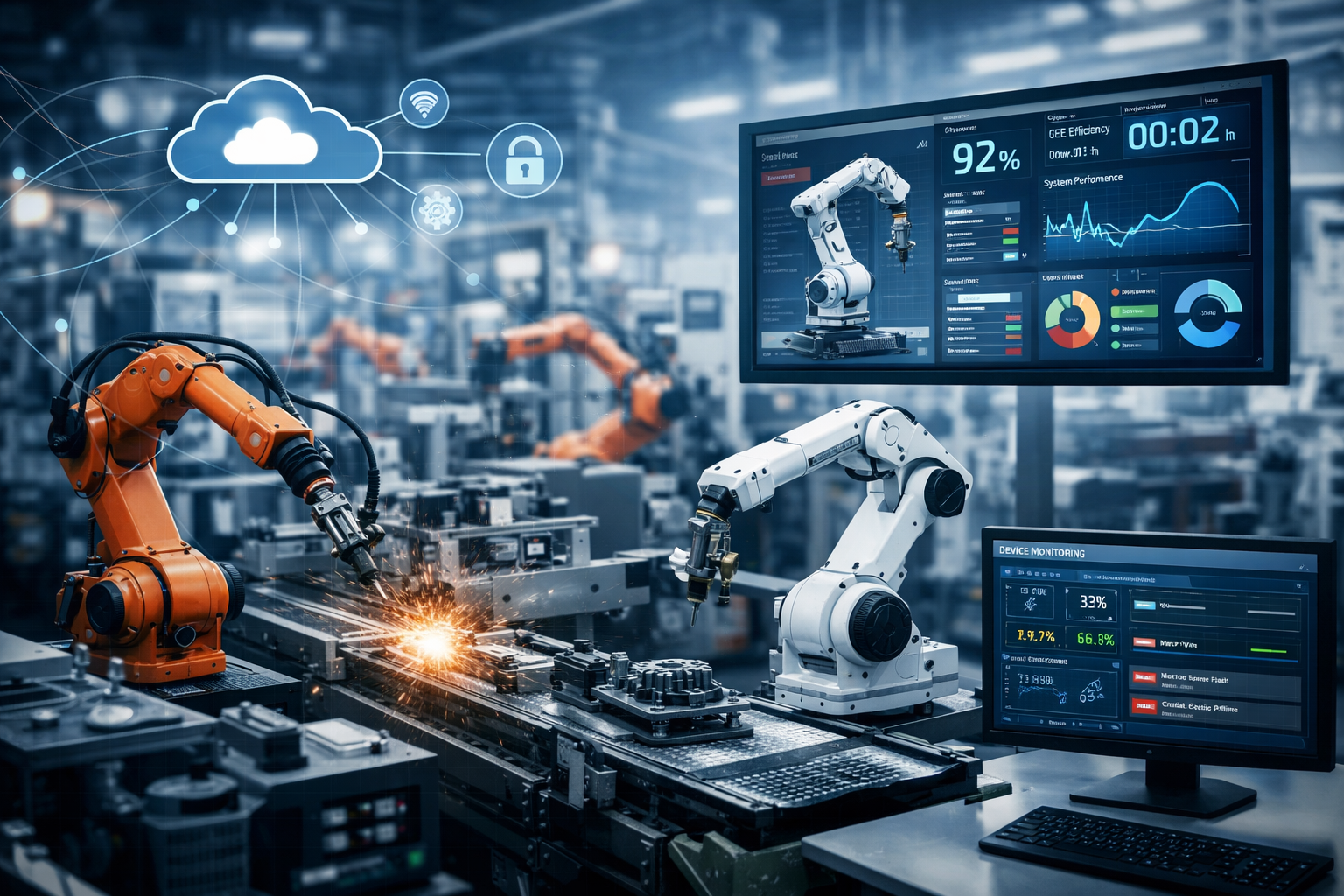
Proactive monitoring is equally important. Being able to remotely monitor all devices, tracking device performance and identifying anomalies early, allows manufacturers to shift from reactive fixes to planned intervention. This approach supports predictive maintenance strategies and reduces the likelihood of unexpected disruption.
Cybersecurity must be built into these processes. Strong access controls, regular updates and clear procedures help protect both IT and operational systems, while staff awareness remains a key line of defence against common threats.
Managing complexity at scale
As manufacturing operations scale, consistency becomes harder to maintain. Centralised management and monitoring tools allow organisations to oversee devices and systems across multiple locations from a single point of control. This improves response times, supports standardisation and reduces the operational burden on local teams.
Just as importantly, it allows manufacturers to make better use of limited specialist skills. Rather than relying solely on on-site expertise, organisations can extend support across sites and shifts, ensuring help is available when it is needed most.
Digital transformation continues to reshape manufacturing, but it also exposes weaknesses in traditional support and management models. For manufacturers, resilience now depends on the ability to see, support and secure digital systems in real time.
By prioritising visibility, secure remote access and proactive monitoring, manufacturers can reduce downtime, protect production and ensure digital technology remains an enabler of operational performance rather than a source of risk.