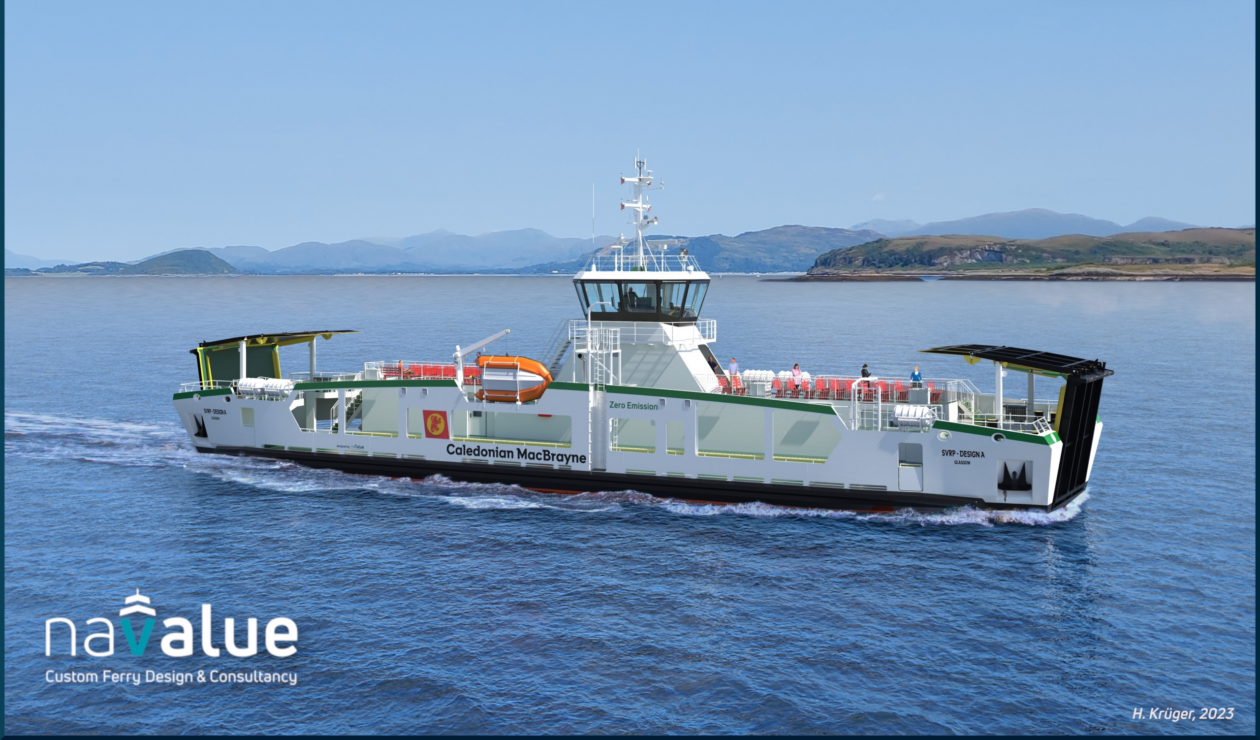
Corvus Energy has secured what it describes as the largest contract in its history, by USD value, after winning an order from Remontowa Shipbuilding to supply battery energy storage systems for seven fully electric ferries being built for Caledonian Maritime Assets Limited (CMAL).
The programme forms part of CMAL’s Small Vessel Replacement Programme (SVRP), covering seven Loch-class electric ferries intended to support services and connectivity for island communities on Scotland’s west coast. Each vessel will be equipped with a 5.7 MWh Corvus Dolphin NxtGen Energy Storage System, taking the combined installed capacity across the seven ferries to around 40 MWh.
Corvus said deliveries are planned to start in 2026 with one system, followed by three systems in 2027 and three more in 2028 — a timeline that underscores both the scale of the order and the industrial reality of battery-system manufacturing, integration, and commissioning at shipyard cadence.
“This project is significant for Corvus Energy not only because of its scale, but also because of the outstanding collaboration we’ve had with the designer, the shipyard, and the integrator throughout the entire process,” said Stein Ruben Larsen, Senior Vice President of Sales at Corvus Energy. ABB is named as the integrator for the vessels’ battery systems.
The vessel design and engineering work is spread across multiple organisations: naValue provided the concept design, LMG Marin developed the basic design, and Remontowa Marine Design & Consulting delivered the electrical and detailed design. That division of labour is increasingly typical in European clean-maritime projects, where operators are trying to de-risk new technology by leaning on established yards, integrators, and naval architects with prior electrification experience.
Remontowa and Corvus also point to continuity. The companies have worked together since 2018 across a mix of fully electric ferries and hybrid offshore vessels, and Corvus said the CMAL programme takes their joint project count to close to 20.
The UK angle is straightforward: ferry electrification is moving from “one-off demonstrator” into repeatable fleet procurement, but only if charging infrastructure, grid connections, and operational patterns keep up. A seven-vessel series build is a step towards standardisation — and it will be judged on availability, maintainability, and lifecycle cost as much as emissions.