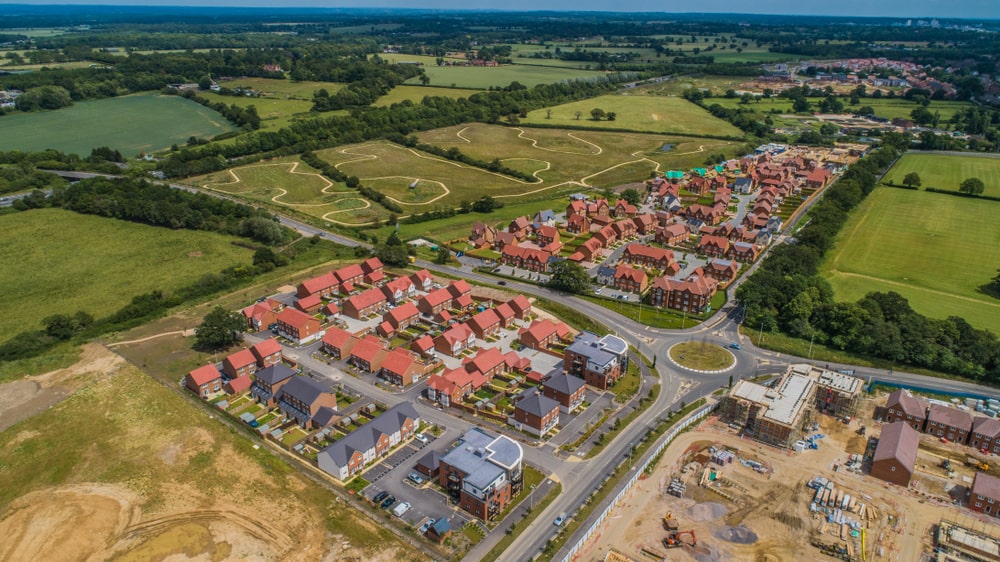

The government has confirmed it will progress development of the next generation of new towns across England, following the publication of an independent report by the New Towns Taskforce. The report, led by Sir Michael Lyons, identifies 12 potential locations for large-scale housing development, with the government stating its ambition to commence construction of at least three new towns within the current Parliament.
In its initial response, published on 28 September, the government welcomed all 12 proposed locations and highlighted Tempsford in Central Bedfordshire, Crews Hill in Enfield, and Leeds South Bank as the most promising at this stage. A new specialist New Towns Unit will be established to coordinate delivery, working across departments and agencies to address barriers and test innovative approaches to large-scale development.
Each new town is expected to deliver at least 10,000 homes, with the Taskforce recommending a minimum of 40% affordable housing, half of which should be for social rent. The developments will combine standalone greenfield sites, urban extensions, and regeneration schemes, aiming to provide long-term certainty and capacity in housing delivery. A Strategic Environmental Assessment (SEA) will now be undertaken to assess the implications of the proposed sites before final decisions are made, with draft proposals and the SEA due for consultation in spring 2026.
The 12 recommended locations span England and include sites such as Adlington in Cheshire East, Marlcombe in East Devon, Thamesmead in Greenwich, and Worcestershire Parkway in Wychavon. Urban expansion projects are also proposed in Manchester’s Victoria North, Plymouth, Milton Keynes, and Oxfordshire’s Heyford Park. Each location is tied to broader regional economic strategies, such as supporting the East West Rail corridor, maximising the government’s £2.1 billion transport allocation for Leeds, and aligning with investment at HMNB Devonport in Plymouth.
For the construction sector, these proposals represent significant long-term opportunities across planning, design, infrastructure, and delivery. Main contractors, subcontractors, and suppliers will find scope to engage in projects ranging from transport integration and utilities provision to large-scale residential construction and placemaking initiatives. The government has also signalled that different delivery vehicles will be tested to shape future settlement models, opening the way for a variety of procurement and partnership structures.
With the SEA expected to conclude in 2026 and the first new towns targeted for commencement within this Parliament, early engagement will be critical. Firms with expertise in large-scale infrastructure, sustainable housing, and integrated transport systems should monitor consultations and prepare to position themselves within supply chains that will underpin these nationally significant projects.
If you would like to read more stories like this, then please click here