
Image courtesy 123rf
Increased reliance on gas power following the April blackout for grid stabilisation in Spain has been costly, says Ember in a new research report, highlighting the need for investment in clean forms of flexibility such as batteries and interconnection.
According to Ember in the report, Decoupled: how Spain cut the link between gas and power prices using renewables, Spain remains reliant on gas for grid services, the costs of which have doubled since the April 28th blackout.
These services accounted for 57% of the country’s electricity price in May 2025, up from an average of 14% in the year before the blackout.
This stems from the Spanish grid operator running the grid in a ‘reinforced mode’, calling on more combined cycle gas turbines (CCGT) than usual to provide grid stabilisation services, such as voltage control.
Despite this, Spain has not seen a significant rebound in gas power generation. Since the beginning of 2025 gas generation has been elevated compared to 2024 – when gas generation was far below average – but in all months it has remained below the 5-year average.
Additionally, although renewables in the country have rapidly grown, investment in grids and clean flexibility solutions has not kept pace. As a result, renewables curtailment and grid costs had been rising steadily, before spiking since the blackout.
In fact, following the blackout, curtailment of renewables has tripled in the country, from 1.8% in the last two years to 7.2% during May-July 2025.
Have you read?
Europe’s TSO Innovation Alliance calls for climate-resilient power grid solutions
Electrification will cause system collapse without flexibility warns energy commissioner Jørgensen
Surging wind and solar
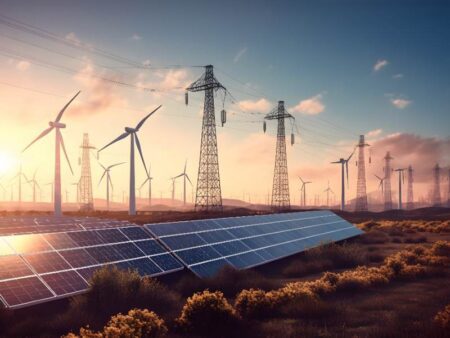
On the side of renewable generation, Ember’s research lauds the uptake of wind and solar in the country, which has reduced the influence of expensive fossil generators on the electricity price by 75% since 2019.
This decline in the hours where the electricity price was tied to gas power cost was faster than in other gas-reliant countries, such as Italy and Germany.
As a result, Spain’s wholesale electricity price was 32% lower than the EU average in the first half of 2025.
Commenting in the report was Ember’s Chris Rosslowe, Senior Energy analyst: “Spain has broken the ruinous link between power prices and volatile fossil fuels, something its European neighbours are desperate to do.
“Spain risks sliding back into costly gas reliance amid post-blackout fears. Boosting grids and batteries will help Spain break free from fossil dependency for good.”
According to Ember, Spain lags behind its European peers in grids and battery storage. As Europe’s fourth biggest power market, it only has the thirteenth largest battery storage fleet and is also one of the continent’s least well-connected systems.
Many factors are behind this lack of battery storage development, says Ember, including the lack of a clear regulatory framework and Spain’s relatively large pumped hydropower fleet. However, the need for flexibility is clearly growing, as demonstrated by the arrival of negative power prices in 2024.
Additionally, adds the company, post-blackout reforms aim to remedy this.
Ember cites the Royal Decree-Law 7/2025, for example, a package of reforms approved in June 2025, aiming to increase the role of renewables and a range of clean flexibility solutions such as storage.
While the package was initially rejected in parliament for political reasons, the same reforms are being pursued by other means.
Furthermore, says Ember, long-awaited rule changes were approved within days of the blackout, allowing renewables to participate in voltage control.
Originally published on enlit.world