
Wärtsilä Gas Solutions and marine energy infrastructure company Höegh Evi have completed development of what they state is the world’s first floating ammonia-to-hydrogen cracker. This project enables floating import terminals to produce hydrogen at industrial-scale volumes from transported ammonia.
Ammonia cracker technology
The industrial-scale ammonia cracker has a modular design that enables integration into both hybrid floating storage and regasification units (FSRUs) and dedicated floating hydrogen terminals. According to the partners, the technology is highly scalable with a send-out capacity of up to 210,000 metric tons of hydrogen annually.
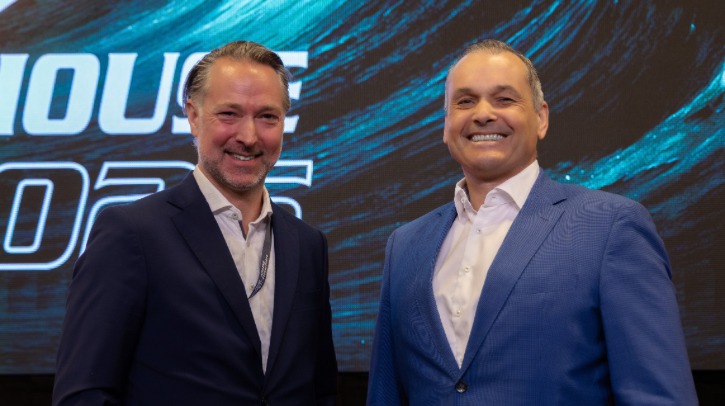
Erik Nyheim, CEO of Höegh Evi, said, “The floating ammonia-to-hydrogen cracker developed by Höegh Evi, Wärtsilä Gas Solutions and partners is a game-changer for the hydrogen economy and the energy transition in Europe.
“Our floating terminals and cracking technology can unlock the full potential of global value chains for green hydrogen, providing European industry with a reliable supply of clean energy within this decade.”
Project development
The project was announced in April 2023 and is part of Norway’s green platform program. The project has received approximately €5.9m (US$6.7m) in funding from the Norwegian government’s green platform program, representing approximately 50% of the total budget.
The ammonia cracker was constructed at Sustainable Energy’s Norwegian Catapult Center in Stord, Norway. Additional partners in the project include the Institute for Energy Technology (IFE), University of South-East Norway, Sustainable Energy and BASF SE.
Norwegian trade promotion organization Innovation Norway is partly responsibility for the allocation of funds within the Green Platform program.
Håkon Haugli, CEO of Innovation Norway, stated, “The future of energy must be green, and it’s our job to be part of the technological development necessary to achieve this goal. We are very happy for this project.”
In related news, the GAMMA (Green Ammonia and biomethanol fuel MAritime vessels) project recently began converting a bulk carrier to sail on climate-neutral fuels and green power. Ammonia and green methanol will be bunkered onto the ship and then converted into hydrogen with cracker and reformer technologies. The hydrogen will be purified and then converted into electricity with a fuel cell. Click here to read the full story.