40 years of RETB

40 years of RETB

Listen to this article In 1985, Radio Train Despatch, technically known as ‘Radio Electronic Token Block’, was introduced on the single line between Dingwall and Kyle of Lochalsh. Prior to the introduction of RETB, a driver could not proceed onto a single line section unless the signaller had given him/her a brass key token for…


Listen to this article

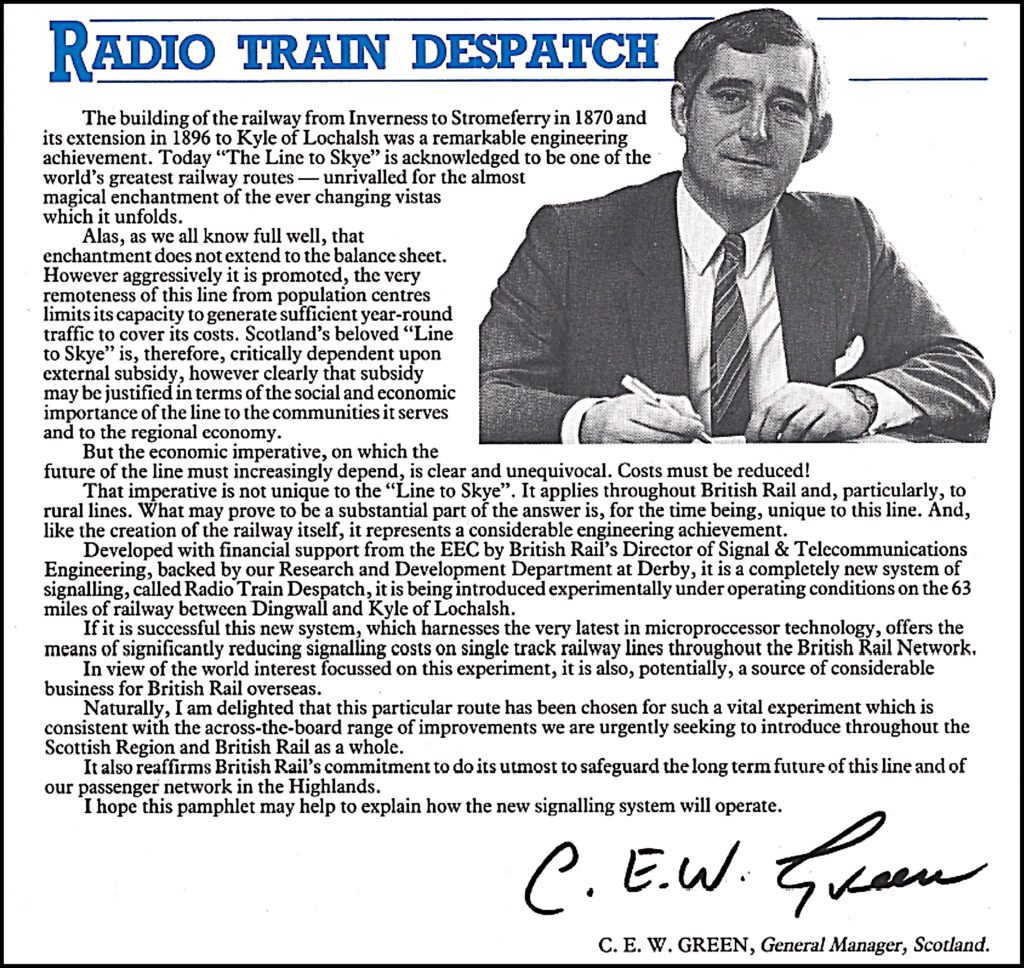
In 1985, Radio Train Despatch, technically known as ‘Radio Electronic Token Block’, was introduced on the single line between Dingwall and Kyle of Lochalsh.

Prior to the introduction of RETB, a driver could not proceed onto a single line section unless the signaller had given him/her a brass key token for the section. RETB replaced this brass token with an electronic token issued by the Dingwall control centre, to a cab display unit which displays the section for which the driver has authority.

This token is coded to ensure it can only be received by the locomotive for which it is intended. Microprocessors control the interlocking and provide the signaller with a visual display of the traffic on the line

It cost £400,000 to introduce this system on the Far North Lines which, by eliminating signalboxes, saved £500,000 in operating costs in its first year.

Rail Engineer is grateful to the Friends of the Far North Line for their permission to reproduce part of the pamphlet issued by ScotRail to mark the introduction of RETB.

Image credit: David Shirres

Stories for you


  • UK manufacturers lift post-pandemic productivity levels

    UK manufacturers lift post-pandemic productivity levels

    UK manufacturers have lifted productivity despite a smaller factory workforce. FourJaw analysis for National Productivity Week points to real-terms output growth since 2020, with automation, data, and process efficiency helping offset labour contraction and cost pressure.


  • Vertiv adds liquid-cooling expertise with STL

    Vertiv adds liquid-cooling expertise with STL

    Vertiv has added liquid-cooling engineering capability through the STL acquisition. The deal strengthens its work across cold plates, server-side liquid cooling, and high-density thermal validation as AI and HPC systems push infrastructure closer to the limits of air cooling.