A recent study published in The New England Journal of Medicine has demonstrated the efficacy of the PRIMA system, a novel subretinal prosthesis, in restoring central vision for patients suffering from geographic atrophy due to age-related macular degeneration (AMD). This open-label, multicenter trial marks a substantial step forward in addressing a leading cause of blindness among the elderly.
Age-related macular degeneration, particularly its advanced form known as geographic atrophy, results in irreversible vision loss due to the death of retinal cells. Current treatments in the United States involve frequent intravitreal injections, which do not substantially improve vision. The PRIMA system, developed by Science Corporation in collaboration with Stanford Medicine, seeks to bypass damaged photoreceptors by directly stimulating retinal bipolar cells.
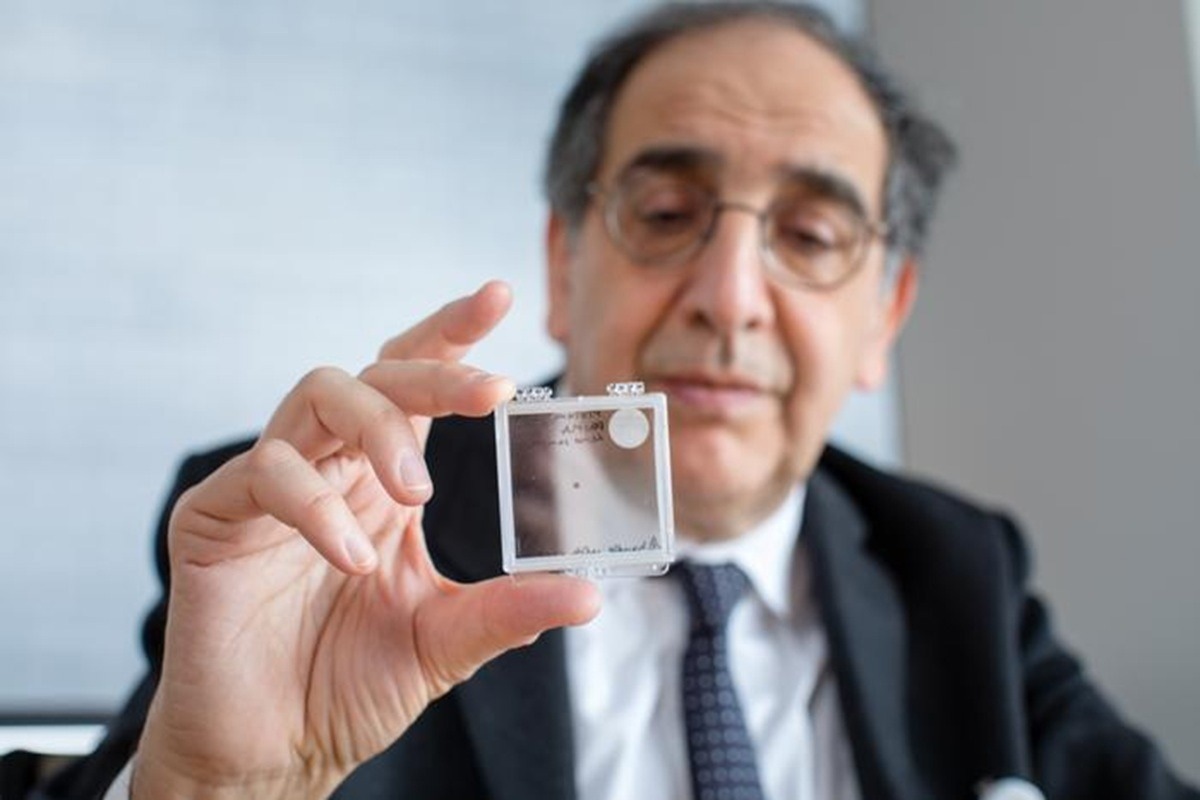
The PRIMA system employs a wireless implant placed under the retina, working in tandem with advanced glasses equipped with a video camera. This setup captures and transmits visuals to the implant via near-infrared light, converting them into electrical signals processed by the brain. The glasses also feature zoom and contrast adjustments, enabling users to magnify and focus on previously unseen details.
The PRIMAvera study, a confirmatory clinical trial, evaluated 38 participants, with 32 assessed for visual improvement 12 months post-implantation. Findings revealed that 81% of participants experienced a clinically meaningful improvement in visual acuity, while 84% reported enhanced ability to read at home. The glasses allowed for significant digital enhancement, enabling reading of smaller fonts than the implant’s native resolution.
Safety assessments noted 26 serious adverse events among 19 participants, primarily related to the surgical procedure rather than the device itself. These included elevated eye pressure and retinal tears, with 95% resolving within two months. The PRIMA implant’s wireless and hardware-free design minimizes surgical risks.
The trial underscores the PRIMA system’s potential to significantly improve central vision without compromising peripheral vision. The implant’s ability to enhance visual resolution through eye movement suggests mechanisms akin to super-resolution algorithms in cameras. While some surgical effects were noted, functional adaptation appears promising, potentially transforming the quality of life for those affected by geographic atrophy. Further exploration and long-term use may unlock even greater benefits.