
Image courtesy 123rf
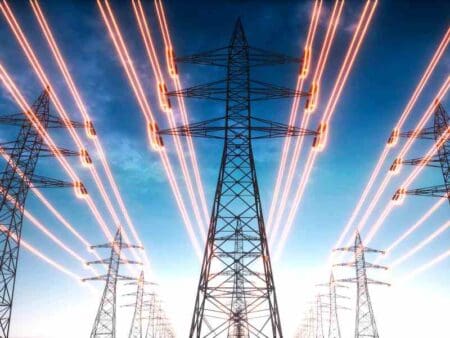
Harry Stokman and Stephan Rupp of Current/OS Foundation write on the drivers for direct current (DC) in power grid, outlining its development and highlighting its critical role in the energy transition.
DC in power grids today is mainly perceived as energy highway at the top layer of power grids: HVDC links transmit power over large distances and increasingly interconnect offshore wind farms.
Most HVDC links represent point-to-point connections and will move to multiport configurations in the next years. At low-voltage level, DC technology is progressing at high speed to directly interconnect renewables, energy storages, charging infrastructure, heat pumps, air conditioning and machines in factories.
By providing one single point of interconnection, DC grids off load the power grid and simplify grid codes. Industry consortiums like the Current/OS Foundation are setting the standards for compatible DC products operating on DC grids.
This paper outlines the drivers for DC in power grids and the state of developments.
Have you read:
How energy suppliers can tackle DSF’s biggest barrier – user adoption
Integrated system testing to ensure reliable working of smart metering systems
Global Energy Transition
Global energy still is dominated by fossil fuels (80% in the year 2020) but is progressing fast to renewables. Wind power and solar power will cover most of the future energy production, supplemented by biomass, hydropower and hydrogen. By 2030, the share of renewables on total power is expected at 40%. The target is to turn the energy mix upside down by 2025 by renewables providing 80% of total power.

Within this transition, the total demand of power remains at a constant level (it even slightly decreases over the years), despite the energy consumption per head is increasing by about 50% over the same period. This apparent paradox is caused by the energy transition: Conventional power plants only convert about 1/3 of the fuel’s energy into electric power, about 2/3 are dissipated as heat. In contrast, when fossil fuels are used for heating, 100% of the energy is used. Using a heat pump will utilise the ambient energy for heating while consuming only a fraction of electric power (usually less than 1/3).
Combustion engines in vehicles only transform a fraction of less than 1/3 of their power consumption from fossil fuels into motion. An electric engine will only need this fraction of energy for the same effect (and can recuperate energy downhill and while slowing down). This way the energy transition makes much better use of power. The gain of efficiency keeps the total demand stable, while providing more useful power.
Electricity is becoming the predominant power source
The examples indicate that the predominant power sources and consumers will be electrical. Figure 2 illustrates the share of electricity in the energy transition in the above-mentioned stages. At the starting point in 2020, electricity represents about 20% of the total energy production. This represents the amount of energy, that power grids used to handle every year. Until 2030, the share of electricity will rise to 30% of total energy production. This development is visible in the current expansion of per grids worldwide: It represents a growth of 50% in total energy to be carried over electric power grids.

In 2050, electricity is expected to represent 50% of total energy production. In comparison to the 20% share in 2020, this represents growth of a factor of 2,5. While this growth over a period of 30 years does not seem unreasonable, in certainly represents a major development in electric power grids: They will need to double.
Another significant change is hidden in energy production: The share of renewables on the grid will rise between 2020 and 2050 by a factor of 10. In 2020, there have been about 3.000GW of renewable power worldwide, by 2030 it will grow to about 9.000GW, and achieve 30.000GW by 2050.
The reason for the higher growth of connectivity for power (factor 10 in GW) against energy production (a factor of 2,5) is the nature of renewables: solar power in Europe can deliver between 1000 to 2000 hours of peak power, peak wind power is available for 2000 to 3000 hours a year. To cover the gaps between supply and demand, energy storages are used: Battery energy storages to buffer solar energy from one day to the other, hydrogen storage for wind farms to cover periods of about two weeks.
DC in Power Grids
Renewables such as solar power and wind turbines represent DC systems. The wind turbine operates at variable speed, so in connects over a power converter, like most electric engines today. Battery storages, electrolysis of hydrogen and fuel cells represent DC systems. The bulk of renewables and their storage systems hence represent DC-systems. Storage and production should be placed close together to avoid unnecessary grid extensions. Charging stations and wall boxes for electric vehicles also represent DC-Systems, along with every variable speed drive and most appliances.

Figure 3 illustrates the growth in power grids: Power lines and transformer stations will need to expand by a factor of about 2,5. The core of power grids will need to double. At the same time power grids will need to offer 10 times to connectivity for renewables. At this point, DC grids may relieve stress from the power grid by connecting native DC systems directly over DC grids. One central power converter (the so called Interlink Converter) will interconnect the DC systems to the power grid.
The Interlink Converters will implement the AC grid code and keep its DC systems organised. Over time, this development will cover the lower voltage level, medium voltage level and high voltage. Most current developments focus on low voltage DC-grids. At LVDC, DC grids including the interlink converters are located behind the meter. This way, the interface between DC-systems (i.e. the DC grid code) is not visible to the grid operator: The DC grid remains a private installation. With DC grid codes getting mature, grid operators may choose to provide DC connections of their own.
Current/OS Reference Installations
The Current/OS Foundation is setting the standards for a DC grid code, which allows the stable operation of systems on a DC grid. It defines the technical requirements for DC grids and devices on DC grids.
Currently, the following DC grids operate according to Current/OS specifications.
Consider the N470 highway in the Netherlands, with solar panels embedded in its noise barriers. Coupled with a 1MWh battery storage system, this forms a DC microgrid which powers the road’s lighting and traffic signals sustainably. Compared to similar AC systems, the highway achieved energy savings of 10%, requiring 40-60% fewer convertors and 35% less copper for electric cables.
The WAVE office building in Lille, France, by VINCI Energies, a Current/OS partner, provides another example. With part of the offices powered in DC drawn from solar panels, the WAVE building uses DC at the local level in conjunction with the public grid. This has reduced energy consumption by 20%, with no need for convertors for IT equipment.
A similar setup at the Rosie Hospital in Cambridge, led by Current/OS’ partner Arriba Technologies, connects a 750kW facility in DC to an 80 kW solar array, forming a DC microgrid that already meets up to 90% of the hospital’s HVAC needs. Having replicated similar setups across five separate hospital buildings in southeast Britain, Arriba has observed electrical efficiency savings of around 7% by pushing solar power directly into high amperage DC-HVAC systems without unnecessary excursions through the 50Hz AC network. This can be boosted to 15% by synchronising HVAC production to fall into a sort of lockstep with solar intensity. Locations situated at lower latitudes, may see even higher returns, owing to both the higher number of sunny hours per year, and the higher usage of air conditioning and refrigeration.
About the authors

Harry Stokman is a DC Entrepreneur since 1988, with a background in power systems, power electronics and corrosion control. Stokman is active in IEC and NEN standardization, and co-chairs the EU Set Plan DC, in addition to his role as an expert driving compatibility at Current/OS.

Stephan Rupp is active in business development of power electronics at Maschinenfabrik Reinhausen, Germany, with emphasis on the development of concepts for integrating renewable energy sources into electrical power grids using DC-grids. He also teaches electrical engineering at the Baden-Wüttenberg Cooperative State University in the Master’s programme of electrical power supply.