The UK Agri-Tech Centre proudly supported World Food Day (16 October) this year by sharing insights into the work it does to help create a more sustainable and secure future for all.
This year’s theme is ‘Hand in Hand for Better Foods and a Better Future’, and there is no better way to showcase the global collaborations that promote sustainable and innovative ideas than the projects included below.
A successful farming future for the world doesn’t just depend on the technology that exists to make our lives easier—but also the adoption of that technology—and sustainable methods to meet the industry challenges that are constantly evolving.
Demonstrating the work undertaken alongside its many partners and with funding from Innovate UK, the UK Agri-Tech Centre has listed four projects that have contributed to producing better food and continue to future-proof our industry.
1. Broccoli Harvester
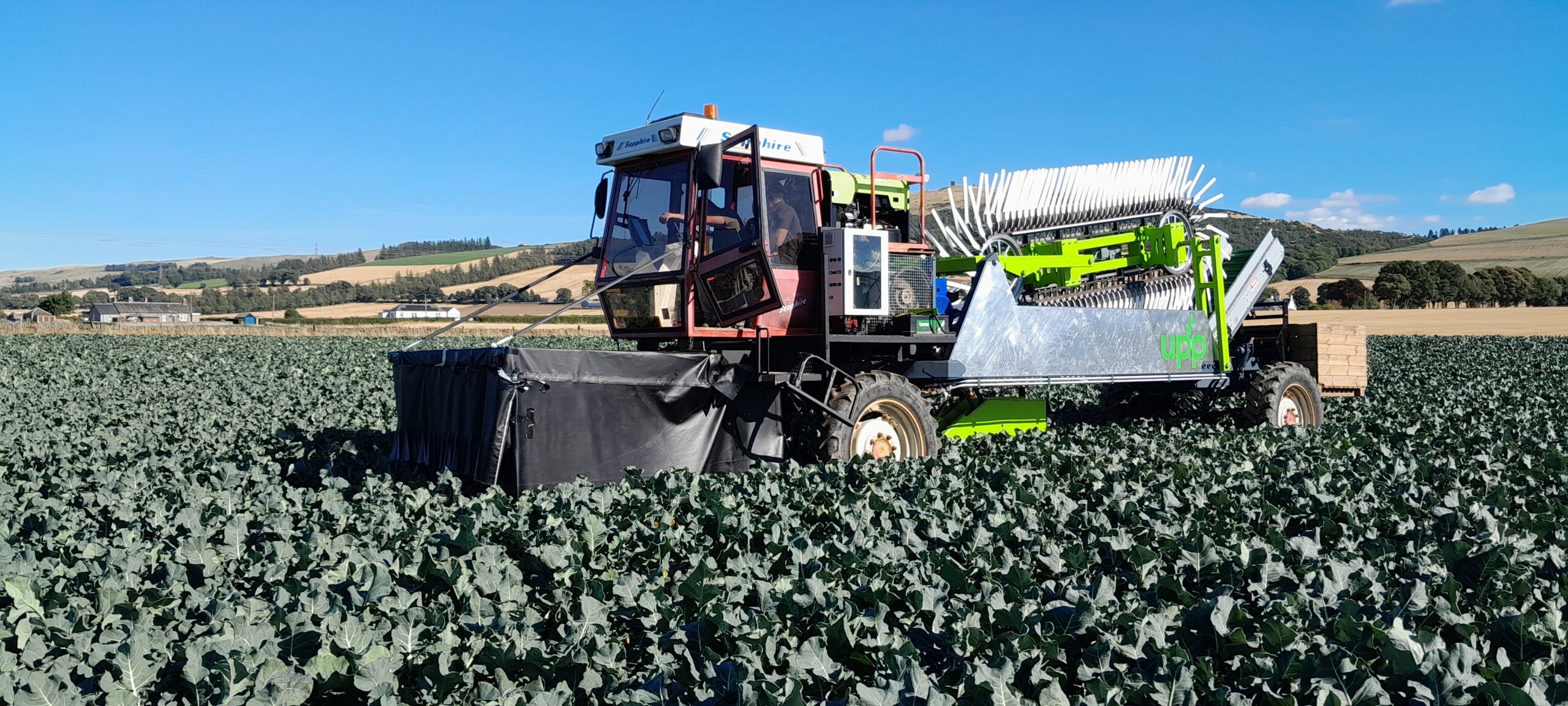
This groundbreaking project by UPP utilises unused broccoli to reduce the CO2 footprint and environmental harm of protein for human consumption.
The UK Agri-Tech Centre’s work with partners on the broccoli harvester now sees us using 100% of the plant instead of just 30%, which makes the innovative sensor technology a sustainably-friendly choice and helps provide more nutritious food options for the consumer, whilst maximising the value of what we grow.
Using unused biomass to produce nutritious hypoallergenic ingredients reduces the CO2 footprint when compared for foods ‘grown for use’ such as soy.
2. DeCyst
This project’s aim was to revolutionise pest management strategies and improve the current knowledge of solanaceous trap crops, and how they are best utilised for Potato Cyst Nematodes control, by potato growers in the UK.
The project partners worked together to refine and optimise trap cropping practices, with the goal of unlocking the full potential of DeCyst™ solanaceous trap crops, specially tailored to outmanoeuvre PCN infestations.
Adoption of solanaceous trap crops could mean an increase in resilience and the maintenance of productivity for the UK potato industry.
3. Precision Pollination
We’re supporting the Precision Pollination project by Polybee, which involves the use of drones to improve yield, fruit quality and forecasting in UK strawberry production by aiding pollination in food crops using changes in airflow.
This combines expert berry growers from the UK, agri-tech innovation and development specialists and a Singaporean partner with expertise in using innovative drone technology for pollination and crop imaging.
The aim of this project is to introduce this technology into commercial UK strawberry crops with a view to improving the success and uniformity of flower pollination, especially at critical stages of the season when poor pollination can lead to reductions in yield and fruit quality, and a subsequent drop in crop margins.
4. Fotenix
Fotenix founded the metaverse of agriculture, using different colours of light with integrated cameras to upload a digital-twin of the farm’s crop.
Once captured the virtual plant models are analysed using machine learning to inform actions on farms that enhance profitability through improved yields, informed labour and enabled sustainability.
A Fotenix-enabled farm identifies problems earlier in the season before they are visible to the sharpest human eye, providing a window of opportunity to rectify any problem such as nutrient stress or disease; integrating seamlessly with farm suppliers.