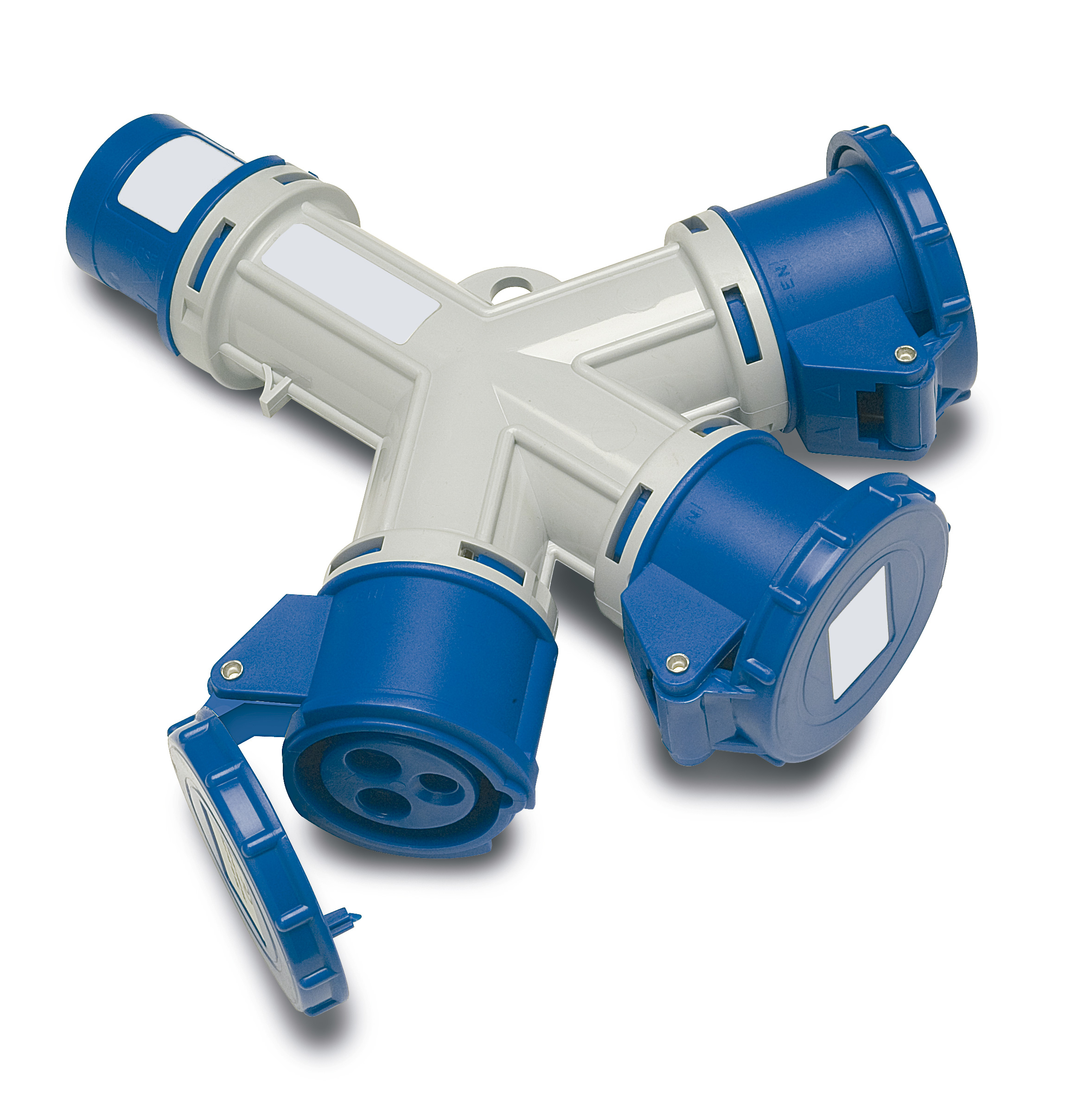
Industrial power connectors are responsible for delivering power safely and reliably. This is especially important in industrial and construction environments, as power lines are constantly being moved, repurposed, connected, or exposed to various environmental elements. Using a connector that’s not suited for the job will create small problems that can easily turn into costly ones.
Selecting the ideal industrial power connector ensures that connections are reliable and safe, regardless of the operating environment. However, this requires that you understand various selection factors, and that’s what we’ll focus on in this guide.
Understand your electrical load requirements
The basic starting point is the numbers. These dictate the amount of power that the connector can handle, and each connector has a specific profile that must be matched. This is the voltage, current, and type of power. If you don’t match it, nothing else really matters.
For the voltage and current rating, you’re looking for:
- Operating voltage (e.g., 240 V, 400 V)
- Current draw (e.g., 16 A, 32 A, 63 A)
The number indicated is usually the maximum capacity. Don’t exceed it as this can lead to overheating, and the insulation may break down as a result.
Besides that, you also need to consider the power phase configuration. Most industrial systems use three-phase power, which has three live conductors, a neutral, and an earth connection (3P + N + E). Don’t mismatch it with single-phase power, which has a live, a neutral, and an earth connection (2P+E).
Match connector type to the operating environment
The failure of industrial power connectors isn’t usually due to the voltage, but to the real-world conditions. These connectors are often exposed to dust, moisture, vibration, chemicals, and mechanical stress. Their ability to handle the different conditions they face, including frequent handling, determines how long they can last and how safe they are under daily use.
If your connector will be exposed to dust, moisture, and weather, the best starting point is the IP rating. Most industrial power connectors have an IP44 rating to offer protection against splashing water and debris. Depending on the application, you may need to consider IP67/69K to ensure protection against dust and water, especially in construction sites.
Other considerations here are temperature and heat variation, vibration and movement, and chemical spills.
Select connector type and locking mechanism
Industrial connectors can easily disconnect accidentally due to external factors like movement and vibration. However, this is also quite costly as it can interrupt production or even cause equipment faults. To avoid this, you need to consider the locking and connector type.
This starts with the design and intended mounting position, and it’s mostly determined by how power actually flows in the site.
Depending on the environmental factors, you can then choose locking and retention mechanisms like threaded couplings and push-pull systems.
Ensure connector certifications and standards
Industrial power connectors are part of a system that needs to pass inspection and satisfy insurance requirements. This means you need to check the certification, as it will help remove guesswork and protect you from liability in case something goes wrong.
In most setups, you need to look for the IEC 60309 reference. It defines the:
- Voltage and frequency categories
- Pin layouts and positions to prevent wrong connections
- Colour coding for voltage identification (e.g., blue = 230 V, red = 400 V)
In the UK, industrial power connectors should also have the UKCA marking, which is equivalent to the EU’s CE marking. This is in addition to the RoHS (restricts hazardous materials) and the ANSI/ESD S20.20:2021 (Electrostatic Control Standard), which applies when connectors are used in electrostatic-sensitive environments.
These standards and certifications will eliminate back-and-forth with inspectors and ensure that your connections are safe and clearly documented.