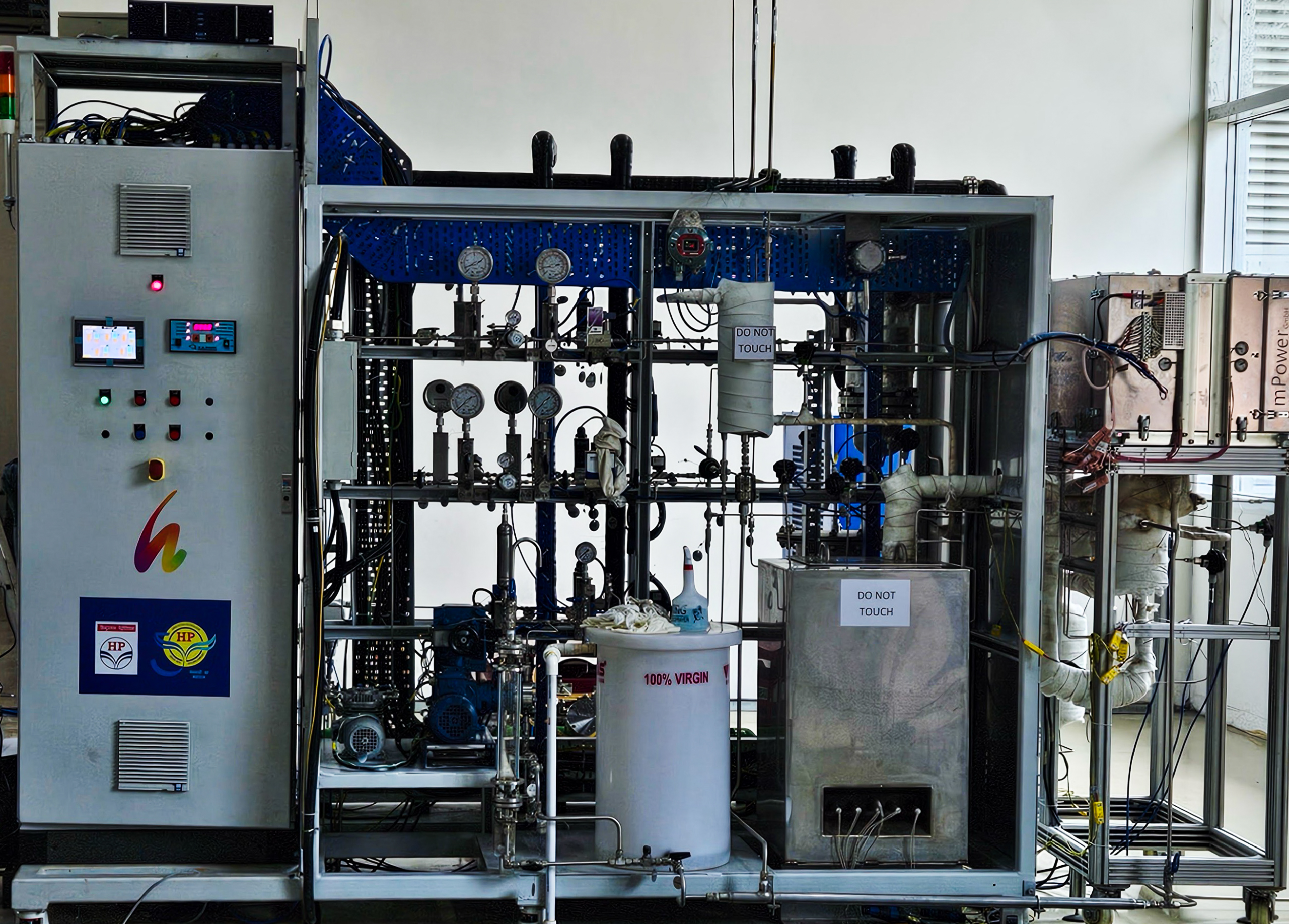
Schneider Electric is using its collaboration with Microsoft to push a more software-defined model of industrial automation into live hydrogen production, with the companies citing India’s first fully autonomous solid oxide electrolyzer system as proof that the approach can move beyond demonstration rhetoric. The installation, delivered with h2e POWER, is based on a 20 kW solid oxide electrolyzer and is being positioned as a working example of how AI-enabled control, edge intelligence, and open automation can be used to modernise high-complexity industrial processes without ripping out existing infrastructure.
The technical proposition is straightforward enough. Schneider’s open, software-defined automation stack is being combined with Microsoft Azure cloud, AI, and edge services so engineering logic can be written, configured, adjusted, and scaled with less dependence on proprietary hardware. The companies say their Industrial Copilot can automate engineering tasks such as control logic creation, documentation handling, and system configuration, with reported time savings of up to 50% and production-line changes completed in hours rather than weeks. That matters well beyond hydrogen, because the same bottlenecks appear in process plants, utilities, and discrete manufacturing lines that still rely on hardware-locked legacy control estates.
The green hydrogen pilot gives the claim something more tangible. Schneider and h2e POWER say the autonomous SOEC system has now surpassed 6,000 hours of stable operation under part- and full-load conditions, while cutting electricity consumption by up to 10% in a process where power accounts for more than 70% of hydrogen production cost. The companies also say stack wear has been reduced and levelised hydrogen cost has fallen by up to 10%, equivalent to around €500,000 a year at a typical 10 MW plant. For a technology family prized for efficiency but often constrained by demanding operating conditions, that is a significant operating claim.
There is a broader industrial point underneath it. Schneider has spent the past year sharpening its case for open, software-defined automation as a migration path rather than a clean-sheet rebuild, and its public positioning in India makes the same argument: protect existing investments, push intelligence closer to the edge, and let operators spend less time on repetitive monitoring. In hydrogen, where commercial viability still turns on uptime, energy efficiency, remote visibility, and maintenance discipline, that argument is easier to test than it is in many more forgiving process environments.
Siddharth Mayur, Founder and Managing Director of h2e POWER, said the open architecture means intelligence can be redeployed across multiple sites without lock-in. That is the part industrial operators will watch most closely. If autonomous control can be standardised and ported between assets, the commercial value runs far beyond one electrolyzer. It starts to look like a template for how difficult energy systems might finally be modernised at scale.