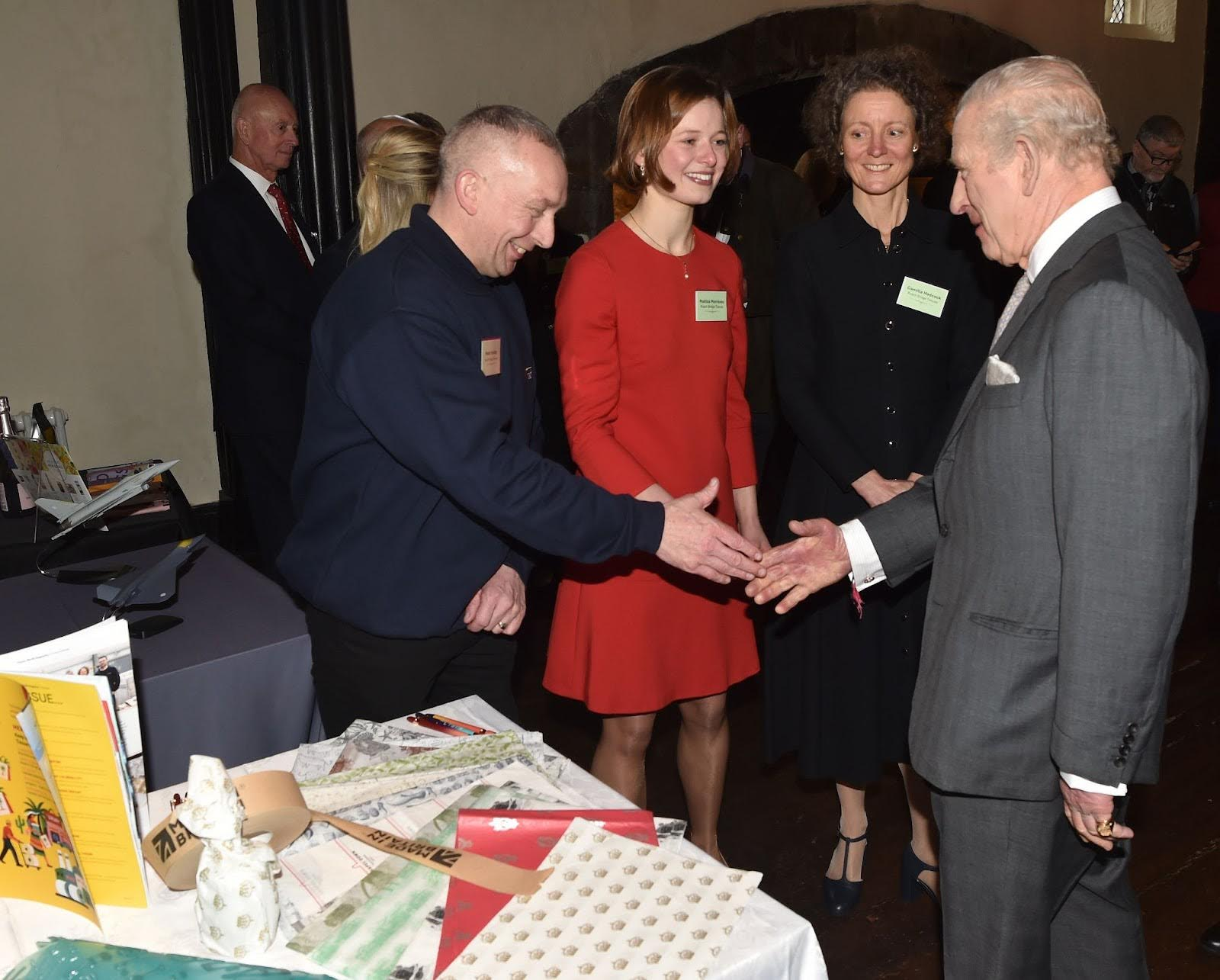
King Charles III’s visit to Samlesbury Hall has handed Lancashire manufacturer Roach Bridge Tissues an unusual national platform at a time when British industry is again leaning on resilience, domestic sourcing, and visible local production. The family-run business, based at Roach Bridge Mill near Preston, was among the organisations presented during the February engagement, where it used the occasion to explain how specialist printed tissue paper is still being made on a historic mill site in the county.
Roach Bridge Tissues occupies a narrow but durable corner of UK manufacturing. The company produces bespoke and stock tissue papers for wrapping and packaging, supplying branded and plain formats from a site with papermaking roots stretching back more than 120 years. Camilla Hadcock, director of Roach Bridge Tissues and chair of Made in Britain, said after the visit that the King had shown genuine interest in the business and its sustainability commitments, which goes to the centre of how smaller manufacturers are increasingly positioning themselves.
At Roach Bridge, that sustainability case is tied to operations rather than branding alone. The business says it uses power from an on-site hydro-electric scheme and solar generation, and can supply FSC-certified tissue on request. For a specialist paper converter and printer, that matters because packaging buyers are under sustained pressure to trace material origin, cut embedded carbon, and shorten supply chains without sacrificing presentation or lead times.
That operating model also gives the company a degree of insulation from the harsher economics of commodity paper. Bespoke printed tissue competes on service, design flexibility, short runs, and responsiveness, which can favour smaller domestic converters able to move faster than larger, more centralised supply networks. In that sense, the company’s value is not just that it still makes something in Britain, but that it does so in a format where local manufacturing can still win commercial work.
The wider symbolism of the visit was not lost either. Roach Bridge has been part of the Made in Britain network since 2016, and the group now represents more than 2,200 UK manufacturers across multiple sectors. That places the business inside a broader push to connect domestic production with procurement, sustainability credentials, and export potential rather than nostalgia alone.
The company’s own history reinforces that continuity. Hadcock and her husband bought the mill site in 1999, returning tissue production to ground once run by her grandfather. A royal encounter does not change the economics of British paper converting, but it does underline something useful: specialist manufacturing still cuts through when it can combine provenance, operational credibility, and a product buyers still need.