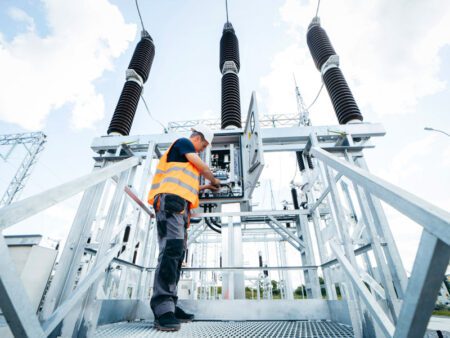

Image: Lloyd’s Register Foundation
A new study from the Lloyd’s Register Foundation reports that rising temperatures are an area of concern when it comes to energy sector workers safety.
According to the study, extreme heat exposure increases the risk of work injuries by 1% for every 1°C increase, and 17.4% in heatwaves, especially in subtropical climates.
Other increasing risks of harm are from natural disasters and new safety hazards associated with emerging technologies.
This comes on top of the Foundation’s world risk poll showing that one in five workers globally experienced harm at work in the last two years and the study estimate that 10.2 out of every 100,000 energy industry workers experience a fatal injury.
Also of interest
The energy workforce: A human capital conundrum
Eurelectric proposes steps for DSOs to enhance climate change resilience
While workers across all industries face a host of direct and indirect risks as a result of climate change, including UV radiation and extreme weather events, those in the energy industry were found to be particularly at risk of natural disasters and new safety hazards emerging with the transition to low carbon fuels including ammonia, methanol and hydrogen.
This is especially the case for outdoor and offshore workers, maritime workers and workers in small renewable businesses, according to the study, which also highlighted a lack of research and evidence when it comes to climate-related risks.
In areas where data does exist, it is often limited to one sector or region and doesn’t examine workers in different contexts.
Nancy Hey, director of Evidence and Insight at Lloyd’s Register Foundation, said that as the effects of climate change continue, the impact on work is also changing.
“This affects all of us, but some sectors and geographies stand to be more affected than others. Filling the gaps in knowledge should be an urgent priority – this work will enable lives and livelihoods to continue safely, and is essential to a thriving global economy.”
She adds that where there is already strong evidence, as with risks from heat and UV radiation, then clear guidelines for employers should be created and widely shared.
“Researchers, evidence brokers and safety practitioners all have a role to play, and bringing these stakeholders together to share knowledge across sectors and regions will be key to protecting workers from the risks posed by climate change.”
Some general findings of the study are that while climate change is a global phenomenon, not all regions will be equally affected and that approaches to protect workers need both global data and local knowledge to be effective.
Moreover, while workers across all sectors will be affected, not all sectors or occupations carry the same risks.
There is a lack of evidence on how to protect workers from climate change related risks, especially those working in low-and-medium income countries.
More research also is needed around the effectiveness of interventions and policies in specific contexts.