
Image courtesy 123rf
Andressa Ferraz of ABB Electrification Service discusses how, as disruptions to the power system become far more frequent, there is an urgent need to rethink how we deploy, finance and manage renewable energy infrastructure.
Recent power outages across Europe have highlighted the vulnerability of our interconnected energy systems. From major blackouts affecting millions across the Iberian Peninsula to transport disruptions in London caused by localized grid faults, these incidents exemplify how quickly energy infrastructure failures can cascade into widespread economic and social disruption.
These events underscore the fragility of a centralised grid system and how localised technical failures can rapidly escalate beyond their initial scope. Energy systems are growing more complex and weather patterns are becoming increasingly unpredictable – an uncomfortable truth is that these disruptions may become more frequent unless we deploy, finance, and manage our renewable energy infrastructure.
The invisible barrier
As energy systems evolve and modernise, we’ve focused intensely on technological solutions such as EVs, solar panels, wind turbines, and battery storage. These innovations are impressive and essential, but I believe we often overlook the fact that the greatest challenge to clean energy adoption lies not in the advancement of technology, but in the financial hurdles that prevent access to continuous, reliable renewable energy.
Britain’s National Infrastructure Commission recently warned that power demand in the UK is set to rise by around 50% by 2035 and double by 2050, requiring investments of £37-50 billion ($50.1-67.7 billion) in the distribution network – at least double current levels. Yet the regulatory process remains “too complex and focused on short-term costs,” creating an uneven landscape of energy security that undermines business confidence and regional economic resilience. As the report notes, waiting for demand to materialise risks investing too late, creating bottlenecks and delays that could severely impact both energy infrastructure development and business continuity.
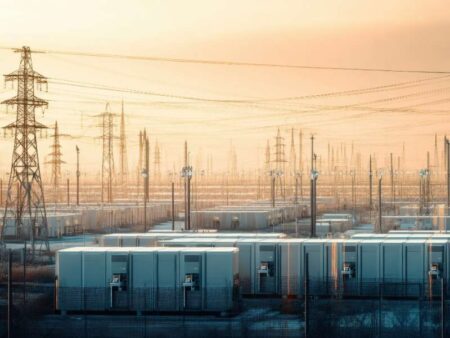
When grid capacity constraints make traditional connections financially unfeasible, battery energy storage systems (BESS) offer a solution by powering EV charging stations without costly grid upgrades. Yet prohibitive upfront capital costs keep BESS out of reach for many businesses in underserved regions.
The same challenge applies to renewable energy deployment. Wind and solar power face the fundamental challenge of intermittency – the sun doesn’t always shine, and the wind doesn’t always blow. Without effective energy storage to balance supply with demand, renewable energy sources remain dependent on fossil fuel backups, limiting their adoption and effectiveness in in modern energy systems.
Have you read:
Rethinking Resilience: Why the energy transition needs smarter, distributed infrastructure
How power systems can boost resilience to extreme weather
The as-a-Service alternative
When we look at the recent power outages in Europe, it’s clear that there are critical vulnerabilities in our energy infrastructure that demand urgent risk mitigation strategies. While no single technology could have prevented such a widespread grid failure, distributed energy systems with backup capabilities could have helped businesses and critical facilities – hospitals, transport hubs, data centres – maintain some level of operational continuity during such crises, potentially reducing financial losses when traditional risk management approaches might fail.
This is where Battery Energy Storage Systems-as-a-Service (BESS-as-a-Service) could help transform energy security from an expensive contingency into an accessible operational strategy. Rather than requiring prohibitive capital investments, it allows organisations to strengthen their risk posture through service fees, transferring both technical and financial risks to specialised providers who manage these complex systems and allowing organisations to focus on their core business.
The true power of the as-a-service model is its ability to simultaneously address financial risk, operational risk, and energy security threats. While traditional capital investments in energy infrastructure create immediate balance sheet vulnerabilities with uncertain future returns, BESS-as-a-Service delivers multiple risk mitigation benefits from implementation day. During normal operations, the system provides financial risk hedging through peak shaving and time-of-use energy management. It creates new revenue opportunities through grid ancillary services and energy arbitrage, improving return-on-investment forecasts. But during grid failures like the Iberian blackout, these systems could complement other resilience measures by providing some backup power capability beyond their typical financial functions.
Mitigating risk in an uncertain time
The Iberian blackout we’ve just witnessed isn’t a distant warning. This is our present reality. As we navigate renewable energy transition, businesses face increasing uncertainty: volatile energy markets, evolving regulations, and the growing vulnerability of centralised power systems.
BESS-as-a-Service functions as both an operational hedge and business continuity insurance. Through predictable quarterly service fees, it provides a comprehensive risk transfer solution without requiring specialised technical expertise or capital allocation that might otherwise be directed toward core business investments. When the next cascading grid failure occurs – and it’s very possible that we will start observing an uptick in frequency due to increasing grid complexity, climate-driven extreme weather events, and the challenges of balancing intermittent renewable sources – organisations with distributed energy resources may be better positioned to maintain operational continuity while competitors manage disruption costs.
For utilities and grid operators, widespread BESS deployment could contribute to a more resilient, distributed energy system. While large-scale grid failures like the Iberian blackout require comprehensive infrastructure solutions beyond any single technology, distributed energy storage can help address other types of grid stress and vulnerability. By storing excess renewable energy during peak production periods and releasing it during peak demand, BESS-as-a-Service has the potential to enable greater renewable penetration without compromising the grid stability that is essential as we tackle the renewable energy target of at least 42.5% across the European Union.
Democratising energy resilience
The clean energy transition cannot succeed if it remains accessible only to financially robust organizations. As-a-service models democratise access to cutting-edge energy solutions, ensuring businesses of all sizes can participate in and benefit from the shift to renewables.
Meeting the European Union’s ambitious 2030 target requires solving both the financial and technical challenges of renewable energy integration. By removing upfront costs and technical complexity, BESS-as-a-Service makes renewable energy more accessible, reliable, and profitable for businesses across all sectors.
When we make clean energy accessible to all, we create more equitable access to reliable, cost-effective energy solutions. The technology to transform our energy future exists today. Part of the challenge ahead is to rethink how we finance it.
About the author

Andressa Ferraz is sustainability advisory service manager, EMEA Region & Global Product Manager, BESS-as-a-Service for ABB Electrification Service, where she leads initiatives that enable customers to fully harness electrification, renewable energy, and digitalisation in their journey to net zero.
Originally published on Enlit World.