NVIDIA has detailed an expanded European ecosystem for its DSX AI factory platform, combining high-density computing with closed-loop liquid cooling, electrical management and software designed to respond to grid conditions. The 21 October developments cover reference designs, operator trials and cooperation with infrastructure suppliers rather than a single new data centre project. NVIDIA says particular DSX configurations can greatly reduce facility cooling water consumption and improve the computing output obtained from an available electrical power budget.
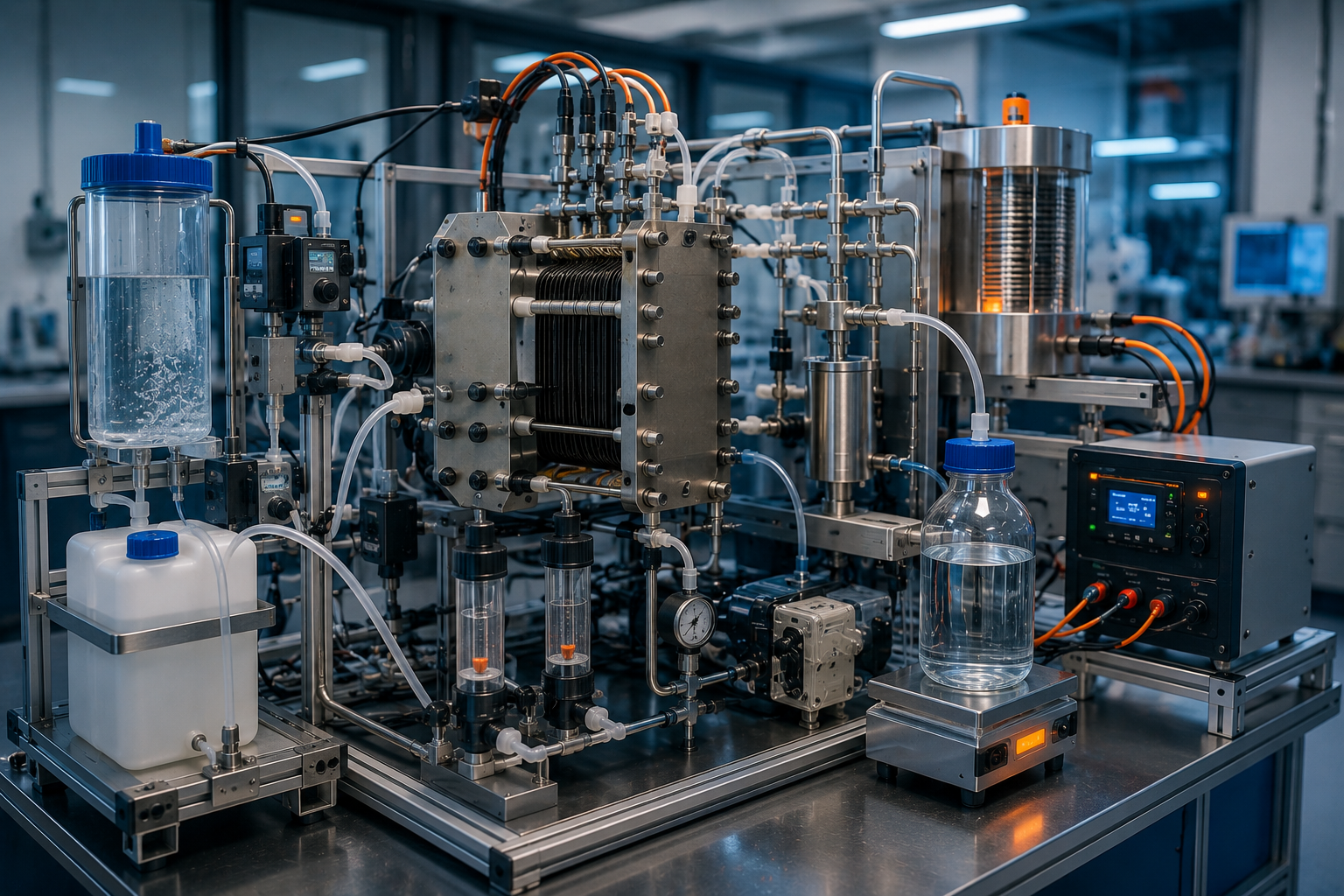
The cooling design connects liquid-cooled computing equipment to outdoor dry coolers instead of depending on evaporative cooling towers. Coolant absorbs heat from servers and circulates through a closed circuit; dry coolers then reject heat to the surrounding air through heat exchangers. Because the arrangement does not depend on evaporating water to remove the normal heat load, its demand for make-up cooling water can approach zero under suitable operating conditions. This does not mean every AI factory would consume no water anywhere on its site.
NVIDIA says its Vera Rubin systems can use full liquid cooling with coolant temperatures of up to 45°C, potentially allowing heat to be rejected through outdoor dry coolers in suitable conditions. Hot weather can reduce the temperature difference available for heat exchange and may require supplemental mechanical cooling. At a hypothetical 2GW scale, NVIDIA estimates 54 million litres a day of cooling-water savings compared with a conventional cooling-tower arrangement. This is a modelled comparison, not a measurement from 2GW of operating European installations.
Electricity availability also constrains how much computing hardware can be operated at once. DSX MaxLPS manages the power assigned to computing equipment within a provisioned budget, seeking to maintain useful output as the distribution of work changes. NVIDIA says tested configurations can generate the same number of output tokens using up to 30% less power. The comparison depends on the hardware, workload and power-control conditions; it cannot be applied as a guaranteed reduction to a site’s total electricity consumption.
Two reported evaluations used different hardware. Lambda recorded 24% greater cluster token throughput and 19% more GPU capacity in a proof of concept using HGX B200 systems with a fixed power budget. At an Nscale installation in Iceland, four GB300 NVL72 racks operating within a 264kW provisioned budget recorded 49% higher inference throughput and 37% more managed GPU capacity using DSX MaxLPS. The increases are separate results rather than additive benefits, and neither establishes equivalent performance at other sites.
DSX Flex addresses a different constraint: the timing of electricity demand rather than the distribution of power between accelerators. It is designed to adjust workload consumption in response to network conditions, demand-response requests, prices and the availability of grid supply, generation or storage. During a test involving Emerald AI, EPRI, Nebius, the UK National Grid and NVIDIA, a Blackwell Ultra cluster reduced its power draw by up to 40% during simulated grid events while critical workloads continued. That controlled demonstration does not establish a continuous 40% reduction or a guaranteed response for every workload.
On the design side, DSX Sim allows proposed electrical and cooling arrangements to be tested digitally before equipment is installed. The newly launched SimReady Central library supplies validated models of physical equipment for such work, including infrastructure assets from partners. Modelled operating points can expose conflicts between loads, cooling limits and component selection. They remain dependent on accurate site conditions, equipment data and subsequent commissioning tests.
NVIDIA has also expanded DSX OS for infrastructure lifecycle management and health automation. Those software capabilities sit alongside the underlying reference architecture and interfaces connecting computing systems with facility power, cooling and controls. The company is working with industrial software and engineering suppliers including ABB, Schneider Electric, Siemens, Dassault Systèmes, AVEVA, Eaton, Hitachi Energy, Trane Technologies and Vertiv. Their roles span equipment qualification, infrastructure design and simulation rather than representing one common construction contract or identical deployment at each partner site.
The European examples show different stages of implementation. Nscale is applying DSX Sim to design work for facilities in Iceland and Portugal, and is exploring DSX Flex for coordination with grid conditions. Other cloud operators are evaluating MaxLPS rather than reporting completed rollouts across their entire estates. Infrastructure qualification under DSX Ready covers particular products and categories, including specified coolant distribution and battery storage equipment, but it is not a certificate that a complete data centre will achieve every performance figure contained in the wider platform documentation.
Higher compute density simultaneously increases the heat that must be removed and the instantaneous power required from the electrical connection. Dry cooling can limit evaporative water use but still consumes fan and pump energy; flexible workload management can relieve peaks but must preserve the service levels of applications that cannot be interrupted. The 21 October European expansion adds supplier integrations, designs and trial results to an existing DSX platform. NVIDIA has not reported a single independently verified saving across the facilities of all participating European operators.