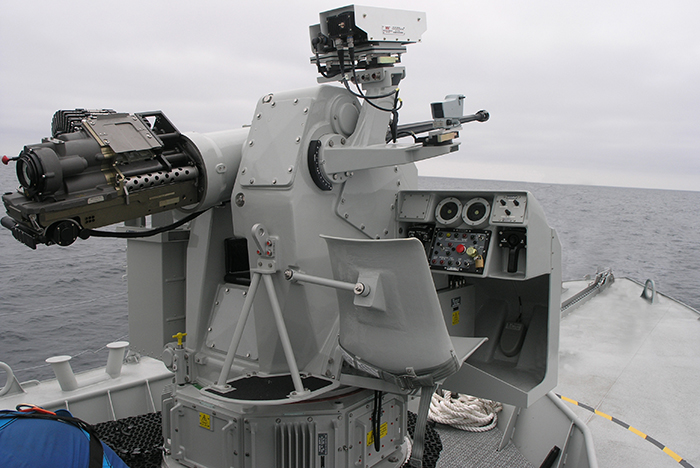
MS International has won a £29.7 million order to supply twelve DS30M 30mm naval gun systems for the German Navy's F128 frigate programme, securing a substantial equipment manufacturing contract for its British defence engineering subsidiary.
The award goes to wholly owned MSI-Defence Systems, with the twelve systems intended for four frigates being built under a programme led by TKMS. The agreement specifies the total quantity and contract value, although it does not publish individual equipment delivery dates, instalment values or the timing of revenue recognition.
A naval gun contract encompasses manufacture and preparation of equipment that must be integrated into a wider ship rather than supplied as an isolated component. The shipbuilder coordinates installation within the platform, where deck arrangements, mounting structures, electrical supply and control interfaces must be compatible with the vessel design. Each supplier therefore works against controlled interface requirements, with changes passing through the platform engineering process before equipment is accepted for installation. MSI-Defence Systems will supply the contracted weapon systems; TKMS retains the prime contractor role.
The DS30M designation identifies a 30mm naval gun system, but the 21 October award does not identify the sensor fit, fire control arrangements, ammunition package or detailed configuration for the German ships. Those particulars cannot be assumed from other naval installations. Manufacturing and integration planning will therefore depend on the applicable programme specifications and acceptance requirements.
The four planned F128 frigates form part of Germany's naval acquisition programme, which is intended to strengthen anti-submarine and maritime security capability. The twelve guns will be installed as elements of a broader vessel design containing propulsion, sensors, communications and other systems. No precise distribution of the twelve weapons between individual hulls was separately disclosed in the order statement.
Industrial execution will require coordination between the equipment supplier and the shipbuilding timetable. Naval assemblies are produced to controlled technical documentation and undergo checks before acceptance, while installation depends on when the relevant parts of a ship are ready. The contract does not provide a timetable for factory throughput or acceptance testing, so neither can be specified as a confirmed project milestone. Production batches and ship construction stages will have to align before completed gun systems can be installed on the ships.
For MSI-Defence Systems, the order adds identified manufacturing work across a multiyear shipbuilding programme rather than a speculative sales opportunity. Deliveries are tied to vessel construction and integration, but the supplier has not disclosed annual revenue allocations or a final delivery year. The £29.7 million is contract value, not a forecast of revenue to be booked immediately.
Equipment manufactured for naval use must be suitable for the stated platform interfaces and withstand the environmental and operational conditions specified by the customer. Component manufacture, electrical integration and quality records consequently form part of programme execution, although the publicly disclosed award does not identify new production lines, extra factory shifts or workforce additions at MSI.
The German contract also follows a separate US Navy supply agreement lasting three years disclosed by MS International on 1 October. Both concern naval customers, but they are different awards and should not be combined in order values or treated as the same order. The new agreement concerns twelve DS30M units for the F128 programme and ship construction under TKMS.
As an engineering supplier rather than the vessel prime contractor, MSI will be responsible for delivering its portion of the programme to the required specifications and handover points. Any subsequent shipboard integration activity is coordinated within the wider frigate project. No announced changes to the platform construction schedule accompanied the award.
The contract strengthens the group's identified defence manufacturing order book, while leaving the exact factory workload profile undisclosed. Systems will need to pass the required customer quality and acceptance stages, and the company has not quantified capital expenditure or changes in output capacity arising specifically from the German award. These uncertainties concern delivery scheduling rather than the existence of the signed contract.
MS International confirmed the F128 customer programme, twelve-system quantity and £29.7 million value on 21 October. Further milestones will be the start and progress of production deliveries to the project, followed by integration on the four German frigates. No dated schedule is available for those milestones, so future delivery reporting will be needed to establish the pace of execution.