Lakeside Equipment Corporation’s wastewater biological treatment systems have now completed 30 years of reliable service at one of the largest National Guard bases in the United States. Originally installed in 1994, the equipment was introduced following the outdated performance of disk aerators in the base’s circular aeration basin. Marlar Engineering, now part of Halff Engineering, was tasked with resolving the plant’s effluent challenges.
Mike Marlar, Vice President of Halff Engineering, highlighted the site’s significant infiltration issues, which, during wet weather, could reach seven times the design flow of the 500,000-gallon-per-day facility. The military base, with its extensive training facilities, also needed to double its wastewater treatment capacity due to a surge in recruit numbers.
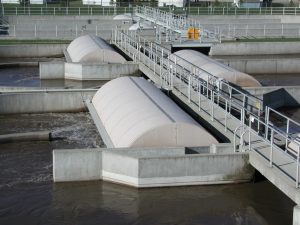
After evaluating various solutions, Marlar Engineering implemented an activated sludge oxidation process from Lakeside Equipment Corporation. They constructed two side-by-side oxidation ditches, equipped with covered Magna Rotors, to achieve a total design flow of one million gallons per day. Remarkably, the system has consistently met compliance standards over its three decades of operation.
A comprehensive rehabilitation of the collection system was also undertaken, including the installation of a new headworks facility with a diversion box. This feature allows excess wet weather flow to be directed into a newly designed equalization basin, with a capacity of 1.5 million gallons per day. The aerated wastewater is processed through two clarifiers in series, followed by tertiary Dynasand filtration and ultraviolet light disinfection — one of the first systems of its kind in the state.
The plant, which first went online in 1995, received the National Guard Bureau’s Environmental Award. Since then, only one upgrade has been necessary, in 2015, involving minor equipment replacements. The stability and efficiency of the system have been maintained through continuous oversight and on-site licensed operation.
Mike Marlar noted that the plant’s performance, characterised by minimal maintenance needs and robust design, places it in the top five percent of treatment facilities he has encountered. The use of just two Lakeside Rotors contrasts sharply with systems requiring multiple diffusers, reducing the likelihood of failures and the need for replacement parts.
For more information, visit Lakeside Equipment Corporation.