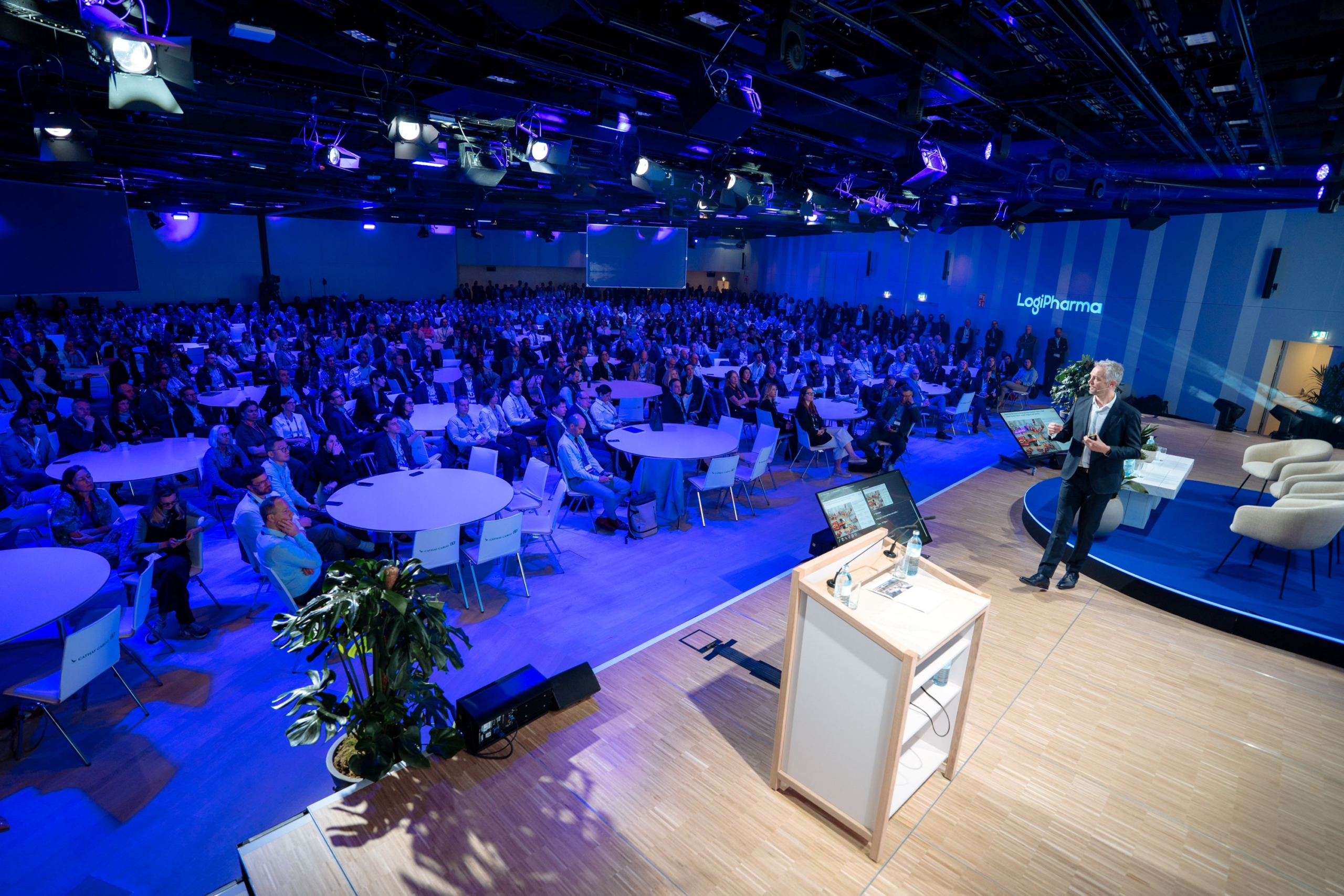
LogiPharma 2026 has concluded on a high, bringing together more than 2,300 life sciences supply chain professionals from around the world for three days of insight, innovation and debate at its new home, the Austria Center in Vienna.
The move to Vienna and the introduction of refreshed formats proved a resounding success, with record engagement, packed sessions and a strong pipeline of exhibitor announcements signalling continued momentum across the sector.
This year’s edition reflected a maturing conversation within pharmaceutical and biotech supply chains, grounded in practical application, resilience and real-world value. That was evident both on stage and across the exhibition floor, where suppliers showcased solutions designed to address today’s most pressing operational challenges.
The focus on interaction delivered tangible results. Delegates submitted 321 questions via the event app, underlining strong audience participation and the appetite for open, honest discussion. Sessions across both the Supply Chain and Logistics tracks benefited from live polling, audience-led debate and practical peer-to-peer exchange.
Reflecting on the themes that shaped discussions throughout the week, Ben Sharples, Event Director of LogiPharma, highlighted a noticeable shift in how the industry is approaching transformation:
“AI dominated the conversation again this year, but the tone was far more grounded. There’s a growing realism about what the technology can deliver right now, as well as where its limitations still lie.”
According to Sharples, true end-to-end visibility emerged as the single most critical capability for supply chains responding to major disruption. Survey data shared during sessions revealed that 50% of respondents felt AI had not helped at all during the recent Middle East crisis, reinforcing the message that technology alone is not a silver bullet.
Other key learnings included the increasing alignment between supply chain and commercial teams, with organisations placing greater emphasis on growth, market share and customer outcomes. Sharples also noted that while AI continues to attract attention, poor data quality remains the root cause of many failed initiatives, often overlooked amid the hype.
Crucially, people and culture continue to define success. “Even the best technology won’t deliver if it’s in the wrong hands,” Sharples added. “Digital transformation is still, at its core, a people and change challenge.”
With major disruption now viewed as inevitable rather than exceptional, the LogiPharma agenda reinforced the need for resilient networks and predictive capabilities. Looking ahead, AI-enabled control towers were widely cited as a foundational element, increasingly acting as the nervous system of modern supply chains, shifting organisations from reactive recovery to proactive foresight.
Other highlights from across the conference
A larger exhibitor zone and wider variety of formats meant that the move to Vienna was also praised by sponsors.
“People love the interactive elements of LogiPharma and these extend from plenaries and round-tables, to the experiential activities brought by sponsors, including a F1 simulator and an A.I. photobooth,” confirmed Jake Brown, Commercial Lead at LogiPharma.
“Exhibitors used LogiPharma as a platform to launch and showcase next-generation technologies aimed at improving resilience, reducing risk, balancing cost and sustainability, and strengthening cold chain integrity,” he added.
TransVoyant announced the launch of Risk in Motion, a new solution designed to analyse multiple data sources against disruption threats. The platform enables supply chain teams to act ahead of potential issues, protecting shipments, inventory and temperature-sensitive products in real time.
Cold chain innovation continued with Peli BioThermal’s introduction of a new SmartCap for DV10 dewars, offering enhanced visibility and reliability for high-value cell and gene therapy shipments.
Visitors to Woolcool were introduced to the LifeGUARDIAN® thermal box system, a fully passive packaging solution designed to protect temperature-sensitive payloads for up to 120 hours. The system combines a layered design — including an outer carton, fleece jacket, thermal core and ice packs — to deliver consistent and reliable temperature control without the need for active components.
Innovation from emerging companies was also firmly in the spotlight. Tapp was named Start Up Village Champion, recognised for its progress in developing a simpler and more sustainable way to manage temperature-controlled shipments. The company was selected for its focus on reducing e-waste and enabling instant data access without the need for additional hardware.
Beyond technology, the event also highlighted the importance of partnership and shared purpose. A standout moment was Yusen Logistics hosting a traditional Japanese Kagami Biraki sake barrel-opening ceremony, symbolising new beginnings and strengthened collaboration.