Kayentis and Ametris have announced a partnership to deliver an integrated electronic Clinical Outcome Assessment (eCOA) and wearable technology solution, with the pitch aimed squarely at a problem sponsors keep rediscovering the hard way: participants do not reliably wear devices for long enough, often enough, to generate usable continuous datasets. Rather than bolting wearable dashboards onto sponsor-side reporting, the two companies are embedding adherence support directly into the patient-facing eCOA experience.
The combined approach integrates continuous wearable monitoring and device management into Kayentis’ Clin’form App, so participants complete questionnaires and tasks in the same environment that tracks whether the wearable is actually being worn. Kayentis and Ametris say the app will provide real-time feedback on wear time sufficiency, reminders intended to improve compliance, and automatic syncing, with the aim of reducing data gaps and the operational clean-up that follows.
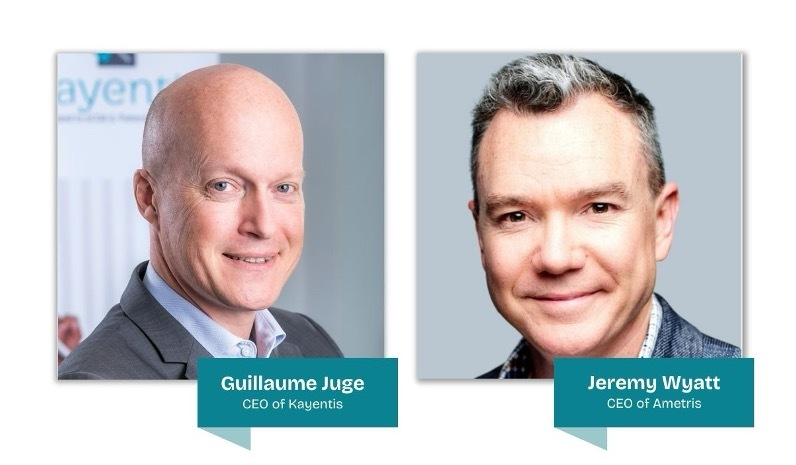
“We are thrilled with this alliance with Ametris in rolling out a value-added integrated eCOA and wearable technology solution that will transform wearable adherence in clinical trials,” said Guillaume Juge, CEO of Kayentis. “It marks a significant step forward in the management of complex clinical trials, often marred by data frequently collected in separate systems and only reconciled retrospectively.”
Wearables are increasingly used to capture objective measures such as activity, sleep, circadian rhythm proxies, functional capacity, and vital signs, particularly in oncology, cardiology, and neurology studies, but adherence failures can turn “continuous” datasets into patchy timelines that inflate variance and undermine endpoint confidence. The partnership claims to tackle that head-on by embedding compliance monitoring for Ametris’ ActiGraph LEAP multi-sensor wearable into the eCOA workflow, with mobile alerts when wear time is insufficient.
Ametris, formerly ActiGraph, has been positioning itself as a digital health technology platform provider, combining sensors, algorithms, and remote capture operations, and the integration is also framed as a site-burden reduction play. Fewer systems means fewer enrolment steps, fewer support workflows for device connectivity, and less time spent by site staff chasing participants for missing wear periods or troubleshooting sync issues across separate tools.
“This partnership represents a meaningful step forward in how digital health technologies are delivered in clinical trials,” said Jeremy Wyatt, CEO at Ametris. “By deeply integrating our best-in-class wearable DHT platform with Kayentis’ proven eCOA capabilities, we’re addressing two of the most persistent challenges in studies today – participant adherence and site burden.”
The companies say future enhancements are planned to further streamline device management and trial operations. Still, the focus on adherence as a first-order design requirement, rather than a downstream data reconciliation exercise, is at least aligned with how sponsors increasingly want digital endpoints to behave: as boringly complete datasets.