Infineon Technologies has opened a new semiconductor backend manufacturing site in Samut Prakan, Bangkok, adding automated assembly, test and wafer-test capacity to a production network that the German chipmaker is deliberately spreading across more regions. Around 350 people currently work at the plant, with employment expected to reach approximately 1,000 as the first building, Module A, moves through its planned ramp.
The greenfield site has been designed around phased expansion rather than a single completed factory, with space for as many as five production modules over time. Infineon says the layout could ultimately make Bangkok one of its largest backend manufacturing locations, giving the company a way to add cleanroom and equipment capacity in stages as product demand develops instead of equipping the final site footprint immediately.
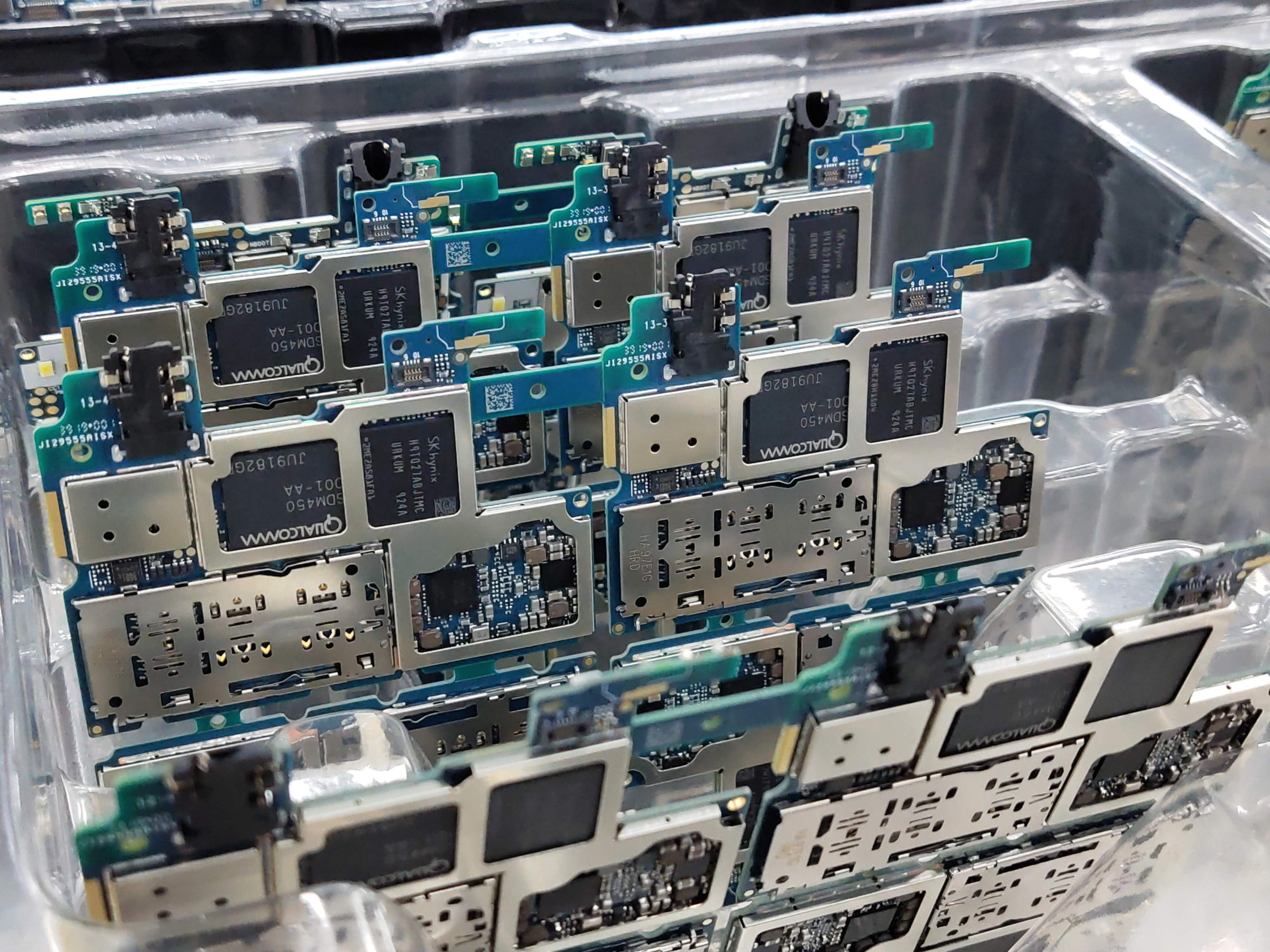
Backend manufacturing takes place after wafers have been processed in a semiconductor frontend plant and covers the operations required to convert finished wafers or dies into tested components ready for customers. Wafer test, assembly, packaging and final test may carry lower capital costs than leading-edge wafer fabrication, but additional frontend output cannot reach customers unless enough downstream capacity exists to process increasingly complex products and package formats.
Infineon has equipped the Bangkok facility with cleanroom, assembly and test systems supported by a high level of automation and a digital manufacturing backbone. The plant covers the complete spectrum of backend processes as well as wafer test, allowing products to move through several downstream manufacturing stages inside the same operation while production data, equipment condition and quality information are collected across the line.
Large backend operations have to balance throughput against variation because automotive, industrial and energy products can require different packages, qualification regimes and test conditions even when they originate from related semiconductor technologies. Automated handling and connected production systems can reduce manual movement and improve traceability, although equipment recipes, material supply and inspection still have to accommodate the product mix without creating changeover or test bottlenecks.
Bangkok also increases geographical diversity after Infineon completed the sale of its older Nonthaburi backend site to Malaysian Pacific Industries earlier in 2026 under a long-term supply agreement. The two decisions place part of Thailand’s existing assembly and test capability with an outsourced semiconductor partner while creating a new in-house operation at Samut Prakan, giving Infineon a mixture of internal manufacturing and external supply rather than relying entirely on one model.
That combination reflects the broader semiconductor supply chain, where wafer fabs, outsourced assembly and test providers, internal backend factories and materials suppliers operate across several countries. Expanding in Thailand does not make Infineon’s production network self-contained, because wafers, substrates, packaging materials, chemicals and specialist machinery will continue to cross borders, yet another backend location reduces the amount of downstream capacity concentrated in a smaller number of existing plants.
Automation becomes particularly important as unit volumes increase because a small process deviation can affect large quantities of devices before final test identifies the result. Continuous equipment and quality data allows engineers to detect drift earlier, while digital traceability can link a failed device or batch back through the equipment, material and test history that produced it, reducing the amount of production that has to be quarantined when a problem is found.
The modular layout also gives Infineon greater control over investment timing in a sector where demand can move rapidly between shortage and inventory correction. Building Module A with room for four later additions creates an expansion route without committing the complete final site to equipment from the outset, leaving later capital spending dependent on utilisation, product demand and the technologies assigned to Bangkok.
Southeast Asia already has a substantial semiconductor assembly and electronics manufacturing base, giving the site access to suppliers, logistics infrastructure and an experienced labour market. Infineon is also working with universities, educational institutions and industry partners in Thailand as it develops the workforce, because automated backend production still depends on process engineers, equipment technicians, quality specialists and maintenance teams capable of working across machinery, software and cleanroom systems.
The plant operates on 100% green electricity and incorporates water recycling, rainwater collection and on-site solar generation, according to Infineon. Backend processes are generally less water and energy intensive than wafer fabrication, although a large automated assembly and test operation still carries significant cleanroom, cooling, compressed-air and electrical requirements that rise as equipment utilisation increases.
Module A now has to move from inauguration into stable production while customer qualifications, equipment availability and yield establish the operating baseline for later expansion. The five-module plan gives Infineon substantial room to grow in Thailand, but the speed at which that space is used will depend on how effectively the first operation converts its automation, workforce and downstream manufacturing capacity into sustained output for automotive, industrial and energy customers.