Hoist & Winch Ltd has completed a two-stage lifting installation for a new flour mill, combining a temporary high-capacity hoist for plant installation with a permanent system designed for long-term maintenance access. The arrangement reflects a common problem in modern processing plants: construction lifts and operational lifts rarely demand the same equipment, but both have to work within the same constrained vertical access route.
For the installation phase, the company supplied a JDN air-powered chain hoist with a 10-tonne safe working load, 30 metres of lift, and a motorised trolley, supported by a portable diesel air compressor and hoses. That package gave contractors the capacity needed to move heavy process equipment through the dedicated lift shaft during the build and commissioning stage, while also allowing Hoist & Winch to manage installation, testing, and certification of the customer’s runway beam under LOLER requirements.
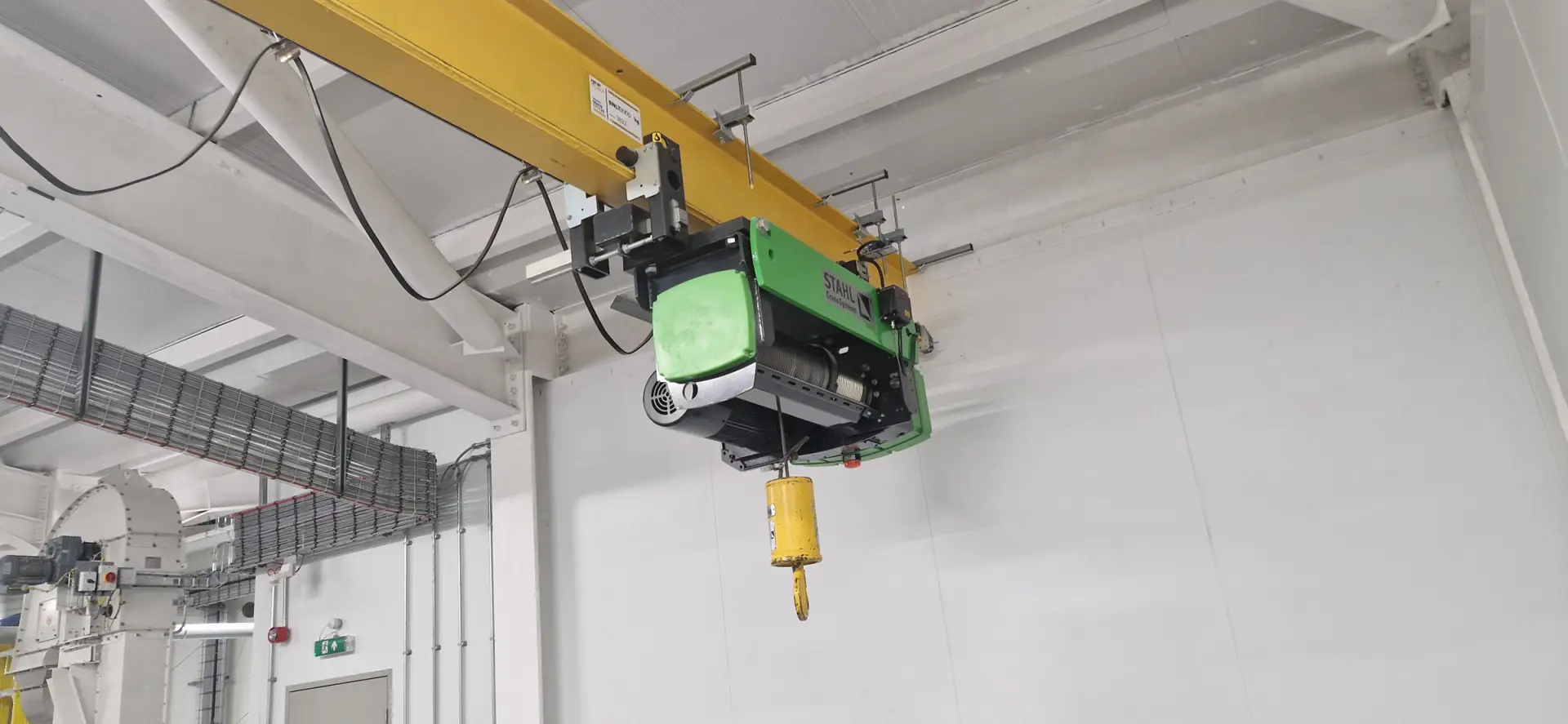
Once the plant was commissioned, the lifting requirement changed from one-off heavy installation work to faster, more controlled maintenance access. Hoist & Winch then removed the temporary hoist and installed a permanent 3.2-tonne Stahl electric wire rope hoist with the same 30-metre lift height. In service, the unit runs at up to 16 m/min for routine lifts, with a slower 2.6 m/min speed for controlled load landing, giving the mill a system better suited to minimising downtime during maintenance interventions.
That changeover is the real substance of the project. Rather than leaving an oversized installation hoist in place, the contractor moved to a permanent lifting strategy matched to the plant’s operating reality, where repeatability, speed, certification, and maintainability matter more than maximum headline capacity. Hoist & Winch also provided handover training for both installation crews and maintenance staff, and has since secured the annual inspection and maintenance contract.
Andy Allen, director at Hoist & Winch, said the project showed the value of early technical collaboration between lifting specialists, plant designers, and project managers. In food processing environments where access constraints and hygiene-driven layouts often complicate retrofits, getting the lifting logic right at construction stage can spare a lot of awkward engineering later. For more on the company’s approach to project work, see this Hoist & Winch project note.