Hexagon has updated its BendingStudio XT software to push tube and wire inspection further into series production, adding batch measurement, EV-focused correction workflows, and handheld scanner support that broadens the addressable market beyond highly automated lines. The release centres on TubeInspect, the company’s optical inspection cell for shopfloor measurement, but its significance lies in how much more of the production chain the software can now cover.
The headline gain is simultaneous multi-part inspection. Manufacturers can now check multiple identical parts in a single image, with immediate pass or fail feedback and correction data that can be sent back to bending machines. That reduces the inspection bottleneck in high-volume environments where cycle time is often constrained less by forming itself than by the speed of verification and process correction.
Hexagon has also tuned the release for EV component manufacturing. New correction reports for electric motor hairpins, plus a CAD adapter for rectangular profiles such as busbars, are designed to improve how users measure, compare, and document components that have become increasingly central to e-mobility production. Christoph Dold, senior product manager at Hexagon, said the update was intended to help manufacturers add capability while dealing with skills shortages and cost pressure.
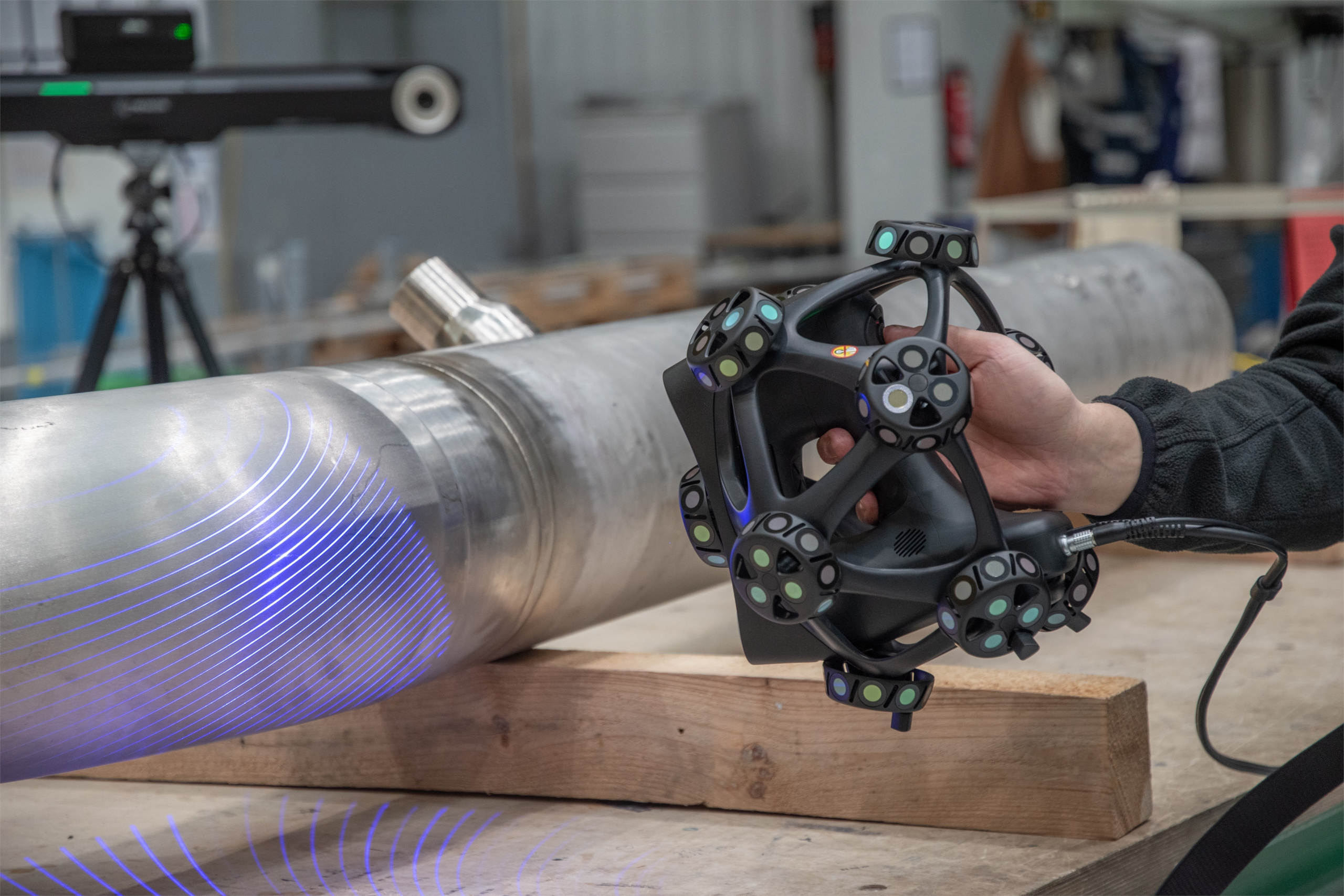
Just as notable is the move beyond fixed cells. The new version integrates Hexagon’s ATLASCAN Pro and HYPERSCAN handheld 3D scanners, giving smaller shops, fabricators, and maintenance teams access to the same software environment without investing first in a dedicated TubeInspect installation. That expands the platform from a specialist series-production tool into a broader metrology workflow that can also cover larger parts such as industrial pipework and extensive exhaust systems up to 5.5 metres long.
TubeInspect’s core proposition remains intact: non-contact measurement in seconds, repeatable accuracy on the shop floor, and direct feedback into production. Hexagon says the system is designed to hold accuracy in oily, dusty, or high-temperature environments, supported by temperature compensation and ISO 17025-certified calibration. The new software layer makes that inspection architecture more useful across a wider range of users and part geometries.
That shift matters because tube and wire forming is no longer a niche measurement problem tied only to dedicated bending cells. It now spans EV components, installed pipework, project-based fabrication, and production lines that need faster correction loops with fewer metrology specialists on hand. BendingStudio XT is available now, and with this release Hexagon is making a case for tube inspection as a more connected manufacturing workflow rather than a standalone quality checkpoint.