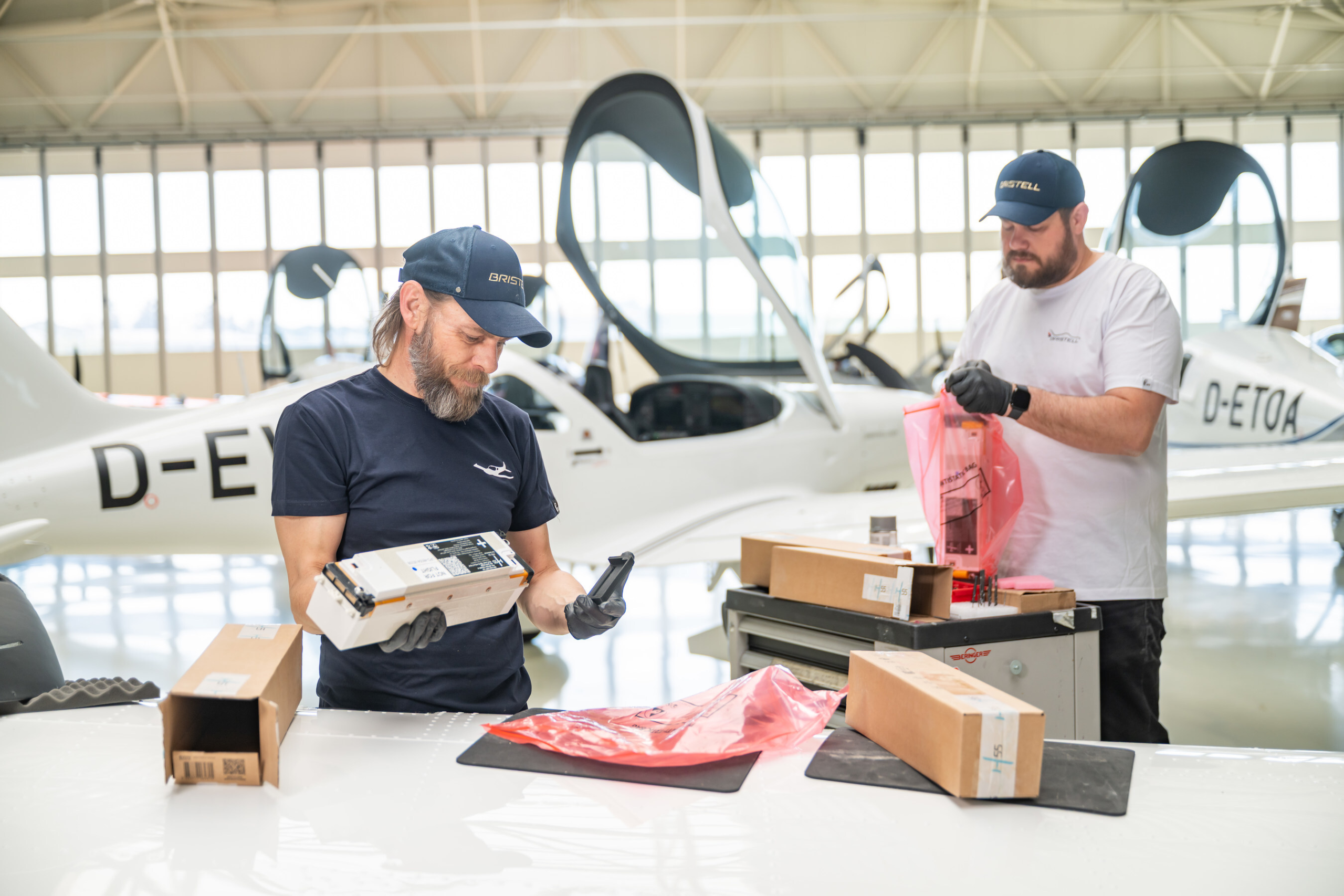
H55 has delivered conforming, certifiable propulsion battery modules to BRM Aero for the Bristell B23 Energic programme, moving the electric aircraft from battery validation into the next stage of aircraft-level integration.
The modules will be used to support mechanical integration and wider validation of the fully electric trainer, a step that takes the programme closer to commercial execution rather than laboratory proof. In electric aviation, that distinction matters. Battery performance alone is not enough; the hardware must be produced in a form that can sit inside an aircraft certification programme, with repeatability, safety evidence, and manufacturability all aligned.
The latest delivery follows H55’s announcement in February that it had completed what it described as the aviation industry’s first regulator-required, authority-witnessed propulsion battery module certification test sequence. That earlier milestone dealt with one of the hardest technical and regulatory barriers in electric flight: proving that high-energy battery modules can safely contain worst-case failures under the standards demanded by certifying authorities.
The B23 Energic is being positioned squarely at pilot training, one of the more commercially plausible early markets for electric aircraft. Training flights are short, repetitive, and cost-sensitive, which makes lower energy use, quieter operation, and reduced maintenance more attractive than in longer-range missions. H55 has already described the aircraft as its first customer application, a two-seat 104 kW electric trainer with more than 100 orders secured.
Rob Solomon, Chief Executive Officer of H55, said: “The delivery of conforming modules marks a key step toward commercializing the Bristell B23 Energic. With strong market demand already materializing, we are now moving decisively from development into scaled execution.”
First deliveries are planned for late 2027, and H55 says current orders in Europe and the United States have already secured production capacity for the first two years of operation. For electric aviation, that makes this more than another test update. It is a programme moving from technical eligibility towards industrial delivery.