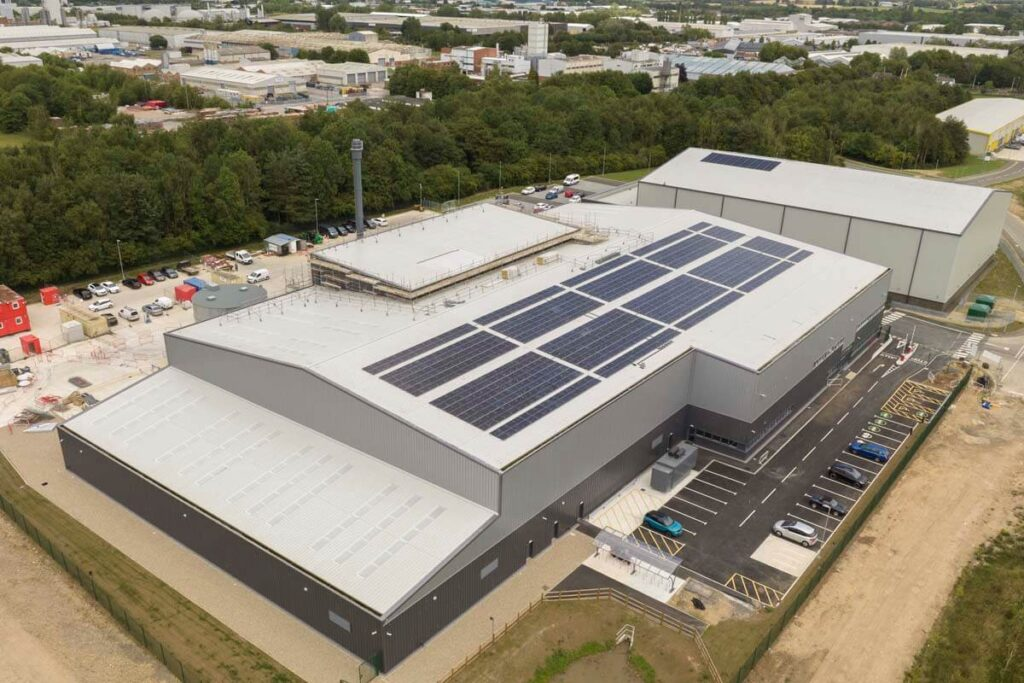
The Environment Agency has opened consultation on a draft decision to grant Fornax (North East) an environmental permit for its proposed high-temperature hazardous waste treatment plant at Merchant Park in Newton Aycliffe, County Durham. A final determination remains outstanding.
The proposed operation would accept clinical, commercial and industrial hazardous waste for thermal treatment. After assessing the application and representations submitted during its earlier consultation, the regulator has said it is minded to grant the permit, subject to a further public consultation closing on 1 December 2026. Its draft decision and proposed conditions are available for scrutiny.
Planning permission and an environmental permit are different authorisations. Fornax secured planning consent after an appeal in December 2022, but that does not allow the plant to operate without regulatory assessment of its waste handling, combustion process, emissions and monitoring. The current consultation relates to the Environment Agency's proposed operating controls, not to a newly granted planning permission.
The plant is designed for waste whose hazardous characteristics require controlled acceptance, storage, combustion and residue management. Clinical material may carry infectious hazards, while industrial waste may contain chemicals that affect the composition of flue gases or ash. High treatment temperatures contribute to destruction of hazardous constituents, but environmental performance also depends on how material is fed into the process and how pollutants are captured before gases reach the stack.
Fornax describes a rotating kiln for waste reception and primary treatment, followed by a secondary combustion chamber. Its published design information refers to temperatures from at least 850°C in the kiln to between 1,100°C and 1,400°C in secondary treatment. The company also describes reagent dosing and baghouse filtration for pollution control. These are developer specifications and should not be mistaken for the final legally enforceable conditions of a permit that has not been issued.
The developer gives a maximum design throughput of 10,500 tonnes of clinical and hazardous waste per year. Its stated intention is to serve regional healthcare, laboratory and industrial waste producers, some of whose material currently travels longer distances for specialist treatment. Whether shorter haulage routes result depends on future supply contracts and transport arrangements, not simply on the existence of a nearby incinerator.
A proposed heat recovery system could put energy from combustion to use within the plant or make it available to neighbouring sites. Fornax has described potential local heat users, but an operating district heating network, contracted customers and delivered energy volumes have not been confirmed. Recovered heat also does not replace the need to control combustion by-products or comply with emission limits.
The Environment Agency consulted on the original application during 2025 and has now published its proposed determination with supporting reasons. Its position is that the evidence assessed so far has not revealed grounds to refuse the application under the relevant legal tests. That judgement remains provisional, and representations received during the current period must be considered before the final decision.
Waste reception arrangements, combustion parameters, residues and emissions monitoring are all capable of becoming enforceable permit conditions. The developer describes storing incoming material in enclosed areas with controlled airflow and using treatment stages intended to manage gases and particulates. The final permit, if granted, would establish which measures and limits must be demonstrated in operation; company descriptions alone are not a substitute for that authorisation.
Commissioning would provide a further opportunity to verify the operation of the kiln, secondary chamber, gas cleaning systems, process controls and monitoring equipment. Fornax states that its design envisages commissioning tests before full operation. Regulator oversight and any enforcement action would depend on actual compliance with the conditions imposed, rather than an assumption that a draft approval guarantees environmental performance.
The environmental consultation also differs from a wider debate about local waste policy or the desirability of the location. The agency must consider representations that fall within its statutory permitting responsibilities, including pollution prevention and protection of human health. Its published documents explain the questions it can determine and the matters that belong to other planning or policy processes.
Comments on the draft decision can be submitted until 1 December. The Environment Agency will then review the responses and decide whether to grant the permit and on what conditions. No approved operating date follows from the present consultation, and any subsequent commissioning would have to demonstrate compliance before the proposed facility could operate fully.