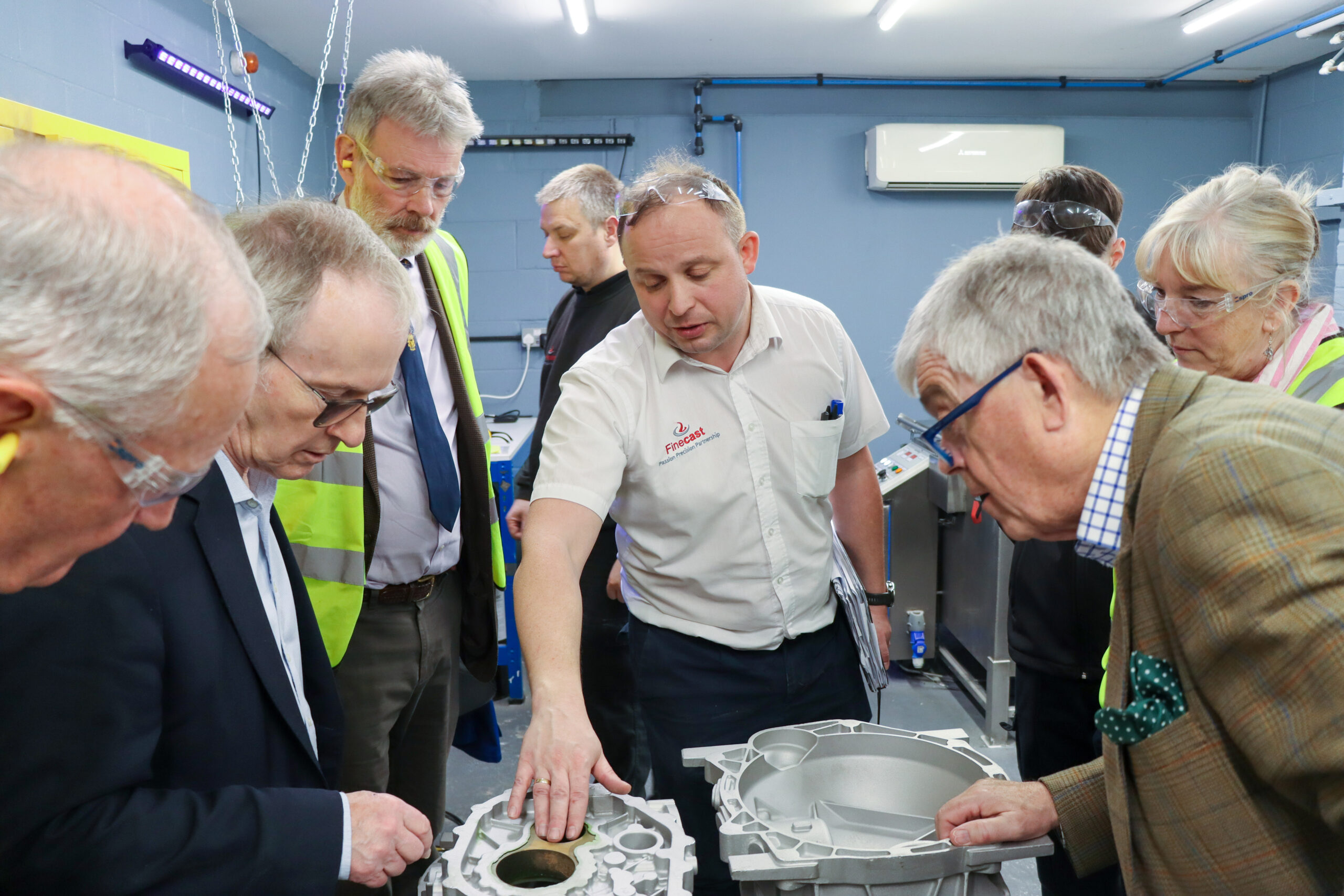
Finecast has used a visit from the Worshipful Company of Founders, industry leaders, academics, engineers, and apprentices to argue that the future of UK casting will depend less on volume and more on investment, accreditation, and technical specialisation. The West Sussex precision casting and machining business opened its site earlier this month as pressure continues to build on Britain’s remaining foundries.
The backdrop is a sector that has contracted sharply over several decades as production shifted overseas and domestic operators faced persistent pressure from energy costs, skills shortages, underinvestment, and policy uncertainty. Finecast’s message was that survival in that environment depends on moving up the value chain rather than trying to compete on commodity output.
That is the model the company says it has pursued since chief executive Chris Heatley bought a struggling foundry for £30,000 almost 25 years ago. Today Finecast supplies sectors including defence, aerospace, automotive, motorsport, and energy, and names Thales, Rheinmetall, Porsche AG, Jaguar Land Rover, and Safran among the global manufacturers it serves. The business has recently invested £2 million in machine shop capability and says it is working towards NADCAP accreditation, alongside a broader multi-million-pound push into aerospace and defence capacity.
Heatley said: “The UK foundry sector has seen a huge amount of offshoring over the years, but what remains are highly specialised businesses operating at the top end. That’s where we positioned ourselves, from the very beginning.”
Finecast is also making workforce renewal a central part of that argument. The company says its average employee age is around 30, with much of the management team between 25 and 38, and that it has built a leadership pipeline through apprenticeships beginning at 16. That emphasis on skills arrives as the wider casting sector continues to wrestle with succession, recruitment, and the image problem that still hangs over heavy manufacturing despite the technical demands of modern foundries.
The visit carried added weight because it came soon after Finecast was selected for the Ministry of Defence’s Defence Supplier Capability Development Programme, where only 10 SMEs were chosen from 561 applicants. The Worshipful Company of Founders, founded in 1365 and now active in industry support, education, and metals-sector advocacy, has also backed the Back British Metals campaign. Pam Murrell, chair of the Founders’ industry committee, said: “This industry is vital for the economy, providing good jobs and precision engineered parts for a wide range of sectors that support our sovereign capability and environmental sustainability.”
For a sector that has spent years shrinking, that combination of defence relevance, specialist process capability, and younger technical talent is about as strong a case as UK castings can currently make.