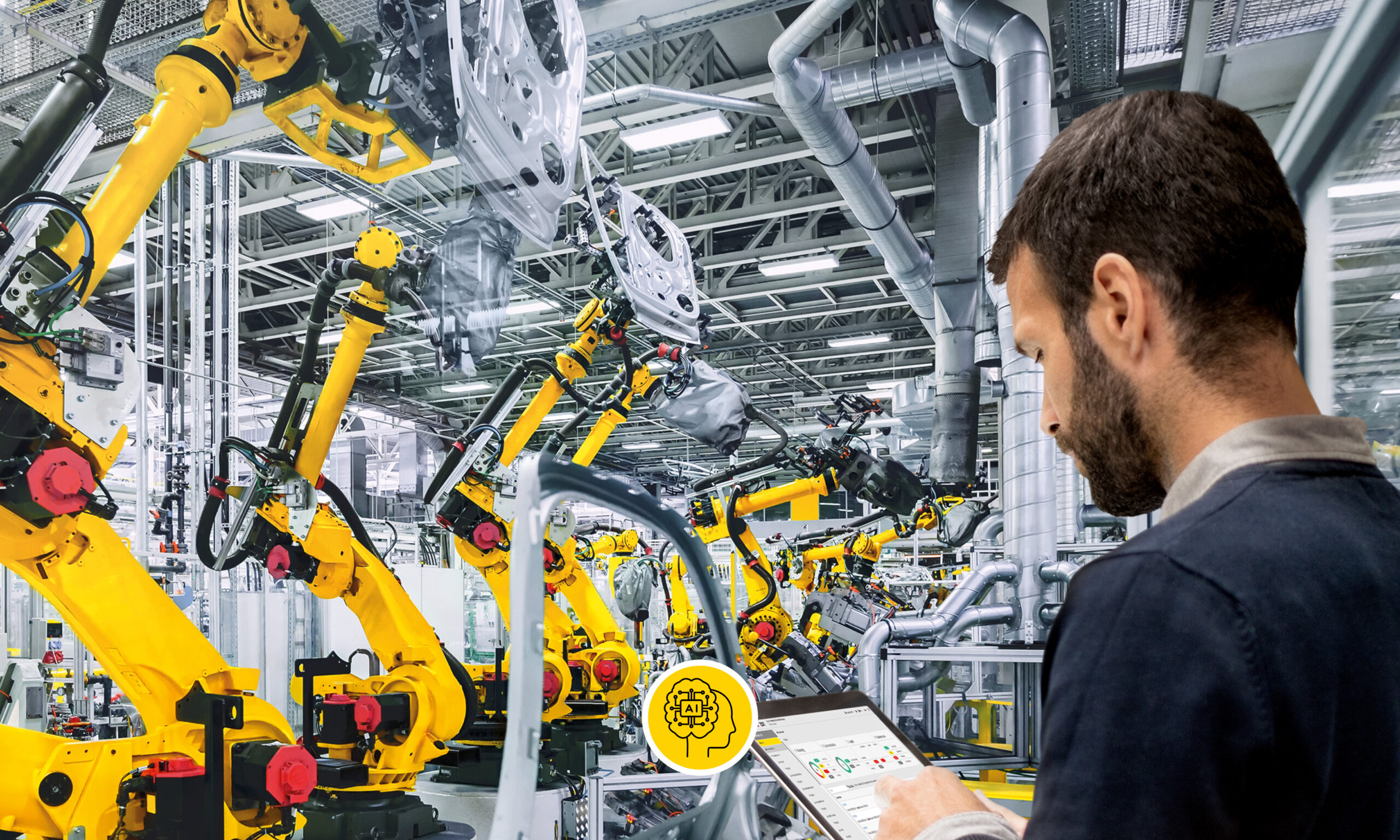
FANUC has partnered with NVIDIA to integrate NVIDIA’s AI computing and simulation platforms into FANUC’s industrial robot portfolio, as the Japanese automation supplier looks to move “physical AI” from pilot projects into mainstream factory deployment.
The collaboration centres on two technical pillars: on-robot and edge inference using NVIDIA hardware platforms such as Jetson, and photorealistic, physics-aware simulation using NVIDIA Isaac Sim to support virtual commissioning and training. In practical terms, it is an attempt to compress the slow, expensive, and frequently brittle process of deploying new automation into a workflow where behaviours are tested, tuned, and validated in a digital environment before steel is ever cut on the line.
FANUC is also moving to lower the software barrier around its robots by supporting ROS 2, enabling developers to build applications using a widely adopted robotics middleware stack, with Python-based development workflows sitting closer to mainstream software engineering than traditional industrial robot programming. If you want more AI in factories, you either need to train more robot programmers, or you need to meet developers where they already are. FANUC is choosing the latter.
For manufacturers, the point is not that robots will suddenly become chatty. It is that perception, adaptive motion, and real-time decision-making reduce the cost of changeovers and the operational risk that comes with variability — mixed SKUs, fluctuating takt times, and human-robot interaction in constrained spaces. Digital twins add another lever: simulation-based testing for reach, cycle time, collision risk, and process stability, before the production team is asked to accept downtime for commissioning.
The industrial reality is that “smart factory” rhetoric tends to evaporate on contact with the average brownfield site, where uptime is king, engineering change is painful, and every new layer of software is another thing to support at 2:00 a.m. The near-term test for FANUC and NVIDIA will be whether their combined tooling can shorten commissioning timelines, and improve reliability, without pushing manufacturers into a dependency spiral of proprietary stacks and specialist skills.
FANUC said it will showcase physical-AI-enabled demonstrations at upcoming trade shows, including use cases such as adaptive motion, safety-aware human-robot collaboration, and virtual commissioning in digital twins.